
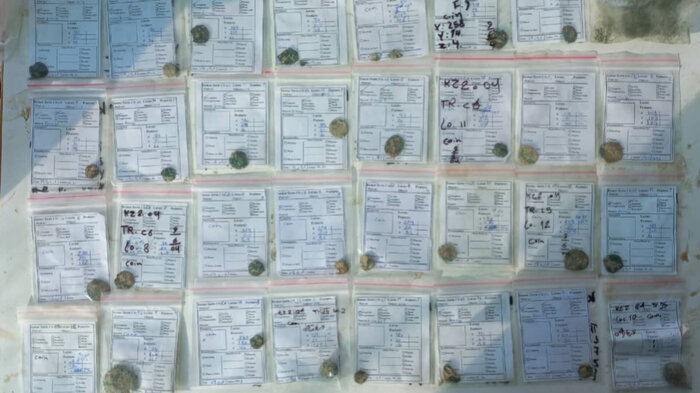
TEHRAN – Archerodists have identified 100 historic coins during the second season of excavations at Kamal Zarinsite, the ancient city of Isfahan, said Amir Kalamzadeh, director of the Department of Cultural Heritage on Monday.
He told the IRNA they found artefacts that enhanced the potential of important traders in the region.
“We’ve recovered 35 coins just yesterday, which is a very significant number,” he said.
He revealed that these coins belong primarily to the Islamic era, but to accurately determine their age, they must be cleaned and inspected in a laboratory environment.
Pointing to the importance of the findings, he said, “Given the evidence available, I believe that the area has been a significant trade center in the past and that there are more valuable artifacts at the bottom of the soil.”
He also provided news about the extension of the excavation permit by the Archaeological Institute, adding that the excavation permit for the second season was 40 days and with the end of it a new permit was issued to continue excavations in the area before the Kamal Zarin Mosque.
“This opportunity will allow us to conduct extensive research and get more details about the region’s economic and cultural history.”
Karamzadeh emphasized that these excavations will help to better understand Isfahan’s historical and civilized identity and provide valuable findings to researchers.
The excavation site is located near the UNESCO-listed Jamemesk buffer zone in Isfahan, one of the city’s most prominent monuments. Karamzadeh pointed out that this proximity could provide new insights into the historical strata surrounding the mosque, thus leading to discoveries being “increasing importance.”
The launch of the second phase continued what officials described as multiple challenges. Karamzadeh believes that the support of state officials, including Governor Isfahan, mayor and local prosecutors, has enabled the excavation to be reopened.
The first excavation at Comer Zarin, a team from Isfahan University last year, revealed traces of human activity across several historic periods. Ali Shohaye Esfahani, an archaeologist and faculty member at the university, said the findings remained in the Sassanian period (224-651 A.D.), confirming the long-standing role of the passage in the city’s development.
Isfahan once stood at a crossroads in Iran’s international trade and diplomacy, but now for good reason it is one of Iran’s top tourist destinations. It is filled with many architectural wonders, including unparalleled Islamic buildings, bazaars, museums, Persian gardens, tree-lined paths and more. It is a city where you walk, get lost in a bazaar, a city where you can doze off in beautiful gardens and meet people.
The Persian proverb “Isfahan, Nezuhuejahan” (Isfahan is half the world) reflects the city’s cultural and historical prominence.
KD