
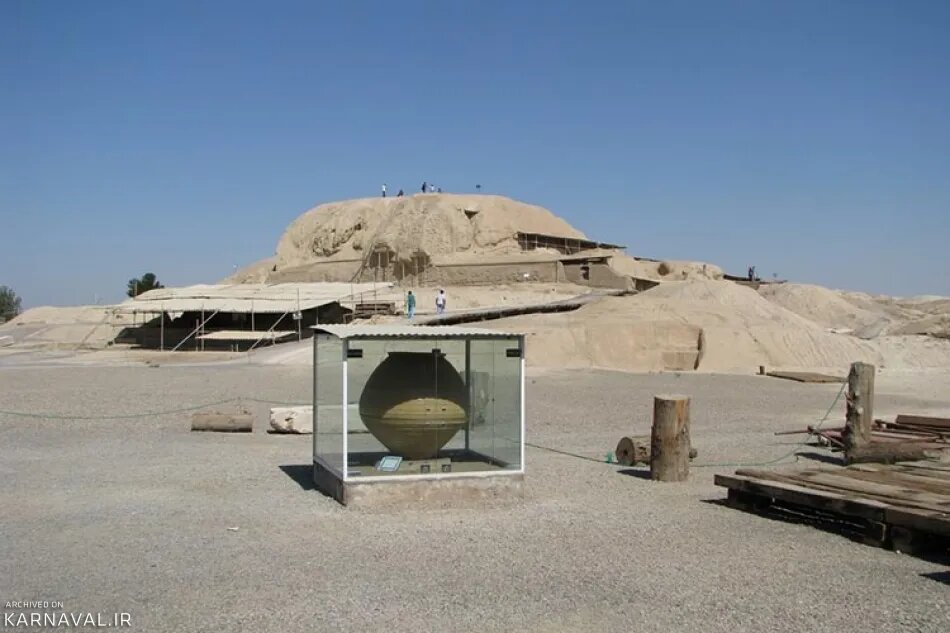
Tehran-TepeSialk, c. The 8,000-year-old archaeological site in Kashan, central Iran, is on the list of potential UNESCO World Heritage Sites, a potential UNESCO World Heritage Site candidates in an effort to resolve legal and conservation issues regarding protected areas of the site’s protected areas.
Amir Kalamzadeh, the Bureau of Cultural Heritage, Tourism and Handicrafts in Isfahan, told the Tehran Times that following coordination between the Ministry of Transport, the Ministry of Urban Development and the Ministry of Cultural Heritage, it is taking steps to release the site’s buffer zone to prepare for international registration.
“Tepe Sialk is one of the most eligible prehistoric sites in the state on the UNESCO interim list,” says Karamzadeh. He said the site was on the waiting list and now has an updated rating.
The buffer zones around the mound cover about 100-112 parcels of land, and have seen decades of suspensions in construction activities for heritage protection. “For over 35 years, building permits have been suspended to protect the site, creating difficulties for residents and related authorities,” he said.
During a recent visit by the Minister of Cultural Heritage to Kashan, an agreement was reached with the Ministry of Transport and Urban Development to allocate alternative land to owners to promote legal permits for protected areas.
Karamzadeh said some landowners were reluctant to move there while the ministry proposed one replacement site. “We asked the ministry to identify and offer new options, and our department pursues this through high-level channels,” he added.
Officials emphasized that the goal is to legally resolve ownership issues, clear buffer zones, enable ongoing archaeological work and support UNESCO’s registration process.
Karamzadeh also reported that illicit construction within the buffer zone and development of the villa have been repeatedly halted and destroyed through collaboration with local heritage authorities. “In recent years, protection efforts and legal cases for offenders have increased,” he said.
The Tepe Sialk site, previously removed from the interim UNESCO list due to issues related to the structure of the buffer zone, is considered a strong candidate for future nominations if legal issues are resolved.
Karamzadeh explained that Iran has limited slots and must prioritize sites that it nominates each year, but Tepe Sialk has high archaeological value. “The site’s continuous cultural strata dates back to the fifth millennium BC,” he said.
He also mentioned a municipal project to establish an urban museum on the premises. “The city of Kashan is working to establish a museum and aims to coordinate efforts to develop the region as a vibrant cultural tourism hub,” he added.
Tepe Sialk was first excavated in the 1930s by French archaeologist Roman Ghirshman and his wife Tania. The site consists of two main mounds, north and south hills, each with six layers representing a continuous ancient civilization.
morning