
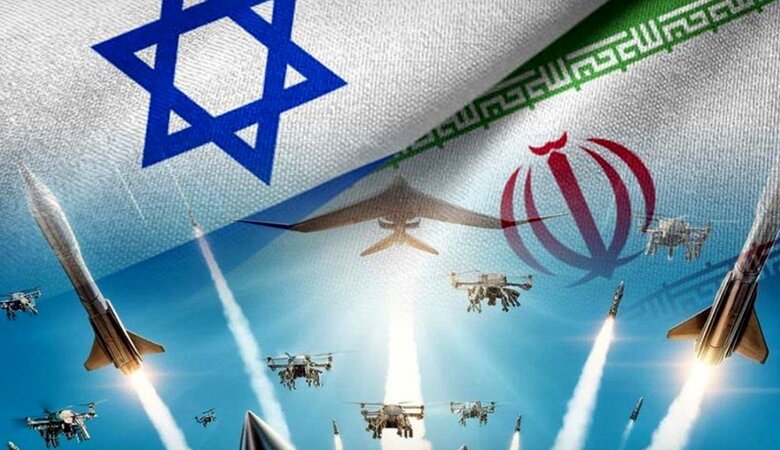
Despite the hospital bombing, Zionist regime officials and the media have launched a campaign to deceive public opinion around the world.
In this respect, multiple warnings to Iranians can also be analysed to evacuate different areas. Zionists are trying to persuade the world with this move that protecting the lives of citizens and civilians is important to them.
It has been a week since the start of the Zionist regime’s aggressive attack on the integrity of Iran’s territory.
During this time, along with the blatant attacks of the Zionist regime on Iran, we witnessed the media to launch a psychological war, spread rumors, manage stories, instill fear and fear, instill discord, and use strategies to hamper public opinion using traditional and digital media.
Therefore, the Zionist regime relies on a set of media techniques to advance its targets in the war with Iran, giving off aggressive attacks in positive senses such as “legitimate defense” and “right to self-defense.”
The news story depicts a series of media tactics and techniques of the Zionist regime amid attacks on Iran’s territorial integrity.

1. The spread of rumors
In an attack on Iran, the Zionist regime implemented a classic example of a psychological bombing consisting of spreading rumors, releasing suspicious videos and attempting to demonstrate power.
Social media, for example, claims that dozens of fake accounts attributed to Zionist cyber forces, have made the claim that Iran’s defense system is ineffective and that several underground sites are being destroyed on the ground.
However, the confirmed images released do not even record actual explosions deep inside the suspicious target.
In fact, this psychological warfare was an attempt to create anxiety rather than create a military reality, by creating anxiety in the mental structure of Iranian citizens, perhaps by weakening morale, increasing pessimism about the country’s defensive capabilities, and creating space for political pressure.
2. Alternative and false narration
One of the techniques of psychological warfare in the Zionist regime is the creation of alternative narratives. The administration is very well aware that facts are not that important. Rather, what people believe in is determining the winner on the battlefield.
During recent airstrikes at military facilities in cities in Tehran, Kelmansha, Isfahan and Shiraz, the Zionist regime created a broad wave of media from the beginning to portray public opinion as a successful and intellectual and accurate operation. The Iranian Ministry of Defense announced hours later that the majority of the suicide drones had been shot down before reaching the target, but the enemy quickly joined forces with the New York Times and the Israeli Times to claim that all the attacks had hit sensitive military facilities. The purpose of this media’s deception was not to provide information, but to create a sense of defeat and vulnerability in Iranian public opinion.
3. Fake news
Along with its aggressive actions, the Zionist regime is manipulating and forgering war-related news and images in the media. For example, while the video claims that the regime destroyed the Iranian launchers, analysis of the video shows that the regime created several videos from different angles of the destruction of one launcher, published them separately, edited and placed them in a variety of ways!
Therefore, the Hebrew media created the stream by creating massive fake news against Iran. From widespread internet and electricity blackouts to claims of mass escape by security guards, there are a variety of manufactured stories published in an organized manner.
Content analysis of these news items indicates that many of the released videos and images belong to events in other countries or are distorted reports of older events.
The main goals of this media stream are to instill instability, collapse of internal security and a lack of Iran’s sovereignty control. This kind of news reflects the need for the Zionist regime to create psychological crises for its domestic and international audience, but more than the truth.
4. Showing the safety of Iranian civilians
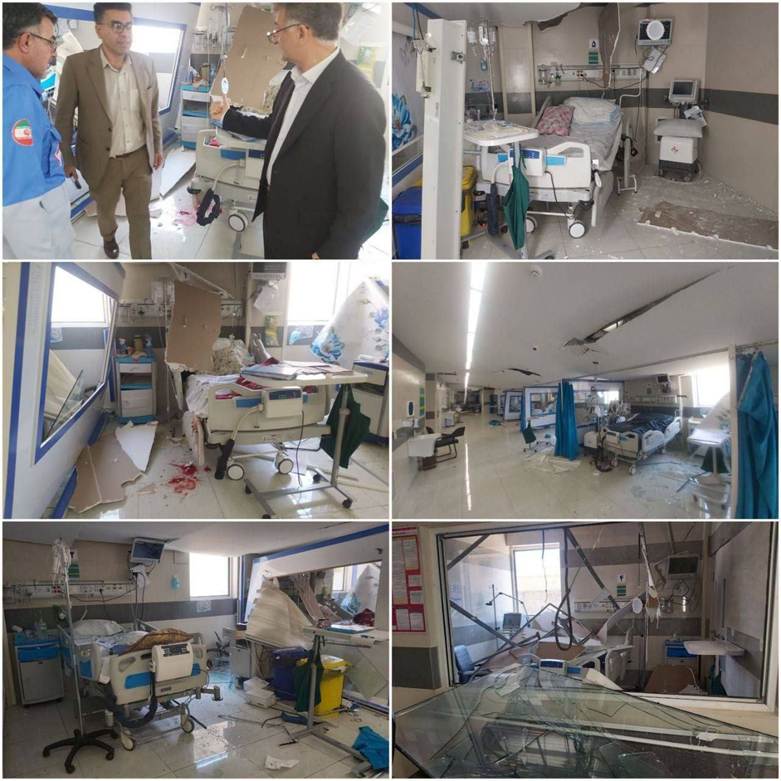
The Israeli regime has been careful to attack attacks with propaganda and pretending to attack without attacking residential areas, but even medical centres are not safe from the offensive attacks of the Zionist regime.
These included projectiles that hit Tehran’s Hakim Hospital, and targeting ambulances in the capital, resulting in three paramedics being able to martial arts. The regime also attacked Farabi Hospital in Kermansha on the first day of the attack.
5. Shows accurate Israeli attacks compared to Iran’s carless attacks
The Zionist regime media are trying to instill the idea that while Iran’s attacks are scattered and aimless, their attacks are accurate and targeted.
To prove the regime wrong, the Wiseman Institute, which has been associated with the Israeli regime’s weapons research for years, has been targeted for Iran’s missile attacks. Attacks carried out in response to the role of the laboratory in developing tools used against civilians.
The Israeli era was recently forced to admit that Iran had destroyed 45 Wiseman Institute laboratories. The estimated cost to build a single laboratory facility without equipment is approximately $50 million. Equipping advanced equipment costs an additional $50 million.
6. Censorship and cover-up
The Zionist regime has consistently demonstrated strict control over the free flow of information by controlling media access to war zones, restricting journalists’ access to war zones, arresting many journalists who published images of Iran’s attacks on occupied territory, and arresting many journalists who banished foreign journalists.
The Israeli regime is working hard to prevent the release of numbers of casualties from Iran’s missile attacks on occupied territories, but some sources, such as the Washington Post, have reported that the number of Israeli casualties since the start of Iran’s missile operations has exceeded 1,800.

7. Ignore reality through misrepresentation of the Israeli military’s military power
Hebrew Media releases several daily videos of suspected attacks on Iranian soil.
Israel claims that its fighter planes have reached Mashhad and call it the largest aviation business in the history of the world. Technically, these fighters cannot return from such distances without refueling.
Many Israeli operations carried out by drones have been misrecorded as airstrikes to present an image of “absolute superiority.”
8. AI, hashtags, and manipulation
For the days after the attack, the trends for certain hashtags on the previous Twitter X were not coincidental, but rather the product of the robotics accounts and AI mobilization by the Zionist Cyber Forces. The goal of these hashtags was to cause an all-out war, cause fear, and spread psychological instability.
Cybersecurity analysts believe that over 70% of accounts that trended these hashtags early is inherently non-human, and that they aim to mismanage global public opinion about the severity and depth of attacks.
MNA