
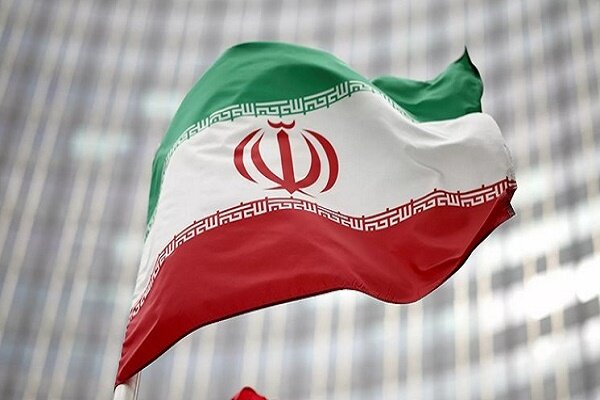
Foreign Minister Abbas Aragut stressed that Iran has accepted the demand to stop the war imposed by the Israeli regime.
“Now is the time for the Islamic world to think about a sustainable future rather than a short-term policy,” Araguchi wrote in an article in the Annahar newspaper.
The full article on An-Nahar’s Araqchi is as follows:
Decades ago, when the Palestinian issue was first framed as a “central cause” in the Islamic world and Arab realms, Iran could not imagine one day at the centre of this cause. Today, days after Zionist groups called for a temporary suspension of war, Iran’s Islamic Republic has not only reaffirmed its influence, but also demonstrated that major changes have occurred in the balance of power in the region.
Two important points need to be emphasized regarding this shift. First, the strong resistance mounted by the Islamic Republic of Iran to defend sovereignty and territorial integrity, along with a critical response to Israel’s attacks deep within the occupied Palestinian territory, led to the collapse of a long and long image of Zionist’s consistent support, relying on Zionist’s consistent support from a unified existence.
Second, Iran’s response was based on resolution 69/51 issued during the 51st session of the Islamic Cooperative Organization (OIC), which was unanimously adopted by all member states.
OIC Members have considered military operations that were directed to constitute an “act of attack” against the Islamic Republic of Iran in accordance with Article 2 (4) of the UN Charter. They also confirmed that actions committed by Zionist groups corresponded to “war crimes” under the rules of international humanitarian law.
Furthermore, another section of the resolution called on the International Atomic Energy Agency (IAEA) to condemn the US and Israeli groups’ attacks on Iran’s nuclear facilities. They also urged the agency to submit a report to the UN Security Council on this blatant and prominent violation of international standards.
What distinguishes the current state of Islamic Umma and our region from the past is that the scenes of national unity and unity seen within Iranian society following these attacks now extend to both the region and the broader Islamic arena. No equivalent moments of collective solidarity have been seen since 1969, when Zionist forces stormed the Al-Aqsa Mosque and set fire to parts of the “first of two Qivlas.”
The UN Security Council at the time adopted resolution 271, which strongly condemned the actions committed by Israeli groups, but had a deeper impact was the decision by the organisation of the Islamic Conference, which convened the first Islamic summit on the Palestine.
In my opinion, the Rabat Summit in September 1969 established the Palestinian cause as a starting point for joint action in Islamic action, but is being reactivated today through a recent meeting of ministers of Islamic countries. This will allow for a perception that will converge in a few decades, allowing Islamic countries to lay the foundations for new realistic dialogues that reflect the aspirations of their people. This is a dialogue without domination due to state, sect or language affiliation, political conflict, traditional presence, and geopolitical competition.
The principle of “protecting the collective rights of local people and nations” has been a common focus on national status over the past two weeks, raising new questions. Are you sure the Islamic world will play an active role in the moment when a new, multi-vesicular, more independent world order is manifested? Would Palestine, dignity and development not be a top priority in the collective concerns of the regional nation and Islamic society?
The last 15 days, or “Empowerment Day,” tested Iran’s deterrence strategy and regional diplomacy cohesion with one hand, while serving as a measure of the severity of the Islamic world facing shared threats. For the first time since organising the Islamic Cooperation Summit in Rabat, the Islamic world is shaping a new Islamic discourse characterized by realism and strength, which its member states are not left behind.
The fundamental pillars of deterrence are now embodied in cooperation among the countries in the region. Faced with shared threats, the understanding of regional stability, economic security, and consensus in combating all forms of terrorism constitutes the four cornerstones where diplomatic negotiations should take place.
Iran’s Islamic Republic in response to the call for a ceasefire will open new windows for comprehensive diplomacy and provide an opportunity for all parties interested in peace to reassess their approach. However, basic conditions must be taken into consideration when entering negotiation and diplomatic success.
The first steps in this path include addressing the issues of “ensure security” and “achieving justice.” Ensuring security can only be achieved by legally formalizing the ceasefire call and providing assurances to attackers against future use of violence. This is an element that does not exist in the case of Gaza and Lebanon. This absence led to continued violations of the agreed ceasefire by Zionist groups and neglecting the stability of the Mediterranean region.
At this point, the UN Security Council must fulfill its responsibilities mandated by the UN Charter and must act promptly and decisively to ensure the necessary assurances from the invaders. There is no doubt that influential Security Council members such as China, Russia and European countries, as well as countries such as Brazil and Japan can play a constructive role in achieving this goal, taking into account the protection of the international peace portion of their duties.
I must point out that my country, Iran, has long advocated a nuclear-free Middle East to ensure the security of the region, and has demonstrated its commitment to this approach. In addition to this vision, it is essential to focus on collective consensus between Islamic countries and work on developing economic development models through initiatives such as investment and regional trade agreements as a tool to alleviate tensions under current circumstances.
Regarding the pursuit of justice, the ideas presented in paragraph 2 of Resolution 69/51 issued by the organisation of Islamic cooperation are valid. The International Atomic Energy Agency’s explicit condemnation (such as Natantz, Fordau, Isfahan) of attacks carried out by Israeli groups and the US at peaceful nuclear facilities in Iran (such as Natantz, Fordau, Isfahan) could be translated into practical and enforceable measures. It should not be forgotten that this demand for condemnation arises in the context of attacks targeting facilities that fully respond to the International Atomic Energy Agency’s safety measures.
Ensuring security and achieving justice can be seen as the starting point for a long journey linking the “Cerez-fire moment” to the “horizon of sustainable peace.” There is no doubt that the West Asia region is at a critical historic crossroads today. It’s time for the Islamic world to reflect on a more stable and sustainable future, rather than relying on short-term policies.
Similarly, the second step in the road to peace is closely linked to the pivotal positions of Lebanon and Palestine as two countries in the Islamic world. This approach requires special attention from all involved parties that both Gaza and Lebanon regions have been most affected by attacks, murders and systematic occupations over the past year and a half.
Iran’s Islamic Republic, like all Islamic countries, sees the immediate halt of attacks and occupation on Gaza and Lebanon as a fundamental condition for managing conflicts, along with urgent humanitarian assistance and serious international involvement in restructuring these two regions.
In addition to the constructive practical steps mentioned, the issues of establishing and developing an executive framework or platform must be taken into consideration. The creation of legal and human rights organizations based on legal principles recognized within the Islamic world, such as the Cairo Declaration of 1990, could serve as a complementary requirement in this context.
This court, like the European Court of Human Rights, should receive extensive international support. Establishing such mechanisms will allow member states of Islamic cooperation organizations to play a more effective role in the path of solidarity and collective action.
The current presidency of Turkey, an Islamic cooperation organisation, will establish a preparatory committee to draft laws as soon as possible, presenting an opportunity to lend an organised and institutional character to cooperation between the Islamic world and international organisations.
From the Islamic Republic of Iran, collective peace and stability in West Asia, a region without nuclear weapons, is possible and within reach through joint cooperation focusing on shared fate.
MNA/