
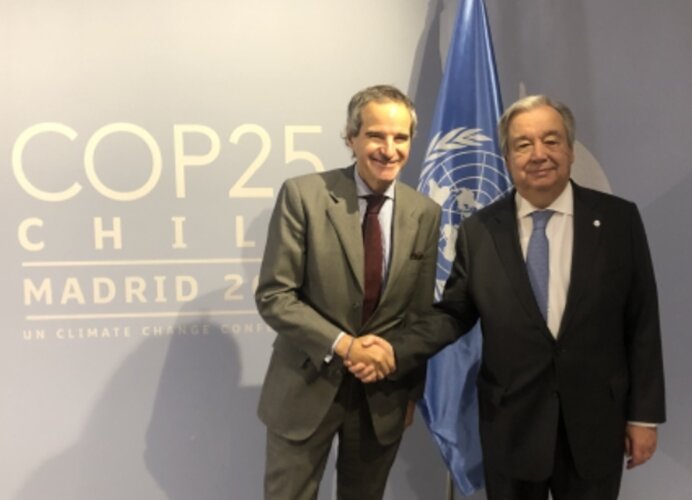
In recent months, Rafael Grossi, director of the International Atomic Energy Agency (IAEA), has been increasingly mentioned in diplomatic circles as a potential candidate to take over Antonio Guterres as Secretary-General of the United Nations.
Unlike many speculations based on media speculation and analysis, in Grossi, we face a series of direct, explicit, and repetitive statements that clearly show that we are assessing the conditions for entry into political race at the highest level of the international system.
The first public indication of this ambition came during an interview with the British newspaper The Telegraph. There, Grossi said that his name appeared in the position of Secretary General, which reflected him. At the time, he emphasized that the focus remained on his current mission at the IAEA, but this subtle hint was interpreted as a prelude to measure responses by international observers.
That wasn’t his only stance. He later said in an interview in Washington that he was taking it very, very seriously. Speaking to Tas a few weeks later, he not only implicitly criticised the UN’s current structural weaknesses, but also responded to the idea of launching the campaign by saying that his work was his best campaign. Such a statement reflects his confidence in his technological diplomatic performance as a springboard for a higher political position.
Furthermore, Grossi’s recent actions lack any indication of diplomatic ambition from the perspective of a neutral observer. Many believe that his biased approach to Iran is part of a broader effort to attract the attention of Western powers and position himself as a decisive figure consistent with the interests of liberal world order, beyond the expected to be from technical staff and leaning towards harsh political rhetoric.
Iran’s Peace Nuclear Programme: Grossi’s Diplomacy of Achilles
Over the past few years, Grossi has been repeatedly standing up to Iran’s nuclear program, which is clearly split from the IAEA’s technical neutrality mission and instead coincides with a political stance. While the institution’s unique role is to provide accurate and impartial technical reports, Grossi has effectively become a tool of political pressure on Iran by publishing numerous reports tailored to the governor’s meeting or sensitive political negotiations. For example, in 2023 and 2024, reports on the suspected discovery of Iran’s highly enriched uranium particles were published prior to scientific verification of its origin. These reports raised tensions ahead of the anti-Iranian resolution by the Governor General’s Committee. I consider what Iranian officials and regional analysts interpreted as “in line with Western demands.”
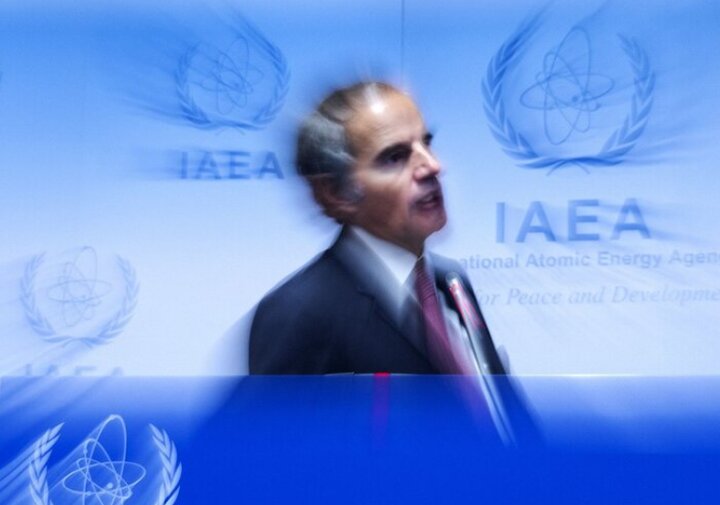
This same biased approach has since helped politically legalize hostile behavior. Within a week, the Israeli regime and the United States carried out aggressive attacks on certain Iran’s nuclear and military facilities after releasing one of Grossi’s recent controversial reports on reduced cooperation between Iran and the IAEA.
These events sparked a wave of media and international forum responses to Grossi and the IAEA. Many observers spoke about the “decay of the IAEA’s technical reliability.” Independent outlets such as the Middle Eastern Eye and Cradle have accused Grossi of turning the agency into “NATO’s intelligence division.” In non-aligned movements, particularly Latin America and Africa, there is growing sentiment that Grossi will abandon his role as a neutral international observer and become an actor in Western political scenarios against formal NPT signatories. Trust in government agencies has been affected in many countries, with Iran halting voluntary cooperation and access to restricted inspectors.
Furthermore, on Wednesday, July 2, pursuant to Article 123 of the Iranian Constitution, Iranian President Masuud Pezeshkian officially conveyed the “law that requires the government to be obligated to cease cooperation with the IAEA,” which was approved by the Congress on June 25, and later confirmed by the Guardian Council, and later approved by the secret national security organization for Ilinic Energy.
This double mistrust – many of Iran and non-Western countries have created a forked image of him at the global stage, accompanied by the continued support Grossi received from the US and European countries such as France and the UK.
In this sense, Grossi faces serious challenges in supporting countries such as China, Russia, Iran, India, South Africa, and other key members of the “group,” the largest intergovernmental organization of the United Nations developing countries. Neutrality is an important requirement for this position.
Ultimately, what appears to be the Iranian nuclear issue, Grossi’s launchpad, has transformed into a demonstration of loyalty to the West. But that loyalty came at a heavy price due to his global status. Grossi not only failed to maintain the traditional fair role of the IAEA, but also became a source of friction and crisis. Some analysts believe that these political entanglements and widespread distrust have seriously undermined his chances of winning the UN Secretary-General race.
Why Grossi is equivalent to the role of Guterres or the UN Secretary-General
At first glance, Grossi appears to be qualified for the role of the UN Secretary-General, particularly as Director of the IAEA, with a broad background in nuclear diplomacy. However, expectations for the UN height and the secretary-general of the international community exceed technical skills and expertise in certain areas such as nuclear energy.
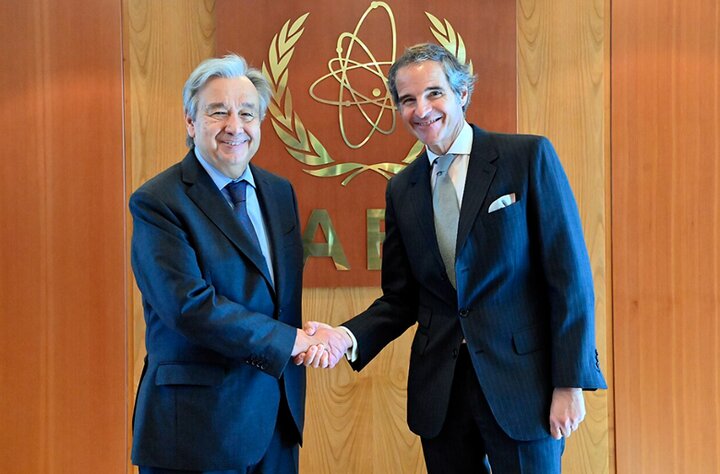
Comparison with the current UN Secretary-General Antonio Guterres (Portuguese Prime Minister Former and UN High Commissioner for Refugees) believes Grossi lacks a high level of executive experience and fairness in the broad range of ethical legitimacy and equity required for such a position.
Guterres has played a role in an era of humanitarian crises, war, migration, climate change and support for the multilateral world order. He not only has political experience at the national level, but also employs a comprehensive and mediated stance of human rights and social crises. This is the quality that defines the Secretary General as someone above a partisan, regional or departmental division.
In contrast, Grossi lacks enforcement experience at the government or humanitarian institutional level, and handling of cases in Iran, North Korea, and Ukraine, shows his vulnerability to power dramas and trends on the side of certain blocs.
Grossi faces another serious hurdle in terms of the voting structure that elected the Executive Director. It is his lack of acceptance in non-aligned and global tropical countries. Many of these countries respect Grossi as a representative of Western interests, particularly after false and sensational reports about his silence regarding the nuclear activities of the Iranian and Israeli regimes. This may be favorable to Washington and EU leaders, but it becomes liable in a process that requires implicit consensus of global authority and approval of the majority of the General Assembly.
Ultimately, Grossi is a diplomat who is well versed in international systems and technology negotiations, a loyal servant of the West, but is not in line with the height, size or mission of the UN Secretary-General. The United Nations needs numbers with moral capital, outstanding equity, sustainable development, world peace and deep understanding of human rights. One-sided, politicized reporting is not a manager that escalates military tensions and undermines confidence in technical institutions. Grossi’s ambitions, which are now visible after playing US and European games, seem like a distant dream rather than realistic possibilities.
MNA/