
We sincerely condolences to all Muslims around the world. An anniversary of the third unerivative Imam martyr in the family of the Holy Prophet Imam Hussein (PBUH).
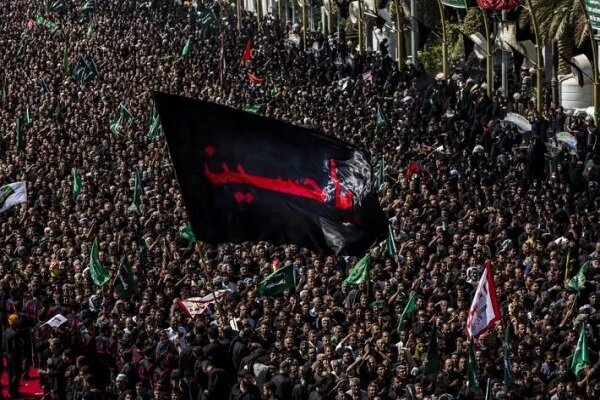
To remember Imam Hussein (PBUH) and his 72 true companions, millions of Iranians of all life will be taking part in a national mourning event wearing black dresses as part of Muharam’s first 10-day annual procession.
On this day, the eulologists and Islamic scholars discussed the Battle of Kalbara that took place in 680 AC, when Imam and his companions fought against the massive tyrant of the time, the massive Army Caliph Yazid I.
This year’s Muharam mourning ritual is due to the outbreak of the coronavirus global pandemic, unlike the previous year, also known as Covid-19. According to the National Coronavirus Combat and Prevention Headquarters, all religious groups and Husenyah across the country need to closely observe anti-coronavirus and socially driven protocols.
The event took place at 680 AC on the current Kalbara Plains of Iraq. Imagine a tent held near the Euphrates. Two troops have settled by this river of rooong, and it appears that there will be a future war. The Imam Hussein on one side (Pbuh), the third unerivative Imam of the Holy Prophet family, and the Prophet Mohammad and the grandson on the other side were in the Kfi army. Kuffis does not allow Imam Hussein’s allies to drink from the river water, and this is where the tragedy begins.
Many historians believed that the reason for this war was “Yazid I” and that Imam Hussein (PBUH) did not accept his rule over Muslims.
The Muharam incident was not limited to Tasua, but many battles have been fought between the two troops a few days ago. The 9th day of Muharam Tasua is an important day. Meanwhile, Imam Hussein’s brother Abbas was sent to Euphrates to bring water, so Shiite Muslims in Iran and Iraq, especially in Iran and Iraq, performed today’s ritual.
Tasu’a is the ninth day of Muharram and one of the important days for Shia Muslims related to the events of Karbala dating back to 61 Hejira. On the ninth day of Muharram, Shemur entered Karbala with a letter written by Ubaid Allah Ibn Ziyad. There, Umar ibn Saad was asked to either show contact with Imam Hussein (pbuh) or to delegate the military commander to Shemur.
Umar Sa’ad prevented the Army commander from delegating to SHEMR and prepared to wage war with Imam Hussein (PBUH).
In a hurry of the army on the day of Tasu’a, Imam Hussein (Pbuh) sent his brother Abbas Ibn Ali (pbuh) to urge him to give him a moratorium to pray and recite the Holy Quran.

Also, on this day, Shemur sent a guarantee of safe conduct, not being accepted by Hazrat Abbas (PBUH) and other descendants of Um ul Banin. Shia Muslims consider and attribute Tasua to Hazrat Abbas (pbuh), love it like the day of Ashura and lament the perfection of the Imam. Tasu’a and Ashura (days 9 and 10 of Muharram) are Iranian public holidays.
The ninth day of Muharram “Tasua” is of paramount importance from a Shia perspective. As mentioned earlier, the day is attributed to Abbas Ibn Ali (PBUH), and Ashura Dei and Shiite Muslims around the world are mourning the difficulties and difficulties maintained by fellow Imam Hussein (PBUH) Aar Al Beit.
The Iranian people and mostly Shia Muslim countries mark Tasua in mourning by setting up a religious committee with a chain of breasts.
According to historical resources, Shemur and 4,000 soldiers, in front of the ninth of Muharam (Tasya), entered the land and territory of Karbala, carrying letters from Ibn Ziyadh of Ubaidu Allah. On this issue, Ibn Ziyad had asked Ibn Saad to accept his loyalty to Imam Hussein (PBUH) or prepare for the battle.
In this letter, Obeid Allah Ibn Ziyad also threatened that when Umar Ibn Saad defied the orders, he should separate himself from the army and entrust the responsibility to Shemur.
According to available resources, Umar Ibn Sa’ad appointed Shemr as the army infantry commander after reading the letter.
Giving safe behavior to children at Umm Ul-Banin
When Shemur received the letter of Ibn Ziyadh written in Umar ibn Saad, he was confirmed by Ubaid Allah and Abdullah ibn Abi al-Mahal, the nephew of Umu ul Banin, and Ubaid Allah.
Abdullah ibn Abi al-Mahal sent a letter of safe conduct to Karbala through his servant. After entering Karbala, he read the text of Umm Ul-Banin’s safety conduction text for children, but the children of Umm Ul-Banin were against it.
Another narration repeats that Shemur brought a safe and guided letter for Hazrat Abbas (PBUH) and his brothers Abdullah, Jafar and Osman as a child of Ali Ibn Abi Tribu (PBUH).
Hazrat Abbas (Pbuh) and his brother were sitting in front of Hazrat Imam Hussein (Pbuh) and refrained from answering the questions raised by Shemr. Imam Hussein (Pbuh) told Hazrat Abbas, “He (Shemr) is a sinner and answers to his questions. He is one of your uncles.”
In this case, Jafar, the child of Ali ibn Ali Talib, and Hazrat Abbas (PBUH), Osman, went out and said, “What do you want?” Shem said, “My nie, you have been given a safe act and I have received a safe conductor from Obaid Allah Ibn Ziyadh for you.”
But Hazrat Abbas (Pbuh) and his brother said to him (Shemr), “May the Almighty God curse you and your safe deeds. We do not want to be given a safe document, but the sons and daughters of the Holy Prophet (Pbuh) are not given a safe condition.”
After the safety conduction letter was rejected, Omar ibn Saad’s army was ordered to prepare for war. They all then prepared to fight Hazrat Imam Hussein (Pbuh) and his real companions on the ninth evening of Muharam.
The reason Shemur called them nie is because he is the tribe of Um ul Banin, the mother of Hazrat Abbas. Because Umm Ul-Banin was the daughter of Hizam Ibn Khalid, a tribe of Bani Kalab, and Shemr was also the son of Dhi al-Jushan, of the same tribe.

Preparation for the battle
On the evening of Muharam’s 9th, the movement of the troops of Omar Saad increased in the desert of Karbala, and Omar ibn Saad prepared for a war with Imam Hussein (PBUH) and ordered the troops to prepare for the war.
There was a stir and noise from the military. Imam Hussein (pbuh) (as) sat in front of his tent and leaned against his sword. Hazrat Zainab (PBUH) heard the noise from the Kfa forces and approached his brother and said, “My brother, can you hear the sound of approaching?”
Imam Hussein (Pbuh) raised his head and said, “In the dream I said to me I saw the messenger of God, and you will come to us.” Imam Hussein (pbuh) told Hazrat Abbas (pbuh) “Abbas, my life is your sacrifice. “Sit on your horse and ask what they want and why they have moved forward.”
Hazrat Abbas (Pbuh), who has 20 jockeys, including Zuhair Ibn Qain and Habib Ibn Mazahir, came to the enemy forces and asked, “What happened, what do you want?” They said, “It is Amir’s order to tell you to pledge your loyalty or prepare for the battle.” Hazrat Abbas (Pbuh) said, “Please do not move from your place until I go to Imam Hussein (Pbuh) and pass your message on to him.” They accepted, so Abbas (pbuh) came to Imam Hussein (pbuh) alone to him to let him know about the matter.
Imam Hussein (Pbuh) told Hazrat Abbas, “I hope you can persuade them to postpone the war until tomorrow and give us rest so that we can pray tonight.” “God knows I love his prayers and his book readings.”
Hazrat Abolfazl Abbas (PBUH) returned to the enemy forces, informing them of the demands of Imam Hussein (PBUH) and asking for rest that night. Ibn Saad agreed to an overnight deadline for Imam Hussein (PBUH) and his companions. On this day, Imam Hussein (PBUH) and his family and companions were surrounded.
Abbas made great sacrifices at the Battle of Karbara and marched on the 10th day of Muharam, also known as Ashura, just before Imam Hussein.
He is buried at his own shrine in Karbara city, within walking distance of the spirits of Imam Hussein.
Thousands of Iranians will also travel to Iraq in Tasua and Asura to participate not only in Najaf, where Imam Ali is buried, but also in the holy shrines of Karbara and Karbara.
Iran & Tajie’s Tasua Ritual (Passion Play)
Today’s religious rituals in Iran are in the form of carnivals in mourning, and these long lines are called dastes (groups) as black-wearing people mourn together by walking long lines through alleys and towns. Each group belongs to a particular neighborhood, alley, or mosque. They hold an alam (sign) in front of each group, which is the symbol of the Army Vanguard of Imam Hussein. The Arum is a vast structure designed with colored feathers and lanterns moved by strong men.

After Alam, two flags carrying two flags, usually black or green, are moving. They then rehearse the poem of sadness, and rehearse the poem of sadness with Maddah (pro-speaking), who sing a specific rhythm about the Karbara incident and Imam Hussein. This is Tasu’a’s simplest ritual. Ta’zieh (Passion Play) is another form of these rituals presented as symbolic performances of Imam Hussein and his 72 fellow martian events.
Some of the famous rituals of these periods (Tasu’a and Ashura) donate Iranian food as votive offerings. These foods are cooked in large pots to serve food to mourners groups. Some families provide votive food among people, so their prayers are accepted by God.
This is a republished report