
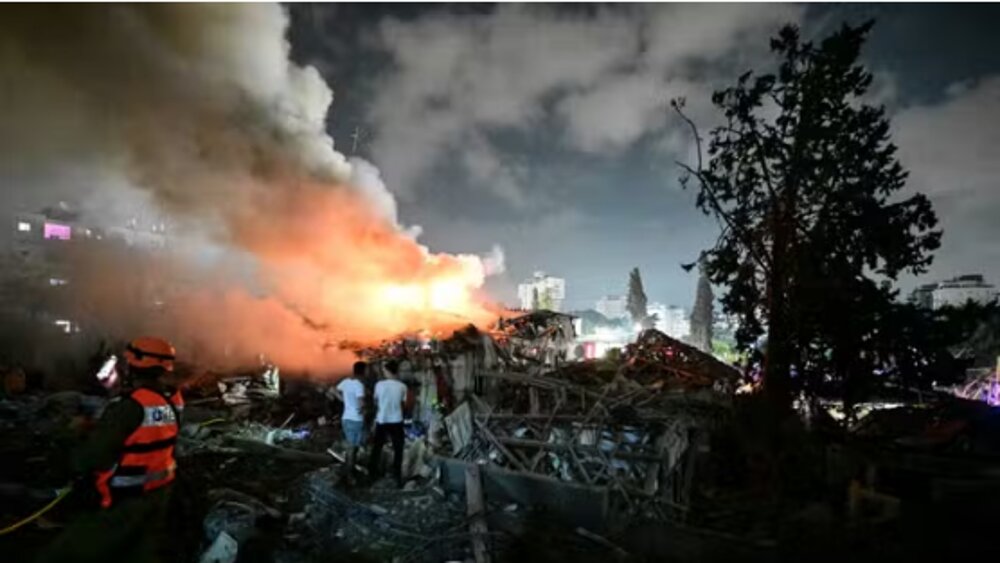
British newspaper The Telegraph said six Iranian missiles had reached targets in the northern, central and southern regions of Israel.
The findings were based on radar satellite data identifying blast damage consistent with missile strikes.
These strikes were previously private by the Israeli military due to strict censorship laws. Israeli authorities have not publicly admitted the strike, and the Israeli military declined to comment when contacted by the telegraph, the newspaper said.
Israel’s military censorship law restricts the release of sensitive security information, particularly during active conflicts, Telegraph reported.
During the war, Israeli officials and the United States claimed that around 84% of Iranian missiles were intercepted by Israeli and American air defense systems.
However, according to The Telegraph, data analysis shows that in the first eight days of the conflict, the rising number of Iranian missiles was a very hampered air defense.
Analysts suggest this could be due to factors such as limited supply of intercepter missiles, more sophisticated Iranian technology, or changes in attack strategies.
Iran has adopted coordinated drone and missile attacks to overwhelm Israel’s air defense. Even when intercepted, using suicide drones disrupt the system and allowed more missiles to penetrate.
A senior Iranian official, cited by The Telegraph, who spoke on condition of anonymity, said using suicide drones in conjunction with missiles was a deliberate strategy aimed at overwhelming Israel’s defenses.
“The main goal of firing drones is to keep the system busy. Many people don’t even get through – they get intercepted – but they still cause confusion,” the official said.
MNA