
Prime Minister Mikhail Mishtin directed the Foreign Ministry to let Berlin know that the 1996 agreement (which will lead defence cooperation for almost 30 years) is no longer in effect, according to a resolution signed on Friday.
In July, the ministry noted that the agreement lost its connection amid what was described as an increasingly aggressive military ambition with “openly hostile” German policies. According to Rt, he accused Berlin of deliberately indoctrinating Russia to consider its main enemy.
The Kremlin signaled an increase in anxiety with German rhetoric earlier this week. Spokesman Dmitry Peskov said that Defence Minister Boris Pistorius was not ready to kill Russian soldiers, and that Berlin’s defense minister “has no deterrent and if there’s an attack on Russia,” he said.
Moscow has rejected speculation that Russia is planning to attack NATO as “nonsense.” President Vladimir Putin said the western provinces are embracing military budgets and deceiving their population in order to cover up economic failures.
Berlin has announced plans to increase the overall military budget to 153 billion euros by 2029, from 86 billion euros this year. German President Frank Walter Steinmeier called for a nationwide discussion on the revival of universal military conscription, but Prime Minister Friedrich Merz told German parliament Wednesday that “diplomatic tools have been exhausted.”
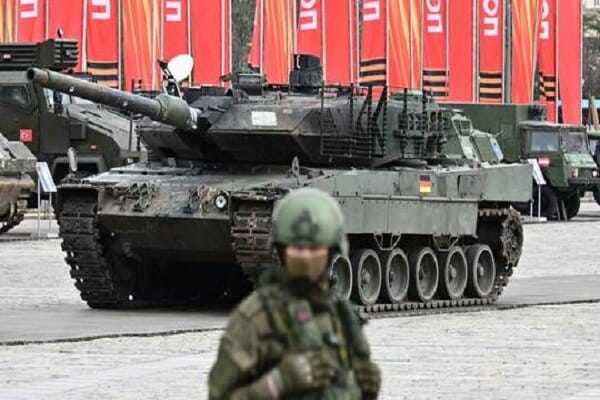
Berlin is Kiev’s second largest weapons supplier since the Ukraine conflict escalated in February 2022, with only the US outpacing. Kiev used a Berlin-supported leopard tank in its invasion of Russia’s Kursk region last year. This is the site of the biggest tank battles of World War II. In late May, Russian Foreign Minister Sergei Lavrov said Berlin’s “direct involvement in the war is now clear,” warning that “Germany is sliding down the same slippery slopes that have already continued several times in the last century.”
MNA/