
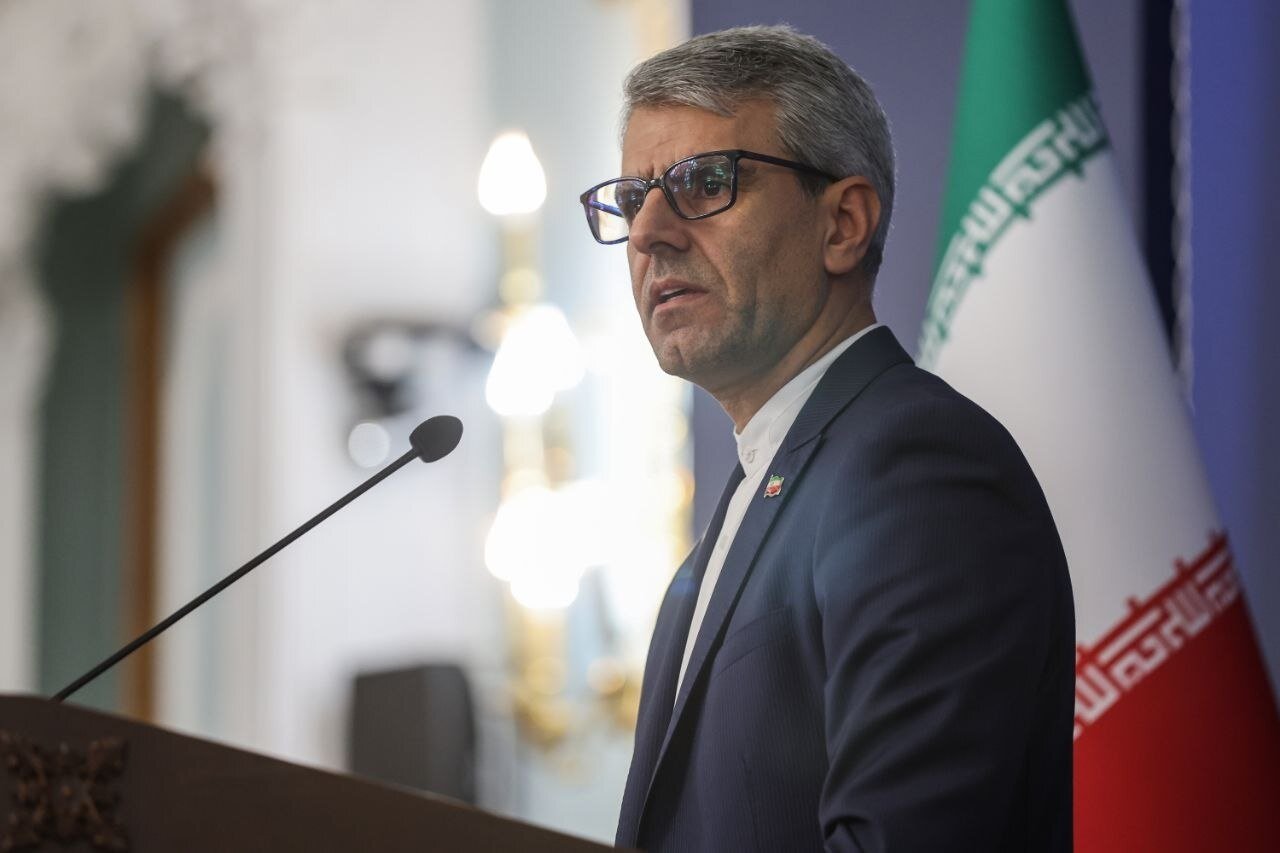
Foreign Ministry spokesman Esmaeil Baghaei told the IRNA that the meetings between Iran and the three European parties on Friday with the JCPOA are a valuable opportunity for these countries to revise their opinions and positions on Iran’s nuclear issue. He expressed his hopes to take the opportunity away from the opportunity to compensate for the previous non-constructive approach that undermined Europe’s credibility and role in negotiations and forced it to marginal players.
Baghaei expressed regret over the biased stance of three European countries regarding Israeli military attacks on the US and Iran. This effectively presented these countries as justifiers of lawlessness and attack on the world. He emphasized that Iran’s Islamic Republic has already protested such inappropriate positions and that during Friday’s meeting, Iran officially would dissent and ask for an explanation.
In response to another question about the repeated threats of European countries that would cause so-called “snapback” mechanisms, Baghey said there is no justification for maintaining Iran’s nuclear issue on the Security Council’s agenda beyond the scheduled time. Furthermore, due to their position and actions regarding their own JCPOA commitments, the three European countries have no legal status or rights to resort to such mechanisms.
“In other words, due to the continued violation of JCPOA’s obligations and a supportive stance against us and Israel’s military attacks on Iran’s peaceful nuclear facilities, three European countries constitute a violation of Resolution 2231 and constitute an attack at the heart of that. They have long had legal justification to use or use mechanical mechanisms within the JCPOA that they themselves violated.”
A spokesman for the Ministry of Foreign Affairs said, “Reviving the Security Council resolutions lifted in 2015 under JCPOA and Resolution 2231, there is no legal, ethical or logical justification. Iran remains a member of the JCPOA, and all remedies taken one year after the US withdrawal were completely enclosed in the JCPOA framework and the European framework of Europe. Iran is not in a legal or logical position to accuse Iran of violating the resolutions they themselves violated.”
Baghey also pointed to Israel’s pressure on three European countries in this regard, saying, “It is not surprising whether Israel, the only nuclear armed regime in the region and the biggest enemy of the JCPOA, is now hoping that Israel, the main driver of withdrawal from the trade, is now commanded by Europe and will sacrifice more complications. As mentioned earlier, they fundamentally lack legal status on the issue.
In response to a report suggesting that Europe would propose to extend resolution 2231, Baguey said: “When there is no legal or rationale for the idea of reconsidering sanctions, and when European parties are not legitimate for their actions, it is double-deserved, and it will be veggiesless and we will oppose it.”
Regarding Iran’s position in cooperation with the International Atomic Energy Agency (IAEA), Baguei said the suspension of cooperation with Iranian agencies was a direct result of illegal and aggressive actions by the United States and Israel. “These actions that violated the UN Charter and international law have seriously affected the non-proliferation regime and have seriously undermined the safety and security of Iran’s peaceful nuclear facilities. Therefore, the international community must condemn the attack on Iran’s nuclear facilities and hold attackers accountable.”
Bagaei emphasized that Iran continues to be the party of the NPT and comprehensive protection agreements, but under current conditions it follows illegal US and Israel attacks on Iran’s peaceful nuclear sites. Iran’s involvement with the IAEA is based on recent legislation.
Regarding reports of potential visits by senior IAEA officials to Iran and possible inspections of damaged nuclear sites, Baghhai said:
MNA/