
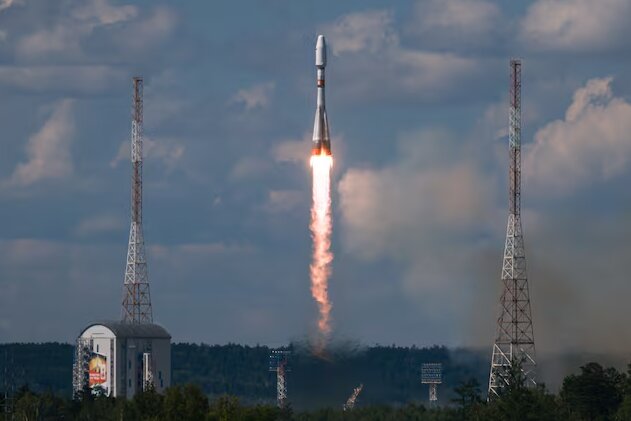
Data received from the launch base shows that the Nahid-2 satellite was successfully injected into orbit at an approximate altitude of 500 kilometers, the Iranian Space Agency said.
The NAHID-2 communications satellite was developed by researchers in Iran’s space industry at the Iranian Space Research Center and the Ministry of Information and Communication Technology, in collaboration with a network of domestic knowledge-based companies.
The construction and launch of this approximately 110 kilogram satellite is a major step towards developing satellite communications, low earth orbit (LEO) and Earth (GEO) communications satellite constellations in the Iranian space industry. The deployment of this satellite will mark the first time that KU-band communications technology developed in Iran will undergo operational testing in orbit.
Other space technologies such as 3-axis attitude control, bidirectional communication in other frequency bands, data management, and power distribution systems will also be tested and evaluated on the satellite.
The Nahid-2 satellite, built within Iran, was successfully launched into space on a Russian Soyuz rocket on Friday, July 25th.
Iranian research and telecommunications satellite Nahid-2 was launched into orbit from Russia’s Vostochny Cosmodrome.
One notable feature of the launch was the presence of an Iranian space agency emblem on the Soyuz launch vehicle that blocked Iran’s official participation in a large-scale international space mission.
The Soyuz rocket previously carried several Iranian satellites into space, including Khayyam, Pars-1 and Hodhod.
The Nahid-2 is designed to stay on track for five years.
One of the key technical challenges of long-term satellites is the progressive orbital damping due to Earth’s gravity, which could affect its location and performance. To address this, the Nahid-2 is equipped with an Indigenous propulsion system that can adjust the altitude up to 50 km.
Iranian space engineers have designed and manufactured propulsion systems completely domestically. The satellite uses homemade hot gas thrusters that incorporate sophisticated components such as composite fuel tanks, high-pressure valves and precision-controlled thrusters.
Due to the sensitivity and high-tech nature of these components, they are rarely available in international markets.
In addition to propulsion systems, NAHID-2 benefits from other important support technologies. These include polymer-based coatings and space-grade adhesives. Both are used for thermal insulation and conductivity management within the engine and throughout the exterior of the satellite. All these materials were developed nationally by research institutes in Iran.
The satellite is also equipped with lithium-ion batteries made in Iran. These batteries are designed to withstand tens of thousands of charge and discharge cycles over the satellite’s operational lifespan.
MNA/TSN Channel