
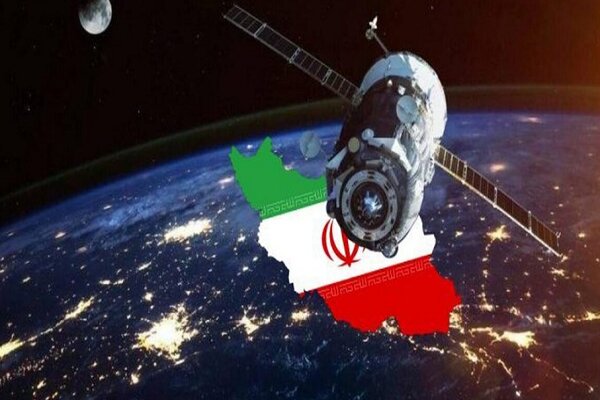
Hossein Salariyeh, head of the Iranian Space Agency (ISA), confirmed the reception of initial telemetry signals from the newly launched Nahid-2 satellite. This indicates that the satellite is currently intact and is operating as expected within the specified orbit.
Salarier spoke to Press TV on Sunday, two days after the launch of the satellite from Vostochny Cosmodrome, a space launch facility in eastern Russia, and said the current purpose is to systematically test each subsystem to ensure it is functioning properly.
He further noted that the satellite functions as a telecommunications satellite, utilizing KU-band communications, which is widely used to establish broadband communications around the world.
The ISA chief also said the agency had conducted thorough testing and evaluation of the satellite.
“Our main focus, as the first Iranian satellite in orbit, is on the evaluation of the design and construction of subsystems and equipment. Following standard procedures, the first step is to achieve orbit stabilization and control the satellite’s status-related components,” he said.
Salarier further emphasizes that the successful deployment of NAHID-2 is a major advance in the country’s space capabilities, pointing out that construction of the next generation of NAHID-3 satellites is already underway.
The Nahid-2 satellite, built in Iran’s country, was successfully launched into a 500-kilometer orbit on Friday, July 25th, on a Russian Soyuz rocket.
Designed to provide a wide range of communication and research capabilities, NAHID-2 supports secure data transmission, on-board storage, and direct connectivity between satellite systems and mission controls.
Observers have charged it as a leap in Iran’s space-based communications infrastructure.
In the first of the Islamic Republic’s satellite fleet, Nahid-2 also serves as a testbed for chemical and hot gas propulsion systems, a technology used for attitude control, or as an accurate management of satellite orientation in orbit.
In addition to a set of innovations, satellites implement GPS-free radio locations using two-wire element (TLE) data, a standardized orbital format that allows for autonomous location tracking in space.
MNA/Press TV