
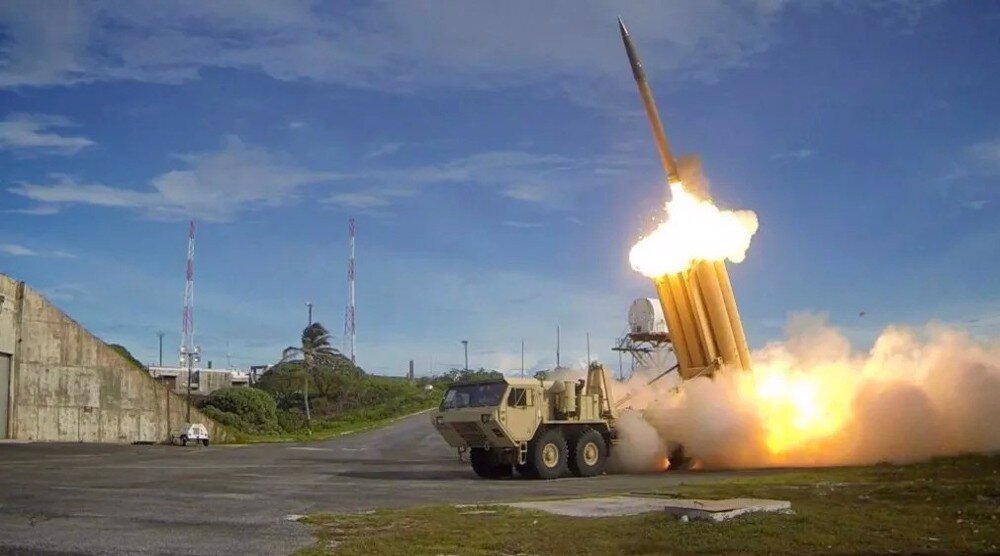
Citing two sources familiar with the issue, CNN reported on Sunday that during the 12-day assault, US forces fired 100-150 high-altitude area defense rockets costing around $12.7 million against Iranian retaliatory missiles.
The report states that in such a short period, it has “significantly surpassed production” with the US producing just 11 THAAD interceptors last year and is expected to produce 12 of this year.
Meanwhile, former US military officials and missile experts warned that the shortage raises concerns about the US’s own safety and the ability to replenish THAAD missile supply.
“Reports regarding THAAD spending are concerns, and this is not something the US can afford to keep going endlessly,” missile experts said. “It was a major commitment to our Israeli allies, but missile defense intercept capabilities are undoubtedly a concern and Thaad is a very rare resource.”
Mala Carlin, the former U.S. Secretary of Defense’s strategy, planning and capabilities aide, said the government is currently tackling a shortage of air defense systems.
“Air defense is currently associated with all major theatres. And there’s not enough systems. There’s not enough interceptors. There’s not enough production and there’s not enough people working on it,” she said.
“You have the challenge of something being incredibly relevant and there is a lack of those,” she added.
Ali Ciclel, associate director of foreign policy at the think tank at the US National Security Institute, estimated that it would take three to eight years to replenish the supply of THAAD missiles at current production rates.
“After burning the majority of available interceptors, both the US and Israel face an urgent need to replenish their stockpiles and significantly increase production rates,” he said.
On Thursday, the Wall Street Journal warned of the “amazing gap” in the US missile Arsenal, saying stockpiles had dropped significantly during Washington’s operation aimed at protecting the occupation regime from Iran’s retaliation.
On June 13, Israel launched a blatant, unprovoked attack on Iran, triggering a 12-day war that killed at least 1,064 people across the country, including military commanders, nuclear scientists and ordinary civilians.
The United States also took part in the war by bombing three nuclear sites in Iran with a serious violation of international law.
In response, Iranian forces targeted strategic sites across the occupying regions and Aldeid Air Force Base in Qatar, the largest US military base in West Asia.
On June 24, Iran was able to stop the illegal attacks through successful retaliation operations against both the Israeli regime and the United States.
MNA/