
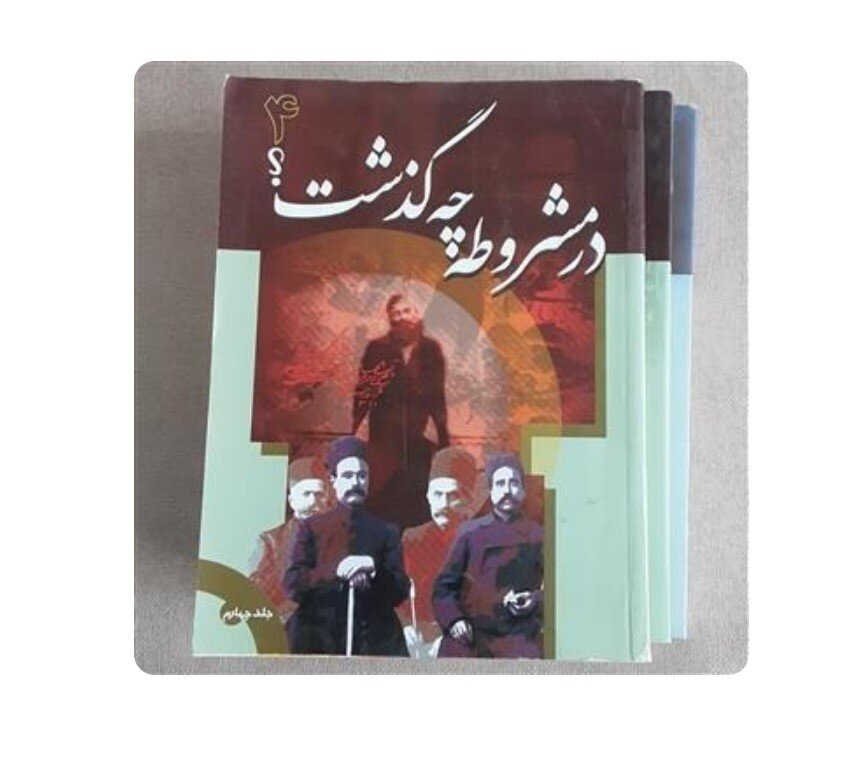
The Iranian Constitutional Revolution (1905–1911) continues to be one of the most transformative periods in the country’s modern history, showing the struggle for democracy, the rule of law and social reform. Both nationalists and religious figures played a role in the development that led to the constitutional revolution.
Through the relentless efforts of the fighters of freedom, Shah Qajar of Muzafa al-Din was forced to issue constitutional orders and allow the creation of the Congress (Majlis), which was elected on August 5, 1906.
What happened during the Constitutional Revolution, the monumental five-volume work, stands as a definitive academic investigation of this era.
Spanning over more than 3,000 meticulously researched pages, the book offers a comprehensive, analytical, and well-documented account of the causes of the revolution, key players, and lasting impact.
Unlike simplified lettering, the book presents a multi-layered analysis and analyses the sociopolitical and cultural upheavals that defined the revolution.
The book covers the qualifying and background of the constitutional revolution, including the Iran-Russian War, the colonial treaties and the tobacco movement.
It also explores the events that took place, from the formation of the First Parliament, the review of the constitution, and the bombing of the Parliament by Mohammad Ali Shah.
The roles of various social groups, from clergy (urama) to intellectuals to merchants and ordinary citizens, meticulously examine how each faction influenced the trajectory of the revolution.
The tensions between traditionalists, modernist reformers, and foreign interventions (particularly by the UK and Russia) are under deep scrutiny.
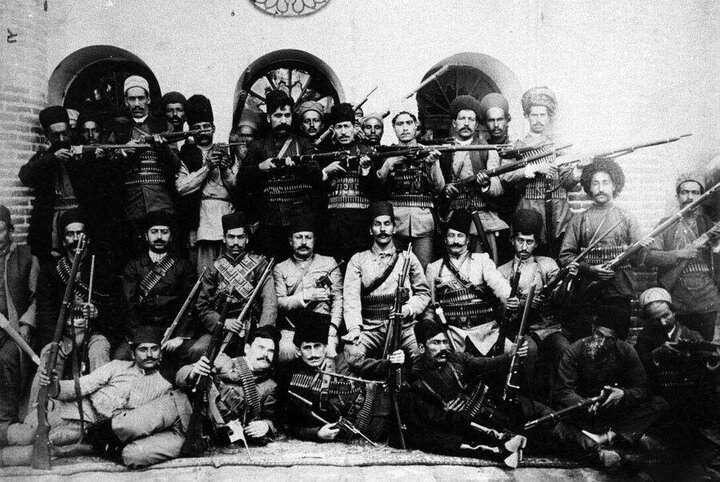
The revolution has sparked debates not only politically, but also about modernity, governance and national identity that the book thoroughly contextualizes.
Few works match this range of research, making them an essential resource for historians and scholars.
The book avoids romanticizing or denigrating a single group, instead presenting subtle portrayals of events, and the use of the original document gives the story credibility and depth.
Some sections assume that you are familiar with Iranian history, which could challenge the average reader.
What happened during the Constitutional Revolution? It is a historic scholarship masterpiece and offers unparalleled insight into the revolution that shaped Iran’s fate. Its pure scale may threaten some, but those willing to engage in it will find thorough, enlightened and deeply studied accounts.
This book is recommended to anyone who is historian, researcher, political scientist, and anyone with a deep interest in modern Iranian history.
We prove a valuable guide to “What happened during the Constitutional Revolution?” for those seeking to understand the complex web of events and ideology of the Constitutional Revolution.
The subsequent volume delves deeper into key turning points of revolution, such as the rise of the constitutionalist movement, the establishment of the Majur (Parliament), and the subsequent era of political turmoil and foreign interference.
The complexity of drafting and implementing a new constitution, which balances Islamic principles with modern legal frameworks, is investigated with academic accuracy.
Furthermore, “What happened during the Constitutional Revolution?” inevitably addresses the dark side of the times, including cases of violence, betrayal and foreign manipulation.
The later volume also examines the intellectual and cultural aspects of the revolution and presents a vibrant discussion that intensifies among intellectuals, writers and artists.
The emergence of new literary forms, newspapers and political magazines is explored to show how the revolution has nurtured a thriving public sphere.
The legacy of the constitutional revolution, including its successes and failures, is carefully analyzed.
The book highlights the enduring impact of revolution on Iran’s political landscape, its contribution to the development of national identity, and its continued connection with contemporary debates on democracy and governance.
While there is the comprehensive nature of “what happened during the Constitutional Revolution,” the important time commitment, depth of analysis, and the rich information it provides can be an essential resource for anyone with a full understanding of this pivotal time in Iran’s history.
This is evidence of the power of strict scholarships and its important contribution to Iranian history.
Reported by Tohid Mahmoudpour