

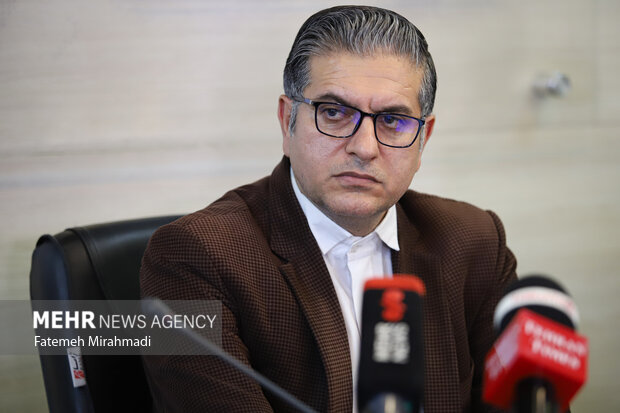
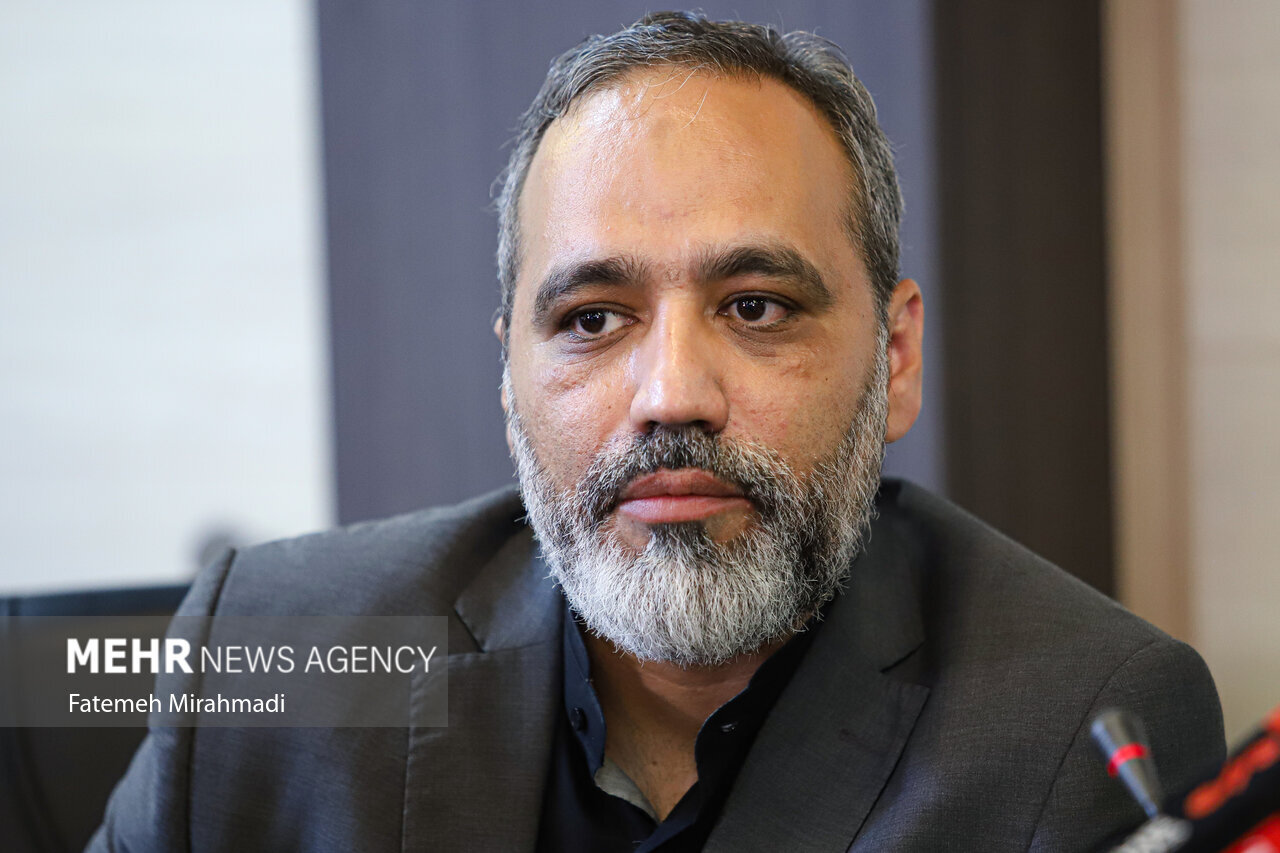
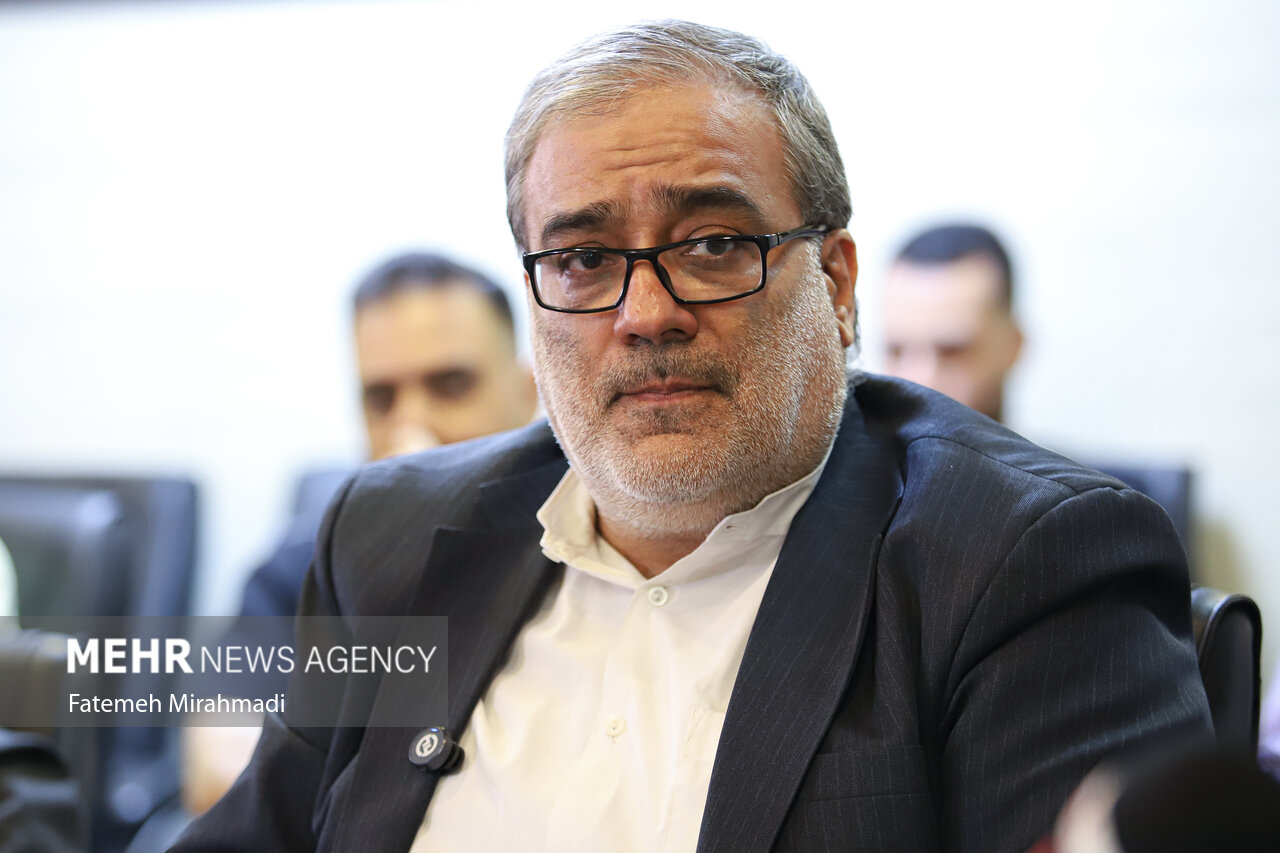
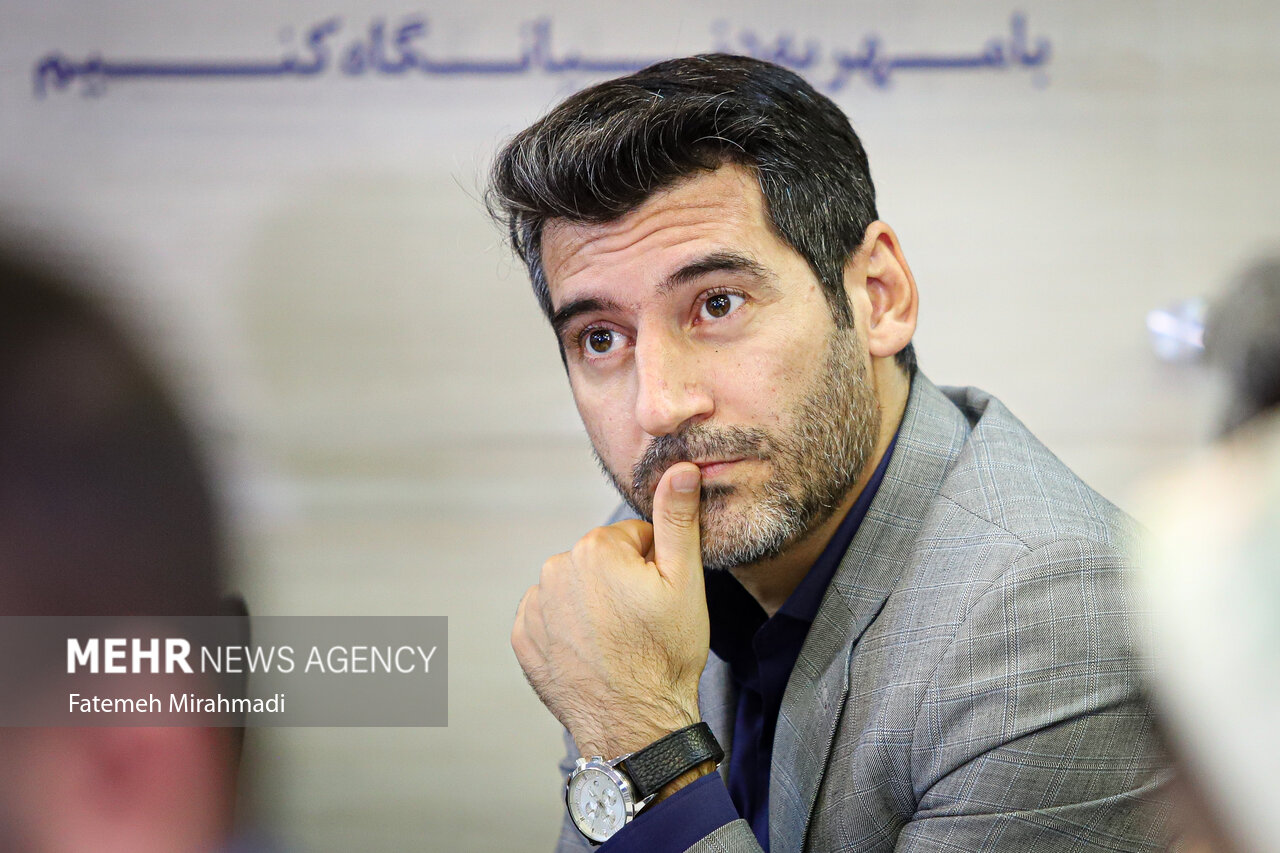
The international conference, “Zangezur Corridor: Geopolitical Threats to Iran and the Perspectives of Various Actors” was held on Tuesday, August 5th in the Conference Hall of Mehr News Agency, with attendance by Shoaib Bahman, director of the Institute for Contemporary World Studies. Dariush Safarnejad, Senior Caucasus Expert. Ehsan Mohahedian, professor at the university and senior Caucasian affairs expert. Mohammad Mehdi Rahmati, CEO of Mehr Media Group. Mohammad Reza Moradi, International and Foreign News Expert and Director of International and Foreign News at Mehr News Agency.
At the start of the meeting, Mohammad Reza Moradi gave a brief overview of the developments associated with Zangezur.
“Since the beginning of the conflict between Azerbaijan and Armenia, connections with the ‘Nakchiban’ have become one of the major challenges between the two countries. It also said, “Nagorno-Karabakh, the territory of Armenians inhabited by Armenians in the territory of Azerbaijan, was maintained through the corridors of Latin. Armenia pledged to ensure that Azerbaijan gained control after some wars and that it avoided the blockade of Armenia with the people of this region and engaged in the region, the most important clause of the 2020 trilateral agreement.
Under Article 9 of the Trilateral Agreement, Azerbaijan claimed that Armenia had committed to creating a corridor from Azerbaijan to Naktiban. Since 2020, Azerbaijan has been bolstering its efforts, and this effort has peaked in the past month. “Zangezur Corridor” is a safe threat to other actors in the Islamic Republic of Iran, Armenia, and the region associated with the South Caucasus. The most important issue for Iran is that land ties with Armenia will be cut off and even land access to European countries will be affected. ”
Media: Drivers to Understand and Shape the Shared Future Between Neighbors
In his opening remarks, Mohammad Mehdi Rahmati said, “We need media dialogue on important local issues. If we can create appropriate media discussions on issues shared in this region, it will certainly have national and international influences.
Most of us have knowledge, expertise and experience in our field and are valuable to share these, especially on issues like the Zangezur corridor. One aspect that is often overlooked is the lack of opportunity to share knowledge, discuss it, and respond to questions to reach mutually agreed solutions.
The future of local neighbours cannot shape one another. Media can understand and shape a common future among neighbors. Media dialogue can influence the political future and find a way to policy decisions. As a country with a long historical presence in the region and the Zanjur corridor is important, Iran can share ideas and take responsibility for reaching appropriate conclusions. ”
“Zangezur Corridor”: The 34-year-old US plan and the formation of a new administration in the South Caucasus
Dariush Safarnejad said the Zangezur corridor was a 34-year-old American plan. The US has been cultivating this plan known as the “Goble Plan” for 34 years. “Zangezur” is simply a modern name, an updated version of its old plans. Iran and Russia’s Islamic Republic have resisted it from the start, and thus has not been implemented so far.
He added that NATO is the main supporter of the Zangezur corridor, followed by groups from the US, Europe, the Zionist regime, Turkey and Takfiri. Turkey plays a prominent role as NATO’s Southeastern Command is based there. This explains the strong presence of Türkiye in the Caucasus, Central Asia, Afghanistan and the Balkans. This acts as a proxy for NATO.
The most important aspect of Zangezur is linked to two meetings held over the past three months. The first and second in Türkiye are peace mediators of the 2020 Karabakh agreement, both without Russia. The contracts reached at these meetings have an 8-9 month timeline. The consortium will be formed with companies in the US, European, Israeli, Turkish, Azerbaijani and Armenian. Armenian Prime Minister Nikol Pashinyan, he agreed to grant de facto sovereignty over the Zangetur corridor, which is 40km long and 5-6km wide, for 100 years.
If they were simply behind the road, it would only require 50-70 meters, or 100 meters on the train. The allocation of 6 km wide land and air corridors indicates that this is more than an economic project, and a strategic plan. During the 12-day war committed by the Zionist regime against Iran, the airspace in this corridor was used by Israeli F-35 and F-16 aircraft in bombing areas in Tehran, Karaj and north.
He said that under the Abu Dhabi agreement, the consortium will be formed for two months to establish the boundaries of the route. What the consortium will confirm is that it is still unknown if it is less than 42 km. Two months later, Azerbaijan and Armenia send letters to the UN Security Council and the EU to declare three years of peace mediation in Karabakh for the OSCE Minsk Group. The Armenian constitution is amended to remove clauses related to Karabakh, and its political system will move from parliament to the president.
“A comprehensive peace agreement between Azerbaijan and Armenia will be signed in Istanbul, Turkey, in front of Trump, Macron, Erdogan, Pashinyan and Aliyev. The following month, a constitutional referendum and election will be held in Armenia. The security of the deleted corridors is of course left to NATO.
Safarnejad added that at these two meetings, Pashinyan told Aliyev not to use the term “Zangezur” but to say “Armenia’s transport route to Europe” because Iranians are sensitive to the name Zangezur. The Armenians call it the Synik passage.
“This corridor includes NATO, the US, Europe, the Zionist regime, the Takfili movement, and Pantorkism. The economy is just an excuse. Zanjur has a deeper layer than ever before. No. We will use Pawn, Pashinyan and Aliyev to implement the plan.”
Iran’s geography is suffocated by the corridors of Zanjur
Shoaib Bahman said, “Major projects have been formed around Iran, and Zangezur Corridor is part of them. For many years there has been talk of Lajevard Corridor in eastern Iran. To rule out that, he is willing to bypass Iran through a combination of railway, sea and road transport.”
Another project, the “IMEC” corridor, south of Iran, starts in India and goes to the southern Persian Gulf, extending to the occupied territories, the Mediterranean and Europe. The corridor of the “development road” west of Iran also heads towards Turkey via the Persian Gulf and Iraq, running parallel to the north-south corridors Iran and Russia have been pursuing for many years.
The northwest “Zangezur serves the same purpose of removing Iran from the transport route. Remove Iran from the transport route. This is not just about transportation. It is not just about transportation. It is not about many geopolitical and security issues. It is not about many geopolitical and security issues. It is not about many geopolitical and security issues. The four corridors mentioned in the north, west, east and south suffocating Iran and exist invisible geographically by all international trade and all international trade and abdominal transport routes. Arteries.”
“If a country is excluded from the global economy, it becomes very vulnerable – easily approved or targeted. Zangezur is part of a larger puzzle around Iran, and without looking at this big picture, “David Corridor” can’t fully understand it. Euphrates, the area of Syrian Kurdish, Iraqi Kurdistan, reaches the Iranian border.
“During the regime’s airstrike in Iran, they used this assumed route: entered through the David Corridor, targeting western Iran and central Iran, reaching the Iranian miscellaneous border, and using airspace in Zanjur’s corridors to fly through the Caspia Sea and attack Tehran.
Is Zangezur an economic corridor?
“Today, the Caucasus has become so important that the US has shifted its focus from Arab countries to Azerbaijan. Baku has become a gravity center that has been drained into Western Asia, with peace agreements imposed on other regions, including Central Asia.
Azerbaijan tries to present Zanjur as an economic corridor, but in reality it targets the security and territorial integrity of the Islamic Republic of Iran. If you want the route, you have travelled through Georgia for years – why insist on passing right next to the Iranian border in a completely sturdy area? From Baku’s point of view, I have not seen regional cooperation. Israeli mercenary cooperation is seen. ”
MNA/6552862