
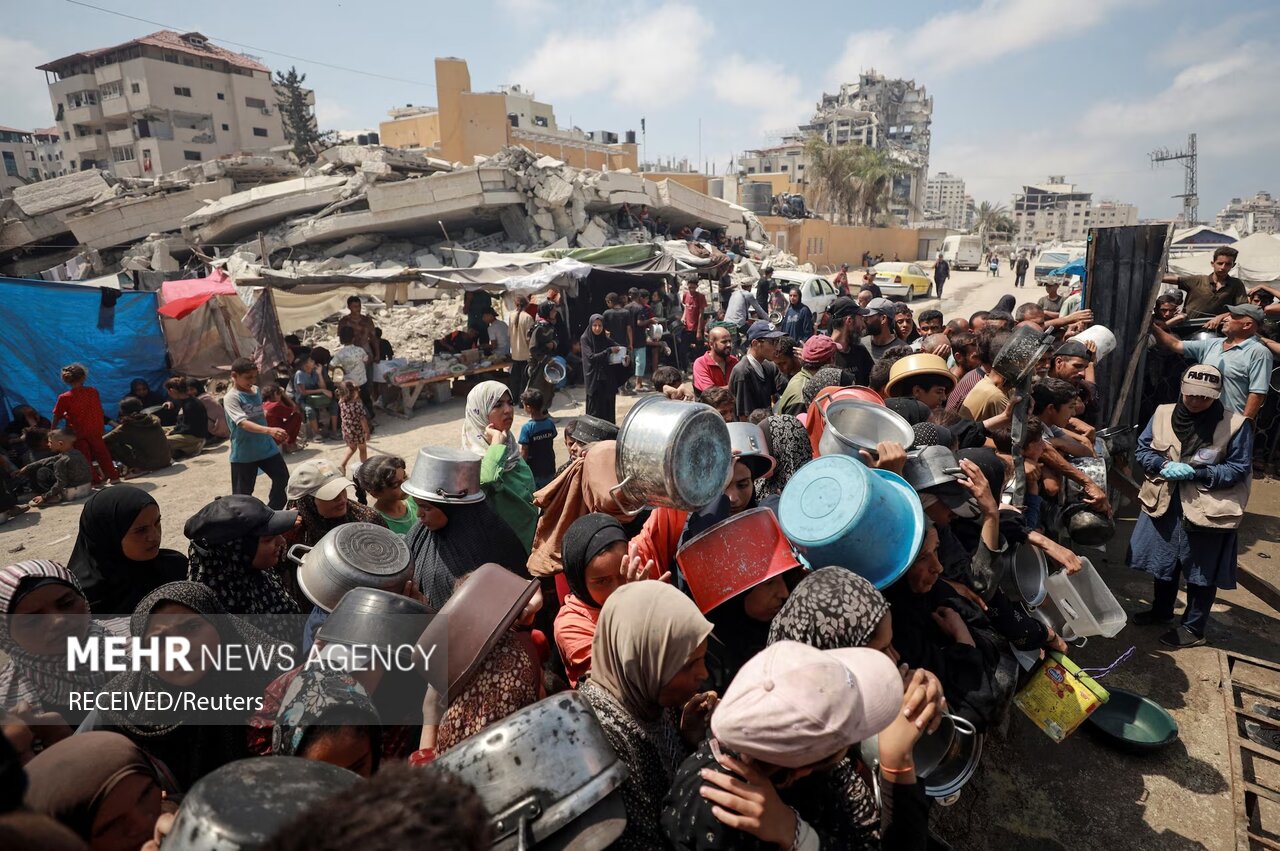
Today, Gaza’s Ministry of Health confirmed 212 deaths from starvation, including 98 children. This is not the job of a failed rain bur. It is the result of the calculated policy.
Since the start of the recent war, Israeli leaders have made their intentions clear. On October 9, 2023, Defense Minister Joab Gallant announced the “full siege” of Gaza. The then Minister of Energy Israel Katz described humanitarian supplies as “one of the main pressure levers.” “There is no grain, no medicine, no mercy,” said itamar ben gwil, Minister of National Security.
What Hungry is currently rolling out is the predictable outcome of sealing 2.3 million people out of food, medicine and fuel. The integrated food security stage classification reports 470,000 Palestinians in the “catastrophic” condition (IPC phase 5). This is the final stage before mass death. In Gaza City, UNICEF says acute malnutrition among children under the age of five has quadrupled to 16.5% in two months. In July alone, 74 people died of malnutrition, including 24 children, less than five.
This is not the first time Israel has used hunger as leverage. In the late 2000s, authorities allowed the Palestanian to calculate the daily calorie limits. That policy is now replaced by a complete denial of survival essentials.
Hunger here serves a double purpose: punishment and evacuation. In October 2023, the leaked Israeli Intelligence Report document outlined a “priority scenario” that would move Gaza’s population to Sinai, Egypt. This method was a dull way of neutralizing Gaza. Hunger is at the heart of that plan. So, if the bomb doesn’t drive you out, starvation will be.
Within Gaza’s collapsed hospital, this strategy is written on the body of a child. Aid workers explain that infants are too weak to cry, and the system cannot even absorb hydration salt. The mother hugged the baby in the cradle, malnourished herself, and they couldn’t feed them. A father in northern Gaza said his six-week-old son died because there was no formula, and his wife could no longer produce milk: “He was too small for a shroud so he buried him in a box.” Multiply that by 98, so far there is the number of child deaths from Gaza’s hunger.
International humanitarian law is unquestionable. Article 54 of Additional Protocol I to the Geneva Convention prohibits hungry civilians as a way of war. Article 8 of the International Criminal Court of Rome defines this as a war crime. As a right of occupation, Israel will be bound under the Fourth Geneva Convention, ensuring food and medical supplies reach Gaza.
Human Rights Watch says Israel’s statements and actions “reflect intentions to starve civilians.” The UN Special Rapporteur warns that the siege could represent genocide. In May 2024, the ICC issued a warrant for Prime Minister Benjamin Netanyahu and Defense Minister Gallant. History shows that such courts rarely act against Western-backed regimes without immeasurable political pressure. World Health Organization Director Tedros Adhanom Ghebreyesus calls the situation “a massive artificial hunger” and emphasizes it as a deliberate act rather than a natural disaster.
Images of bread with children in the skeleton under the sniper fire stabbed the public conscience. From Sydney to San Francisco, protesters carry placards that read “Starving is a war crime” and quote UN officials calling for an immediate end to the siege. However, in many capitals, concern remains the most common currency. More than 20 countries, including European powers and local governments, have denounced the lockdown, but are limited to words rather than actions.
In contrast, some states combine rhetoric with actual measurements. Iran openly linked military conflict with Israel with Gaza’s defense and framed it as part of a broader axis of resistance strategy to break the siege. From support for the alliance movements in Lebanon, Yemen, Iraq and Syria, Tehran has ensured that pressure on Israel was strategic rather than just diplomatic.
On July 22, 2025, Iran’s Foreign Ministry condemned “a horrible crime committed by the Zionist regime” and warned that more than a million Gazans were facing hunger. Pakistan, the UN Security Council, called the siege “unprecedented inhumane” and called for an immediate relief corridor. Apart from Iran and several other dedicated states, there is yet to be a unified and continuous regional effort, whether economic, diplomatic or military, to end the lockdown.
The hunger is not over. It’s an ongoing crime. Every day, without any decisive intervention, the following statistics become more grotesque. The Quranic tradition believes that the cry of the oppressed is heard by God, even if it is ignored by the world. The screams of Gaza are whispers spoken by those who are too weak to lift their heads. If the world does not act when 212 is dead and nearly half a million stands on the edge of survival, it confiscates claims for moral leadership.
History records whether we saw this hunger about what it was: crime against humanity, unfolding before our eyes. You will remember who acted and who made the slowest weapon into the job.
***Islamabad-based Muhammad Aukmal Khan has submitted this contribution to the Mehr English website.
MNA