
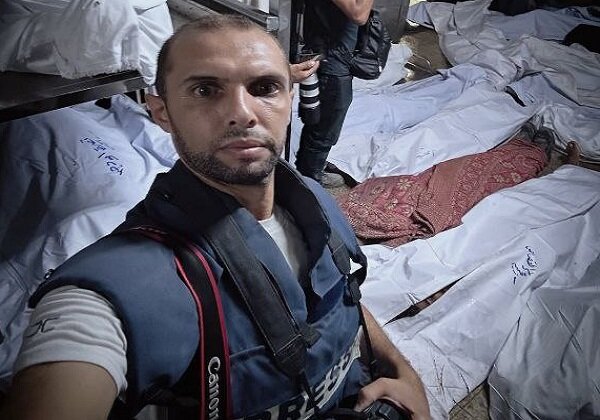
As the situation in Gaza is escalating rapidly, local journalists are facing unprecedented challenges in reporting from the ground. Israel has also killed almost 270 journalists and media workers since launching the war with Gaza.
On Sunday, Israeli forces killed five Al Jazeera staff members, including Al Jazeera correspondents Anas Al Sharif and Mohammed Kareka, as well as photographers Ibrahim Zahher and Mohammed Nofal on a strike that was targeted at a media tent outside Al Shaifa Hospital in Gaza city. This deadly attack highlights the rising threat to journalists trying to cover the unfolding crisis.
Given these critical circumstances, we conducted interviews with local journalists reporting from Gaza to help us understand the ground situation more clearly.
Mohamed Assad, a photojournalist and filmmaker who documented the war in Gaza, told Mehr’s news agency that since the start of the war in Gaza two years ago, news staff faced obstacles and challenges in media coverage that world war photographers have never experienced. “We lack the fuel and safety equipment needed for transportation and transportation. This is the expiration date of the protective vest used.”
“We are directly targeted, and journalist names are even placed on the Army list for intentionally assassination. Some are targeted in the ‘red zone’, while others were killed while walking on the streets due to heavy gunfire,” he emphasized.
Asad added that compensation is not available as their homes and offices have been destroyed, equipment and cameras used have been damaged, and intersections remain closed.
“In addition to blacking out the internet, even the phones that we use occasionally to report events run out of battery life and require constant charging. We try to work as much as we can, but there are events that we can’t document.
He concluded that real action must be taken to end the war in Gaza and to support journalists. “International journalists have to come to Gaza. Everyone sees us from afar and sends solidarity from afar. This is not enough and does not save the situation here. The profession is threatening to have full control over the Gaza Strip.
MNA/