
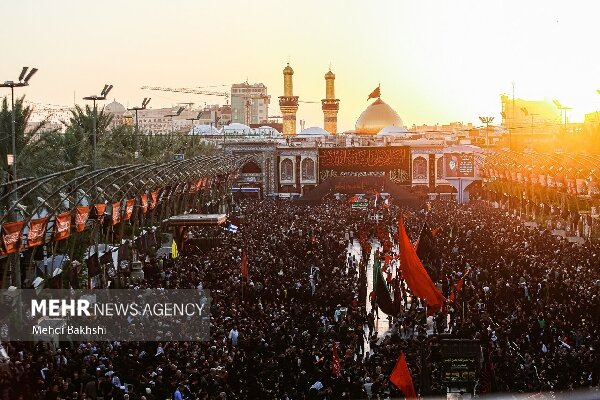
During the Islamic month of Safa, pilgrims cross the desert from Najaf to Karbara.
Imam Hossein, the grandson of the Prophet Muhammad (Pbuh), martyred in 680 AD, for his loyalty to tyranny and refused to become a symbol of courage, justice and sacrifice.
Along the route, Mawkibs (Volunteer Services Station) offers free assistance and hospitality, introducing generosity and selflessness.
Albain, meaning 40, means the end of mourning, and the pilgrimage represents the pledge that Imam Hossein will protect the values.
Arbaeen is distinguished by its inclusiveness, where people of all faiths walk together to promote dialogue and unity.

Upon reaching Kalbara, pilgrims gather at shrines in Imam Hossain and Hazrat Abbas (AS) to deepen their spiritual connections through prayer and acts of charity.
Aaaain’s pilgrimage exemplifies selflessness, unity and resistance to oppression. The event transcends cultural boundaries and promotes understanding and compassion among diverse communities.
Despite its massive scale, Albainn remains peaceful, and is a testament to the pilgrim’s commitment to non-violence and spiritual reflection.
A journey to Kalbara is more than just a physical body. It is a transformative experience that purifies the soul and strengthens faith.
Many pilgrims walk barefoot and endure it as a symbol of Imam Hossein’s dedication and empathy to the suffering.

Aaaain’s pilgrimage is a reminder of the enduring power, the power of love and the pursuit of justice in a world characterized by faith, love, and often conflict and division.
The value of Arbaeen inspires individuals to stand up to the right in the face of adversity and strive towards a more just and caring world for all.
As the pilgrims converge on Kalbara, they create a sea of humanity united by a shared love for Imam Hossein and a commitment to a message of peace and justice.
In Safa’s first 10 days, one million Iranian pilgrims crossed to Iraq for the pilgrimage to Albain, according to Brigadier General Ahmad Ali Gudalji, commander of Iranian border police.
As of Tuesday, around 250,000 people had returned, Goudarzi said, 40,000 people from other countries have returned, with 63,000 pilgrims coming across Iran.
The Chatzebe border intersection is used by foreign pilgrims, and the Sharanche border intersection in the province of Huzestan in southwestern Iran is reserved for legally resident Iranian citizens.
This annual observance, held on the 20th of SAFAR on the Islamic Month Calendar, is one of the largest religious gatherings in the world.
Shia Muslims from Iraq and Iran in particular have been on a pilgrimage to Kalbara, where they trek hundreds of kilometers to honor the (AS) shrine of Imam Hussein.
This tradition has continued for centuries and represents an update of Imam Hussein’s commitment to principles and his loyalty to his path.
Reported by Tohid Mahmoudpour