
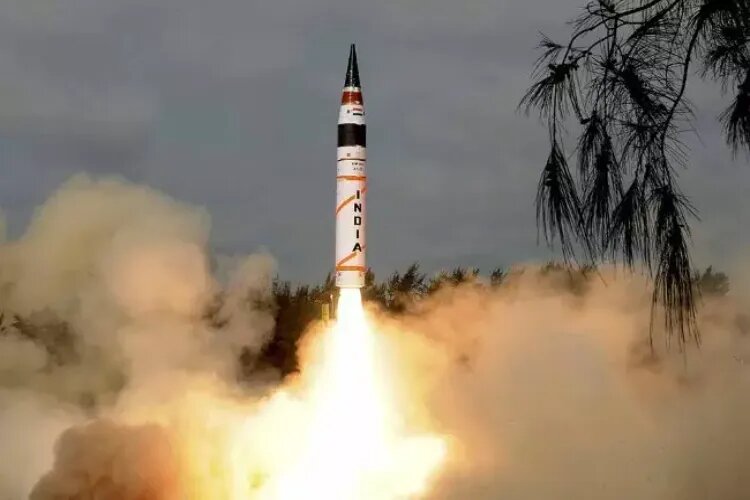
The AGNI-5 missile was successfully launched in East Odisha, India, and authorities said it had “verified all operational and technical parameters.”
India and China, two of the world’s most populous countries, are fierce rivals competing for influence across South Asia in 2020 after a fatal border conflict.
India is also part of the Quad Security Alliance with the US, Australia and Japan, which are considered China’s counter.
India’s bitter rival Pakistan also possesses nuclear weapons, with both countries approaching war after extremists killed 26 people in India-controlled Kashmir in an attack in New Delhi, which was accused of Islamabad in May. However, Pakistan denied involvement.
Caught in the global trade and geopolitical turbulence caused by US President Donald Trump’s tariff war, Delhi and Beijing moved to repair their bond.
Last October, Indian Prime Minister Narendra Modi met with Chinese leader Xi Jinping for the first time in five years at a Russian summit.
Modi will be visiting China for the first time since late 2018 and will be attending the Shanghai Cooperation Organization (SCO) summit later this month. Local security blocks.
Meanwhile, New Delhi and Washington’s relationship is strained by Trump’s ultimatum that India will end its purchase of Russian oil, a key source of revenue in Moscow during the Ukrainian War.
The US has said that if New Delhi does not switch crude oil suppliers, it will double India’s new import duties from 25% to 50% by August 27th.
The AGNI-5 is one of many indigenous and medium-range Indian ballistic missiles aimed at supporting defensive stances against Pakistan and China.
MA/PR