
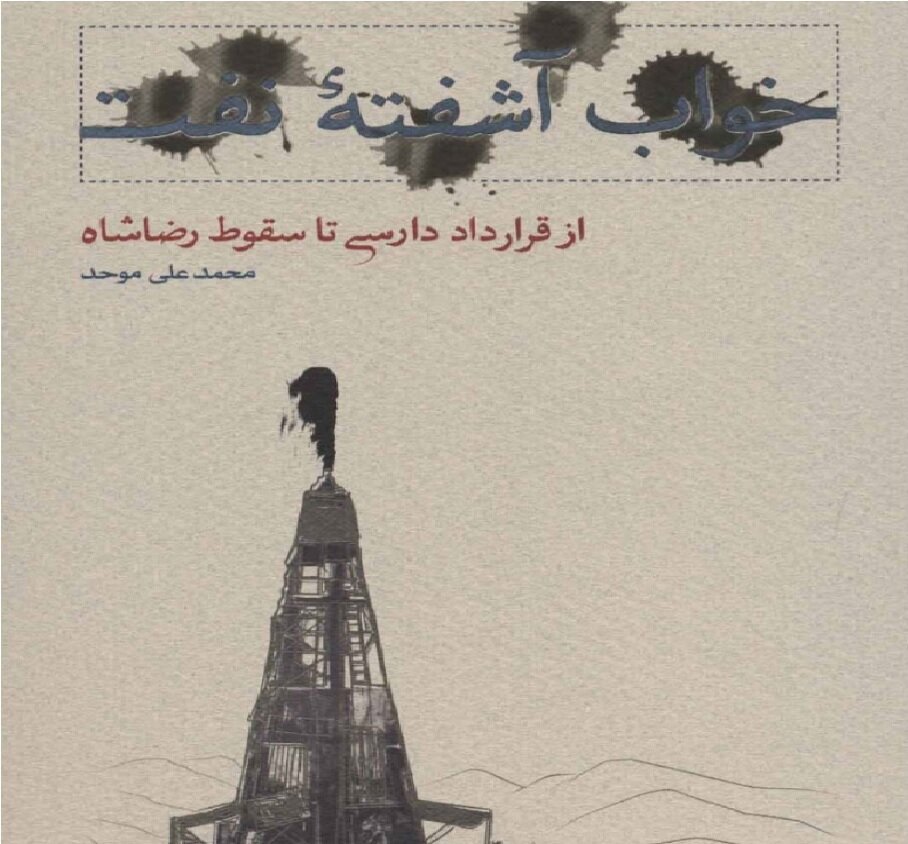
The four-volume story by renowned Iranian historian and analyst Mohammad-Ali Movahed spans the background, political science, oil journalism and the early experiences of OPEC, where “problemous oil” unfolds the history of Iran’s modern oil through a rigorously debated, legally informed lens.
The first volume published by Karnameh Publication covers the arc from D’Arcy Concession to the collapse of Reza Shah, laying the meticulous foundations of contracts, negotiations and legal mechanisms that formed the Iranian oil system.
Focusing on national movements led by Mohammad Mosadodegu and the Iranian national movement, 2 and 3 detail the political, economic and diplomatic dynamics that culminated in nationalization and its aftermath.
The fourth volume analyzes the period from the 1953 coup to the collapse of Zahedi, critically combining how external interference, internal struggles and oil policy interacted to redefine Iran’s political and economics.
Movahhed centres around the narrative of subtle diplomatic operations, contractual complexity, and legal frameworks governing oil agreements, claiming that these micro-level processes reveal macro-level changes in Iran’s development and governance.
This work may be best suited for readers with an academic or policy-oriented interest in Iran’s oil history.
The four-volume format brings an assessment of how well the comprehensive debate fits across different eras and topics.
This book is highly recommended to scholars and students of Iranian history, energy policy, international law and diplomacy.
Researchers interested in the intersection of oil economics and political change, and readers seeking detailed, source-based stories of Iran’s modern development can read this book.
Experts in petroleum industry research, political science, and Middle Eastern research value historically informed, legally and highly grounded interpretations.
A meticulously documented journey of four volumes that travel through Iran’s modern oil age. Movahhed offers a unique, rigorous perspective that reveals how oil policy and international negotiations shaped Iran’s political economy, and then the fate of the country.
The oil movement and the nationalization of the 1953 coup
In 1901, William Knox Darcy, a British investor backed by the British government, secured a 60-year concession from Motzerfahr Ardinshaqajar to exploit Iran’s oil. Oil was discovered in Masjed Soleiman, Fuzestan in 1907, marking the first such discoveries in West Asia and the southern Persian Gulf. The Anglo-Persian oil company was then established within two years to produce and export Iranian oil.
Reza Shah, the first Pahlavi king with British support, tried to reverse the concessions given by his Qajar predecessor. He cancelled Darcy’s concessions in 1932, but the subsequent oil concessions in 1933 remained unfavourable for Iran.
The Iranians opposed Darcy’s concessions and wanted greater rights and a greater share of oil revenue, but the UK sought to maximize its profits and control over Iran’s resources. The British sought a stronger parliamentary-rated agreement to avoid the weaknesses of previous concessions.
The 1933 agreement extended a further 60 years of concession, sparking anger, and contributed to the 1951 nationalisation movement. Following ratification of the agreement in 1933, Rezashah received funds in a bank account in London, with a limited share of Iran being spent by him and his circle.
At the same time, Britain and Russia competed for control over Iran’s resources.
The movement to nationalize Iran’s oil industry came as a response to concessions born into parliament, granted to foreign power by both Kajal and Pahlavi Shah.
Parliamentary lawmaker Mohammad Mosadodedeg led the movement and later became Iran’s prime minister.
In 1941, British and Soviet forces invaded and occupied Iran, abdicated Reza Shah. He was exiled and Iran remained under the Alliance occupation until 1946. On the ascension of Mohammad Reza Shah, the anti-colonial oil nationalisation movement gained great momentum. Ayatollah Abol-Ghasem Kashani also led the popular move against foreign interference.
The post-World War II weakness of Mohammad Reza Shah’s regime gave the oil nationalisation movement even more empowered as various political groups emerged and gained influence.
The move to nationalize the oil industry was a response to the concessions by Iranians that both Kajal and Pahlavi Shah had given away to foreign forces. The movement began in Parliament and was led by Mossaddeg when he was a lawmaker.
The August 19, 1953 coup was motivated primarily by the desire to protect Iran’s British oil profits, particularly after Prime Minister Mosadegu nationalised Anglo-Iran’s oil company.
The US CIA and UK MI6 coordinated the coup against the democratically elected Mosadegu government with Mohammad Reza Pallavi as its sole ruler.
The coup plot lasted five days from August 15th to 19th. The event included the CIA and the UK Intelligence Report (MI6) to coordinate a series of actions, including disinformation and military campaigns, to undermine the Mosadegu government and reinstall the last Iranshire. In fact, the young Shah, along with the UK and the US, was unable to withstand the nationalization of the oil industry and democratically elected Mossaddegu. That’s why they overthrew his government.
After the successful coup, the Shah reversed the course on nationalising Iran’s oil industry. In the aftermath of the coup, Mohammad Reza Pahlavi reasserted his dictatorial rule, negotiating a 1954 consortium agreement with the UK, and reverting Iran’s oil ownership to a consortium of Western companies until 1979.
It is generally agreed that the 1953 coup d’etat put together the seeds for the 1979 Islamic Revolution. However, even after the Islamic Revolution in 1979, we completely eliminated our existence in Iran,
Reported by Tohid Mahmoudpour