
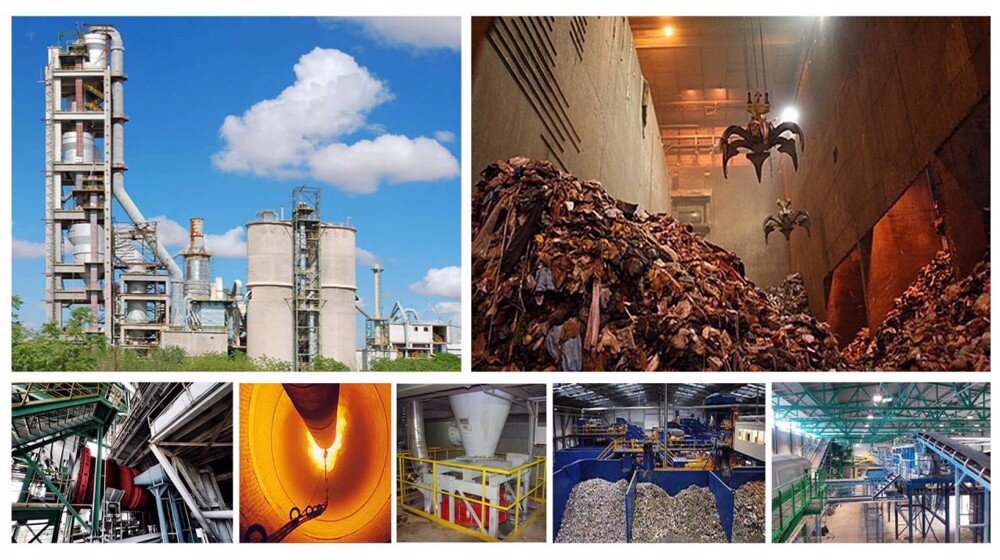
Just as it doesn’t seem like “dirty gold,” there are piles of garbage that accumulate under the merciless sun, and its fascinating smell covers the area.
However, under Foulpon there is a vastly large economic opportunity that represents a new chapter in Iran’s approach to waste management, industrial fuel consumption and environmental sustainability.
The story begins in 2000 when Kermanshah launched what will become Iran’s most pioneering and advanced waste recycling facility. It was a bold experiment at the time, sought to create value from what was once considered purely a rejection.
Since then, the facility has grown to deal with 650-700 tons of urban waste every day, drawing from a mountain of waste-derived fuel, or energy-rich fuel known as RDF.
This compressed, flammable material is created from non-recyclable waste such as plastic bags, textiles and dirty paper, and promises a fundamental shift from fossil fuels that have driven Iran’s industry for a long time.
For years, Iranian cement plants and other heavy industries have relied heavily on fossil fuels, particularly majuts, or thickly contaminated oil derivatives.
Now, Kermansha’s Western Cement Industry Company has become the country’s first site to partially replace natural gas consumption with RDF.
Approximately 120 tons of RDF are delivered daily, replacing about 19% of the plant’s natural gas use, an early but powerful step towards a cleaner energy alternative.
To understand the scale of this achievement, Kermansha generates approximately 1,400-1,500 tonnes of waste daily, with more than half of which coming from the city itself.
Nationwide, Iran produces nearly 60,000 tons of waste every day, weighing around 20 million tons of annual waste. This is more than twice the amount of waste per capita in many countries. Despite this abundant raw materials, the recycling rate is only 5-10%.
Experts estimate that if 6 million tonnes of waste is properly sorted and recycled, it can unlock about $3.5 billion in value.
Considering downstream production of recycled materials, this figure is $10 billion, indicating the immeasurable economic revenue available from investments in waste management systems.
The economic benefits go beyond the direct value addition. Waste recycling creates a wide range of employment opportunities, from collection and sorting to processing and manufacturing.
In many countries, waste management and recycling have become important sources of formal and informal work that contribute to social inclusion and poverty alleviation.
By following the lawsuit, Iran was able to similarly leverage the labour-intensive nature of the sector to create jobs, particularly among young people, thereby addressing both economic and social policy goals.
Environmental interests are similarly high. Unchecked waste accumulation releases methane (a greenhouse gas that is much stronger than carbon dioxide) into the atmosphere.
Reclamation and open dumps contaminate soil and groundwater, but their expansion invades valuable land resources. Bypassing waste from these sites through recycling and RDF production can dramatically reduce these harmful effects.
Furthermore, reducing dependence on Mazut and other fossil fuels will reduce carbon emissions and help Iran meet climate commitments amid growing international pressure.
The Iranian government is cautioning. Officials, including Home Minister Escandar Momeni, who visited Kermansha last week, highlighted the great potential of the RDF.
MNA