
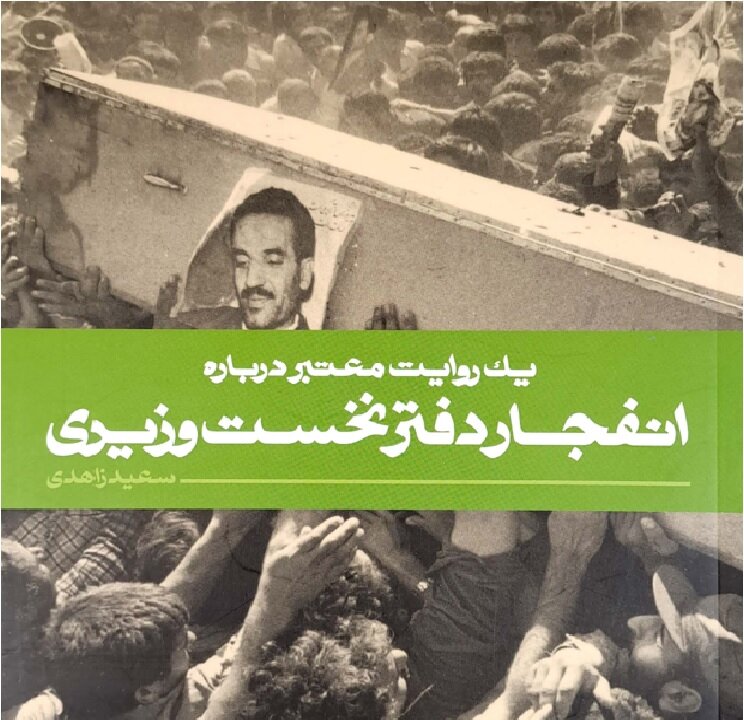
In the aftermath of political assassinations, myths often rush to fill the void of fact. Saeed Zahedi’s ingenious work stands as a powerful fix that reconstructs the bombing that killed Iran’s top officials, using a vast archive of key sources.
The assassination of then-President Muhammad Ali Rajay and then Minister Mohammad Javad Bahonar on August 30, 1981 remains one of the most important and unstable events in the early history of the Islamic Republic of Iran.
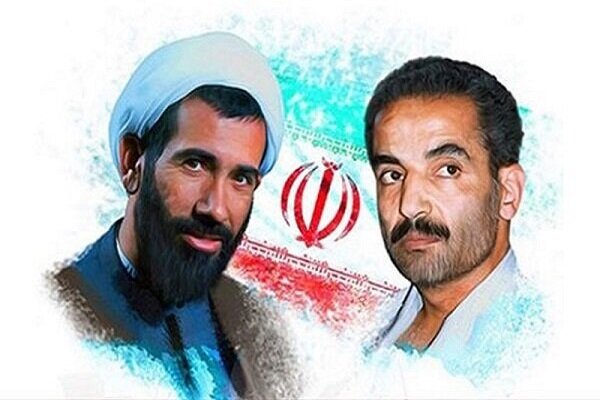
The bombing targeting high-level national security council meetings was not merely a tragic loss of life, but a deep political earthquake in which the aftermath formed the country’s trajectory.
Understanding this complex event requires moving beyond simple narratives and facing political conspiracies, plots and enduring webs of mystery.
The report provides an analysis of Said Zahedi’s ingenious work, “a reliable explanation of the bombing of the Prime Minister’s Office.” Zahedi’s book distinguishes it as a meticulously studied study that eschews sensationalism in favor of a calm, evidence-based approach.
Based on an extensive archive of key sources, including documents from Islamic Revolutionary Documents Centre, contemporary newspapers, and in-person accounts, the author reconstructs the events at three important stages after the event, explosion, and recording.
Our report on the book examines Zahedi’s important discussion. This examines his important arguments, including the “scenario to create martialism” involving Masoud Kashmiri, the role of intruders (operatives), and the intense political manipulation that follows the vacuum of electricity.
Furthermore, it evaluates the book’s important contributions to historiography during the Iran-Iraq War era, and how it challenges accepted conclusions, and contextualizes the broader internal conflicts and bombing within external pressures of the neo-revolution.
Ultimately, this report aims to unravel how Zahedi’s balanced and thorough account provides essential resources to understand the complexity of this tragedy and its lasting impact on Iranian politics and society.
Saeed Zahedi’s “Reliable Explanation of the Bombing of the Prime Minister’s Office” provided a detailed historical investigation into the bombing of the National Security Council meeting at the Iranian Prime Minister’s Office on August 30, 1981.
Using extensive research from the Center for the Islamic Revolutionary Documents, the Institute for Modern History Research, and the Period Newspaper (Kayhan, Ettela’at, and Jomhouri Eslami), Zahedi reconstructs this important event.
The seven-series book meticulously examines the pre-explosion, explosion, and post-explosion stages.
It navigates documented narratives and direct explanations to clarify the ambiguity, political complexity, and untold stories surrounding the disaster.
Specific topics explored include “scenario that creates martianism” involving Masudo Kashmiri, the role of intruders in shaping the post-explosion narrative, subsequent accusations and speculations, President Rajay’s trust in Kashmiri, and attempts to target Imam Homini’s residence in Kashmiri.
This book provides historians, researchers, and anyone interested in Iranian history with a documented, reliable perspective on this important tragedy.
Zahedi’s work stands out in his commitment to presenting a well-balanced and thorough account of research, eschewing sensationalism and partisan narratives.
By cross-referenceing various sources and meticulously analyzing contradictions, the author challenges previously accepted conclusions and sheds light on Iran’s lasting impact on Iran’s politics and society.
The book explores the struggles of power and political manipulation, following the assassination of two of Iran’s finest civil servants, and delves into shortly afterwards.
It investigates how bombing was used and how bombing was used in subsequent years to integrate political landscapes.
Furthermore, “Reliable Accounts…” contextualizes bombing within the broader framework of the early Islamic Revolution and examines internal conflicts and external pressures that contributed to the unstable political situation.
This provides a valuable resource for understanding the complexity of this period and the lasting legacy of the individuals and events involved.
Reported by Tohid Mahmoudpour