

On August 30, 2025, Iran celebrated its 44th anniversary, one of the most shocking terrorist attacks in its modern history. The bombing claimed the lives of then President Mohamad Alilajay, then Minister Mohamad Javadvahonar, and six senior officials.
This tragic event, coordinated by the Mojahedin-e-Khalq organization (MKO), is a pivotal moment in the country’s political narrative, continuing to form its counterterrorism policies and national identity.
The bombing occurred on August 30, 1981, within the Prime Minister’s Office in Tehran. Masoud Keshmiri is an MKO operative who invaded the government under the guise of a trusted security officer and planted a briefcase containing more than a kilogram of TNT.
The explosion tore the room during a high-level meeting, killing eight people soon and injuring 23 people.
The explosion was very intense and the bodies of Rajay and Bahonar could only be identified through dental records due to the severity of the burns.
This act of terror was not merely a physical attack, but a symbolic strike against the newly established Islamic Republic, still shaking since the 1979 revolution and the start of the Iran-Iraq war.
The loss of two of the nation’s most prominent leaders sent shockwaves through political establishment and the general public, causing a period of intense mourning and introspection.
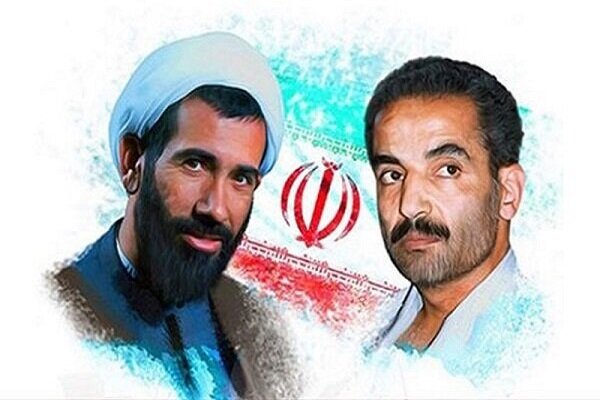
President Mohammad Ali Rajay, 48 years old at the time of his death, was a former mathematics teacher and minister of education. Known for his humble background and dedication to revolutionary ideals, Rajay rose through class as a symbol of integrity and resilience.
Prime Minister Mohammad Javad Bahonard, 47, was a respected Islamic scholar and executive director of the Islamic Republican Party.
He played an important role in shaping the ideological framework of the Islamic Republic and helped to promote unity of various political factions.
Both men were considered stabilizing forces during a period of unstable stability in Iranian history.
Today their ruins rest at Hafte Tir Mausoleum in Behesht-e Zahra Cemetery, a site that has become a place of pilgrimage and memory for many Iranians.
In honor of their sacrifices, Iran observes the week ending August 30 as “Management Week” and celebrates the contributions of civil servants and political leaders who shaped the Islamic Republic.
August 30 has been officially designated as a nation in the fight against terrorism and serves as a reminder of the ongoing struggle against extremist violence.

These memorials are not merely rituals, but are deeply embedded in Iran’s political culture.
They help strengthen the narratives of resilience, sacrifice and vigilance that governments promote in their national and international messaging.
Shortly after the bombing, there was a drastic crackdown on MKO members and sympathizers.
Security forces launched extensive investigations, leading to arrests and trials.
The Iranian government officially labels the MKO as a terrorist organization and cites its involvement in numerous attacks, assassinations and sabotages over the years.
Political analysts and historians broadly view the 1981 bombing as a turning point moment in Iran’s approach to national security.
The attack exposed the vulnerability and prompted a comprehensive overhaul of intelligence reporting operations, security protocols and law enforcement capabilities.
New agencies and departments were established to monitor potential threats, and existing agencies were restructured to improve coordination and efficiency.
Emphasis has shifted from reactive measures to aggressive surveillance and intelligence gathering. These reforms laid the foundation for modern security equipment in Iran. This is one of the most robust in the region.
Beyond political and security implications, the bombing left a deep psychological scar on Iran’s collective consciousness.
The event was commemorated in literature, film and public discourse, and became a symbol of martialism and resistance.
Schools and universities host educational programs during management week to teach younger generations about the sacrifices made by Rajay, Bahonar and others. These initiatives aim to instill patriotism and awareness about the dangers of extremism.
Each year, the anniversary is characterized by a series of official ceremonies, including high-ranking government officials, military parades and speeches by media broadcasts.
These events serve multiple purposes: honoring the victims, reaffirming the government’s commitment to combat terrorism, and promoting national unity.
In addition to state-sponsored activities, civil society organizations, cultural institutions and religious organizations hold exhibitions, memorials and public forums.
These gatherings provide space for reflection, dialogue and community engagement, allowing citizens to express their grief and solidarity.
Iranian officials are using the opportunity to reiterate their stance on terrorism and call for international cooperation to address the underlying causes.
For many Iranians, anniversary is not just a historical marker, but a living memory that informs us of our understanding of patriotism, sacrifice and resilience.
It reminds us that the fight against terrorism is not limited to the battlefield, but extends to education, culture and civic engagement.
To celebrate the 44th anniversary of Iran’s deadly bombing, the nation is united in its determination to fight terrorism and protect its sovereignty.
The memories of Rajai, Bahonar and other victims continue to inspire collective commitment to justice, security and national pride.
Remembering the past leads Iran to resolve and to look to the future, leading him to the lessons of history and the strength of its people.
MNA/