
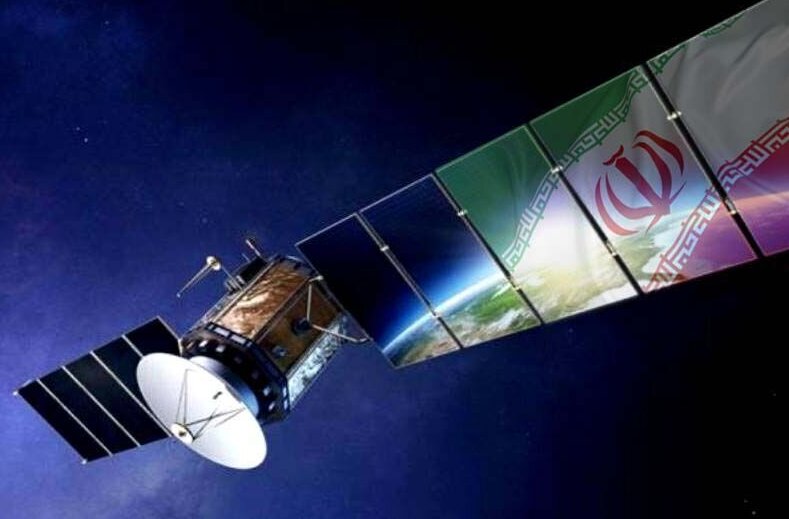
Salarieh confirmed that the second model of the country-built satellite will be launched into orbit in the coming months.
Last year, Kowsar-1 and Hodhod satellites were placed in orbit using the Soyuz Launcher. Less than a year later, Iran completed its final tests on the upgraded Kowsar. It weighs 50 kilograms and is placed in a 500-kilometer orbit around the sun.
The new satellite combines the missions of Kowsar-1 and Hodhod with applications of remote sensing, Internet of Things, precision agriculture and mapping. Salarieh emphasized that Kowsar was the first observational satellite built by the Iranian private sector, and that the second version was developed based on the first lesson.
“The launch schedule will be affected by coordination with other payloads of the Soyuz rocket,” Salary explained. “If these payloads are late in preparation, we can postpone the entire launch, but we are planning to launch the Kowsar-2 this year.”
He said the second version includes an imaging and communications payload, as well as upgrades to the data management code and algorithms, reflecting the progress drawn from the first mission.
Salarieh emphasized that private sector participation in space technology is inherently high risk and that only a limited number of companies have the capacity to engage. Among them is Omid-Faza Company, who took on the task. He emphasized that under Iran’s 10-year roadmap and its seventh development plan, multiple satellites will be developed and launched with private sector involvement.
He added that the Ministry of Information and Communications Technology is working to expand the private sector activities of the space industry. The new bidder will soon be announced that more projects will be handed over to Iranian private companies, offering both markets and guaranteed purchases to drive growth.
MNA/TSN