
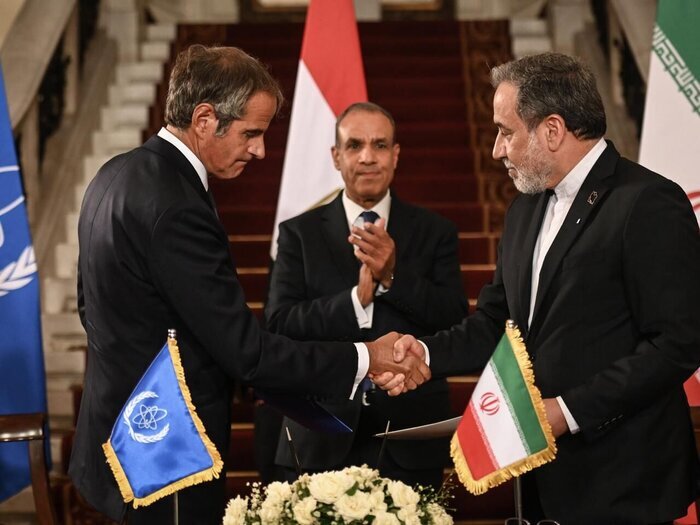
The latest agreement between the Islamic Republic of Iran and the International Atomic Energy Agency (IAEA) comes when Tehran’s nuclear file is facing one of the most complex and sensitive stages. The Cairo agreement was achieved after months of tension and international pressure.
Through intensive diplomacy and special efforts, Iran’s foreign ministry has been able to reach a framework for new cooperation with the institutions. The report and agreement not only prevent the introduction of the case to the UN Security Council, but also creates opportunities for further negotiations on cooperation, thereby reducing the chances of creating a snapback mechanism, but some experts remain skeptical of its full effect in that respect.
This understanding reflects not merely a continuation of technical cooperation, but rather the need to address geopolitical changes, international pressures, and the legal and security challenges that have emerged in recent months.
Change the situation where the game rules have been changed
Illegal military attacks by the Zionist regime and the US over Iran’s nuclear facilities have posed serious challenges to previous frameworks of cooperation, making it unrealistic to continue under the old arrangements. Following these illegal attacks, Tehran conducted a serious review of its cooperation with the IAEA.
Iran was unable to maintain cooperation while its nuclear infrastructure was attacked and threatened. This change is the clear application of the international legal principle of “a fundamental change in the situation,” creating new rights and obligations for the parties. These developments paved the way for intensive negotiations and new understanding with the institution. This is a framework that matches Iran’s new security requirements.
Iran also highlighted Congressional laws that provide a clear and legitimate roadmap for engaging with the IAEA, subject to cooperation in recognition by the highest national security council.
This approach reflects Tehran’s resolve to maintain sovereignty and national security over foreign pressure and interference.
Intense diplomacy in complex games
The Iranian lawsuit in the IAEA was on the crisis that it was declared “non-compliant,” especially after a controversial report in June 2025, but by invigorating diplomacy, Tehran prevented a negative resolution and paved the way for a new framework of cooperation.
The Cairo Agreement was the result of complex negotiations between Iranian representatives and agencies, rooted in Iran’s security needs and domestic legal requirements. Tehran has shown that it is trying to maintain its international commitment while using legal and diplomatic tools to counter unfair pressures.
Key features of the contract
Some features of this Agreement include:
Compliance with Parliamentary Act.
Dealing with the reality of illegal attacks on Iranian nuclear sites.
Recognition of Iran’s legitimate security concerns.
Keep the cooperation channel open while ensuring Iran’s security.
Distinguish between facilities that have been attacked and those that have not been attacked under customized conditions.
Condition each step of approval by the highest national security board.
Possible issues and future outlook
Among the realities and international requirements on earth, one important point of this understanding is the distinction between the facilities that have been attacked and other facilities. This approach shows that Iran embraces the need for cooperation and transparency, but emphasizes the protection and safety of nuclear facilities and does not intend to leave them vulnerable in the face of illegal attacks. Furthermore, with the new agreement, the path of cooperation was conditioned on the approval of the highest national security council.
In fact, this mechanism is a response to external pressure and internal political complexity. Despite this achievement, implementation of understanding faces future challenges, including historical mutual mistrust between Iran and the institutions, and concerns about the protection of classified nuclear information. Furthermore, the return or return of the “snapback” mechanism remains uncertain, and the responses of European countries to this Agreement will be an important factor in future development. Nevertheless, the strength of this agreement lies in demonstrating Iran’s serious resolve to maintain the diplomatic process and prevent escalation of tensions.
Ultimately, the new understanding is not only a response to the legal and security crisis in Iran’s nuclear document, but also an example of Tehran’s aggressive and intellectual diplomacy in the face of international pressure and domestic challenges. The road ahead is difficult, but this agreement can be seen as a starting point for relieving confidence and tensions in Iran’s nuclear incidents, if other parties adopt a constructive and balanced approach.
MNA/6588190