
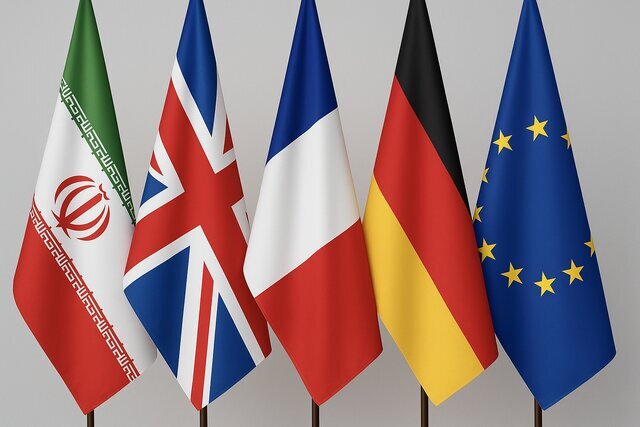
Over the years, comprehensive sanctions have been imposed on the country by the US and European countries, and Iran knows very well how to counter sanctions, he said in an interview with Mehr News Agency.
Kechvalli said the issue of the snapback mechanism is not a new issue in response to the illegal moves taken by three European countries, including the UK, France and Germany, to restore an expired UN Security Council resolution.
Elsewhere in his remarks, he pointed to a good interaction between Iran and countries such as China and Russia, saying that strengthening relations between like-minded and non-hospitable countries is a good opportunity to develop financial and diplomatic interactions that could have a very positive impact on the country’s economy.
Keshvali also emphasized the importance of fair nuclear negotiations, saying that Iran must enter a fair atmosphere in negotiations with European countries and other political parties in line with securing national interests.
On August 28, the European signatories of the 2015 nuclear deal, officially known as the Joint Comprehensive Plan of Action (JCPOA), informed the UN Security Council that it had invoked the so-called snapback mechanism, a 30-day process that would restore all non-sanctions against Iran.
Iran rejected illegal moves by Britain, France and Germany, taking into account the unilateral withdrawal of the US from the JCPOA and the European trio’s alliance with illegal sanctions against Iran rather than fulfilling its own commitment.
On Friday, the UN Security Council held a meeting to consider a resolution on extending the suspension of sanctions against Iran before the mechanism deadline expired, but failed to adopt a resolution that would give Iran ongoing sanctions relief, according to the JCPOA.
MA/6596310