
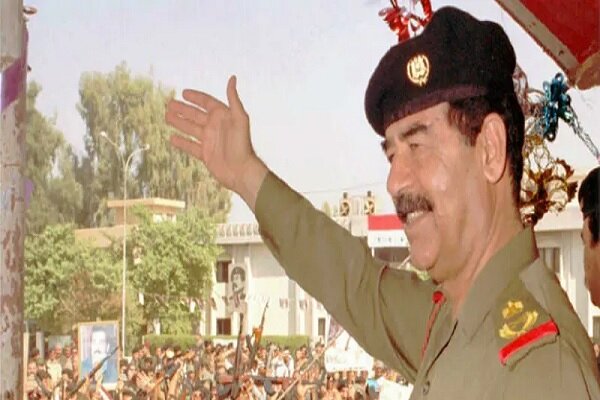
Supported by Western and Eastern powers, Saddam Hussein’s army invaded parts of Iran in the southwestern part of Iran on September 22, 1980, and in February 1979 began the so-called imposed war in a country that witnessed a democratic Islamic revolution a year ago.
The Saddam regime’s war with Iran lasted eight years. Soon after their country was invaded, the Iranians rebelled against the invaders and expelled them from the occupied soil. They launched what they called sacred or sacred defense against the invaders.
Since the beginning of the war, Iran has hoped that its Iraq would be officially declared as the initiator of the war. However, neither the Iraqi Baasist regime nor the great powers were willing to officially declare that the Saddam regime had begun a war with Iran.
The UN Security Council, influenced by the great power that armed the Saddam administration with its teeth, refused to adopt a fair stance in that regard during the eight-year war.
When Saddam began the war by tearing the 1975 Algiers Agreement in front of the camera, the Security Council refused to say who started the war and which side violated the principle of no use of force.
The Iraqi Baasist regime had mentioned border skirmishes that preceded the invasion. The administration claimed it took action after a long history of border conflicts. But the reality was that political instability and the fast pace of development in Iran after the revolution meant that Saddam couldn’t wait to tear the Algiers Agreement apart. He may also have been forced onto hostile western states who were angry at the victory of the Islamic Revolution.
It was the UN Secretary-General Javier Perez de Cuerre, who in his report to the United Nations agency in December 1991, declared Iraq as an invader and the initiator of the war.
This action by the UN Secretary-General, who officially declared Iraq as the initiator of the war, supported Iran’s right to self-defense.
A possible goal for Iraqi dictators was to annex some parts of oil-rich Huzestan, with a substantial Arab population.
To celebrate the 45th anniversary of the start of the war imposed on Iran in Iraq, Iranian forces usually hold a parade annually. Various sections of the Iranian military, including the Iranian Navy, Air Force, Army Ground Forces, Air Divisions, Islamic Revolutionary Guard (IRGC), and police, will take part in the national parade.
MNA