
On Sunday, the UK, Canada, Australia and Portugal formally recognized the Palestinian state, as they described as efforts to revive the two states’ solution outlook. France is expected to comply with the lawsuit at the UN General Assembly on Monday.
The move sparked strong opposition from Israel and showed differences from the United States, which has long been opposed to the unilateral perception of the Palestinian state, Xinhua reported.
However, for many Palestinians, such development raises pressing questions. Will international gestures lead to real changes on earth, or do they remain primarily symbolic?
Om Mohammed Al Sheikh, a 50-year-old mother of six, told Xinhua at a refugee camp in the Alnuseyrat refugee camp in the Gaza Strip.
“We want our children to return to school and stop the war to find medicine for the sick. If the reality on earth changes, the on-paper situation will not be sufficient,” she said.
Yousef Abu Daya, 27, a metalworker in Gaza city, said his workshop (his only source of income) was destroyed early in the war. “We need not only political statements, but real change that people can feel,” he told Xinhua.
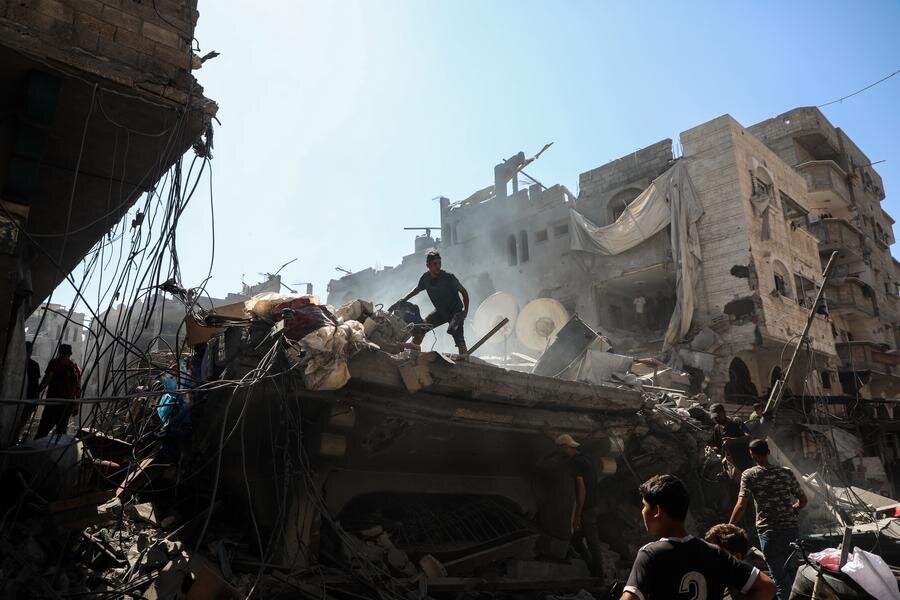
Throughout Gaza, such voices highlighted the gap between high levels of diplomacy and the reality of evacuation, shortages and war.
Esmato Mansoor, a Ramala-based political analyst, described international recognition as “significant interests” that reflect the decades of Palestinian struggle and sacrifice, but “these perceptions do not, by themselves, end the profession or stop the war in Gaza.”
“Recognition does not create a nation in itself, but it adds political and moral weight,” Mansoor said. “The real battle is still on the ground. If we don’t have a strong presence in the West Bank and Gaza, recognition remains largely symbolic.”
Reflecting the sentiment, Gaza-based political scholar Taser Abedo told Dr Xinhua that “Palestine is no longer isolated in the international forum.” These perceptions also changed the dynamics of future negotiations.
Abed emphasized the need for Palestinians to seize this moment through internal unity and systematic diplomatic efforts. “The world has opened a window for us, but crossing it depends on the ability to follow the priorities of the nation,” he added.
Both experts emphasized that the Palestinian settlement is essential to transforming symbolic interests into concrete advancements.
Mansoor argued that Israel views perception as a threat and attempts to downplay them through military pressure.
“In the absence of internal consensus, these perceptions could be a different point of competition rather than a source of strength,” Mansoor said.
Abed emphasized that awareness also brings responsibility. “The world hopes that Palestinian institutions can govern, not a divided authority divided into Gaza and the West Bank,” he said. “Reconciliation is no longer an option, but it is a necessary condition to exploit this international momentum.”
MNA