
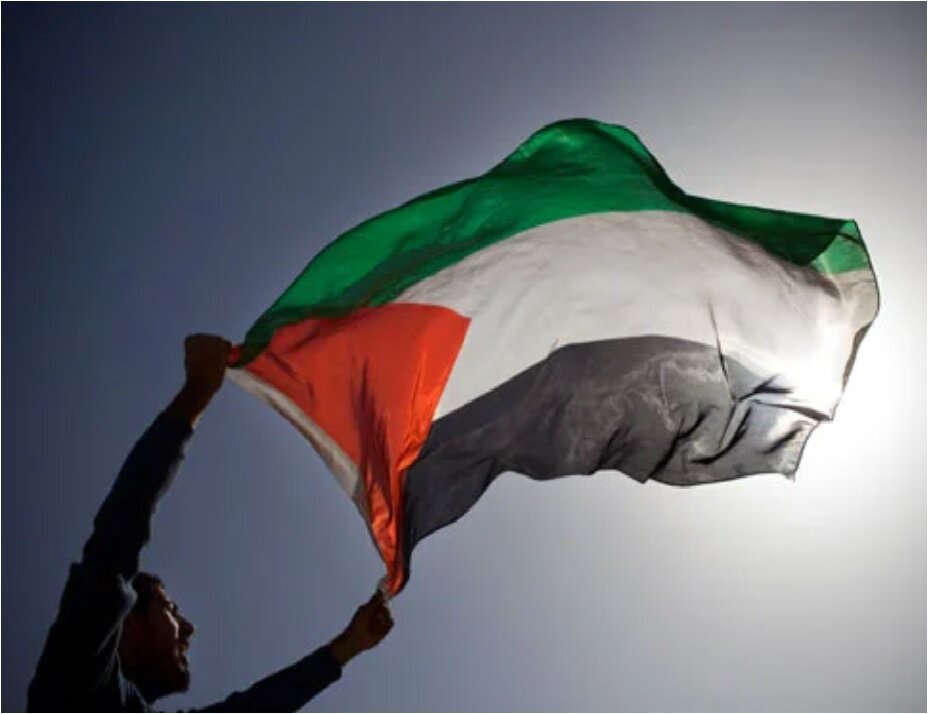
Recently, Canada, Australia and Portugal joined Britain in official recognition of the Palestinian state as they plan to expand Israeli-occupied West Bank settlements and strengthen the war with Gaza.
Amid a major shift in diplomatic momentum, the waves of growing countries formally recognize the Palestinian state, a movement accelerated by the war in Gaza and evolving geopolitical calculations.
What once lingering suctions are rapidly becoming an imminent international order, potentially changing Palestinian status at the United Nations and redrawing the outline of Middle Eastern politics.
The foundation of current momentum was laid years ago. On November 15, 1988, during the first Palestine intifadas, Palestinian leader Jaserarafat declared the establishment of an independent Palestinian state while in Algiers.
Shortly after the announcement, Algeria became the first country to officially recognize the new state. That initial surge in support led to a cascade of perceptions from countries in the Arab world, from Africa, Asia and Eastern Europe.
Between the end of 2010 and the beginning of 2011, a second major wave of recognition emerged. This was led primarily by influential Latin American countries such as Argentina, Brazil and Chile. This stage also focused on showing a deliberate change in strategy by Palestinian leaders and ensuring full national recognition through the UN institutional framework.
The campaign achieved a groundbreaking victory on October 31, 2011, when UNESCO, the UN cultural institution, voted to recognize Palestine as a full member. The move is both symbolic and practical, indicating that Palestine could function as a state within the United Nations specialized institutions.
According to Al Jazeera, Palestine is recognized by 147 193 UN member states, with a majority of over 75%.
However, that recognition still does not give Palestine an official UN seat. This is only approved by the Security Council.
The US, a permanent member of the veto Security Council, has already rejected calls for recognition at this time.
However, the US and other Western countries have been increasing domestic pressure to support the Palestinian cause.
In addition to the perception of the Palestinian state, several Western countries have imposed or threatened to sanction Israel.
The ongoing war in Gaza served as a powerful accelerator, forcing a reassessment of long-standing policies. The incredible humanitarian costs and political paralysis surrounding ceasefires have concluded that many European capitals are no longer withheld as the final reward for the peace process, which diplomatic gestures like recognition, have not been consistently provided.
Supporters argue that this reinforced legitimacy is important for its position in the Palestinian international forum. With national awareness strengthened, Palestine could potentially agree to more international treaties and file a lawsuit against Israel in agencies such as the International Criminal Court and the International Court of Justice.
Furthermore, diplomats suggest that a critical group of European perceptions could ultimately put pressure on the UN Security Council to act as a move that represents the most important upgrade to the international position since the 1988 declaration.
This diplomatic groundwell, moving from its surroundings to the centre of Western consensus, has created an unprecedented reality. Israel faces strategic isolation not from its traditional enemies, but from its own allies.
Decisions by Canada, Australia, Portugal and the UK are not merely symbolic. They represent a fundamental rupture in the Western position over the years, saying that states should be the endpoint of negotiation rather than the precursor.
This shift leaves the US effectively earning it, leaving a veto on the UN Security Council, and the final vulnerability of the barrier to full membership in Palestine.
The paths will be clearly mapped in the future. With over 75% of UN members already being recognized, the focus will shift to the General Assembly.
Therefore, there is an imminent movement to solidify its status as a de facto state in strengthening its right to strengthen Palestine.
More importantly, this overwhelming majority will bring great political pressure on the Security Council. The US veto is still likely in the short term, but the state’s diplomatic costs to wield it will be outrageous.
It is no longer seen as a supporter of the peace process but as a disruption to the will of the international community to defend isolated Israel.

This separation has concrete results. The ability to pursue Palestinian legal and diplomatic paths, reinforced by near-universal recognition, is greatly strengthened.
His position in the International Court of Justice and International Criminal Courts cannot be attacked, opening new paths to challenge Israeli policies.
Thus, growing waves are not ending in themselves, but are an important prerequisite for the final, inevitable step.
It systematically constructs cases that cannot be rebutted for the nation in order to make the US veto unsustainable in time.
The goal is no longer just a perception. It is a full UN membership, and the international community is now actively paving its path to reality, making Israel more and more alone on the world stage.
Reported by Tohid Mahmoudpour