
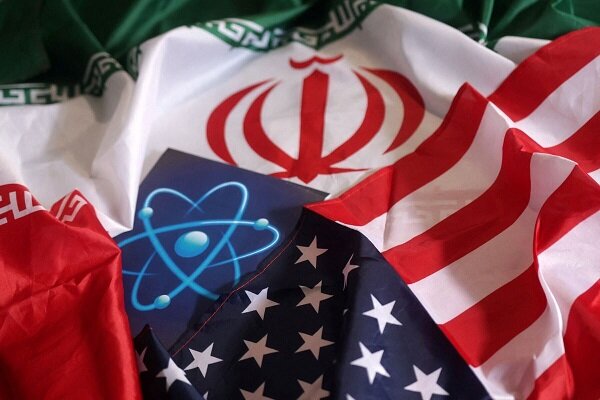
Even amid Israel’s attacks on Iranian soil, Tehran has pursued all reasonable and constructive diplomatic paths to direct consultations with three European countries from the Cairo Accord. But Europe relies on pressure policies.
The 80th session of the UN General Assembly and its bystanders was the setting for a final effort to maintain Iran’s nuclear diplomacy path. The active diplomacy of Iranian diplomatic delegation led by Abbas Aragci and President Masudo Pezeshkian demonstrated that Tehran is pursuing any reasonable and constructive diplomatic course. Nevertheless, Europeans continued to adhere to policies of pressure and condemnation against Iran.
Complying with European pressure policies
The demands of the three European countries always lack logic. Their aim was not to resolve the crisis, but to create an excuse to put pressure on Iran and reduce responsibility. Within the framework of the JCPOA, Tehran fully implemented its obligations and pursued all legitimate and reasonable diplomatic paths.
Iran’s efforts included cooperation with the International Atomic Energy Agency, which spoke directly with Europe at a critical time. However, no practical response was received from the other side.
What happened at the UN Security Council meeting on Friday?
On Friday, the UN Security Council convened to consider a joint draft resolution between Russia and China. This called for a six-month extension of Resolution 2231. This highlighted the continued cooperation between Iran and the IAEA, providing new opportunities for diplomacy, rejected by nine votes, two votes, two abstents and four votes. This revealed that Europe cannot make independent decisions without Washington’s green light.
Russia, China, Algeria and Pakistan voted in favor, while the US, UK, France, Sierra Leone, Slovenia, Denmark, Greece and Somalia voted against it. Guyana and South Korea abstained.
Russian envoy Dmitry Poliansky accused European troika of putting irrational pressure on Iran and declared that he outlawed the activation of the snapback mechanism.
Iranian Foreign Minister Abbas Aragci stressed that Iran has been forced to reduce some of its JCPOA obligations due to a unilateral Western commitment violation. He added that countries that support the solution are on the “right side of history.” This is because it represents a sincere effort to open the doors of diplomacy and dialogue and avoid conflict.
Representatives from China, Pakistan and Algeria highlighted diplomacy and the JCPOA as the only sustainable solution, warning that the lack of a peaceful resolution would pose a threat to regional and international security.
In contrast, US, French and German representatives accused Iran of infringing and announced a re-challenging sanctions.
Iran’s response to our pressure
On Saturday, before returning from New York, Iranian President Masuud Pezeshkian told reporters that Washington had requested a complete uranium enrichment halt in exchange for a three-month suspension of sanctions.
Pezeshkian described the demand as “unacceptable” and rejected it, emphasizing that “if you need to choose illogical demand and snapbacks, choose snapbacks and manage the issues accordingly.”
He added that Iran relies on its relationships with its neighbours, BRICS and Shanghai countries, and with the support of its people, it can overcome the current situation.
The president, along with Abbas Aragut, emphasized that Iran’s foreign policy team has been in numerous talks with various European and Islamic countries, and that Iran will never succumb to Western pressure. He reiterated that Iran has never approached the construction of nuclear weapons, and that its purpose is to preserve peace and security in the region.
He dismissed accusations about Iran’s role in inducing resistance groups as Israeli propaganda, and argued that the actions and reactions of resistance movements, such as Hezbollah and Hamas, are direct responses to Israeli attacks.
The President emphasizes the need for national unity, enhances the country’s scientific, cultural and communication skills, adheres to diplomatic principles, and “the legitimacy of the Islamic Republic in Iran is lying to the fact that it does not pursue nuclear weapons. The Western goal is to spread fear.”
Araguchi’s letter to the UN Secretary-General: Responding to sanctions is illegal
Iran’s foreign minister strove Abbas Aragut in a letter to the UN Secretary-General and the UN Security Council president on Saturday night. He described actions that would revive the actions of European countries and the United States as “null, invalidity and no validity.” He emphasized that Iran will not recognize any attempts to extend or revive restrictions from October 18, 2025.
Aragut reminded me that neither Iran nor UN member states are obligated to comply with illegal measures in the Western states. He urged the Secretary-General to put political pressure on Iran by misuse of the UN Secretariat.
He also warned that any attempt to hurt Iran would face appropriate responses and that those who chose to confront are on full responsibility.
Iran’s diplomacy outcomes and new chapters
The results of this session paved the way for a revival of sanctions and effectively buried the JCPOA amid Western noise and propaganda. This is a reality recognized by Abbas Araguchi himself.
Tehran’s rapid response – Remembering ambassadors from Germany, France and the UK, symbolised the beginning of a new chapter in Iran’s nuclear diplomacy. Iran maintains its ability to fully adhere to its commitments and maintain its diplomatic principles while maintaining its ability to manage negotiations and maintain a logical balance in international relations.
This stage reflects the highly complex nature of global diplomacy and the interaction of great powers. The irrational actions of certain political parties create new equations and unique challenges for both Iran and the international community.
However, experience shows that there is always the ability to return to the negotiation table and pilot diplomacy, indicating that Tehran can manage the situation with a careful approach.
MNA/