
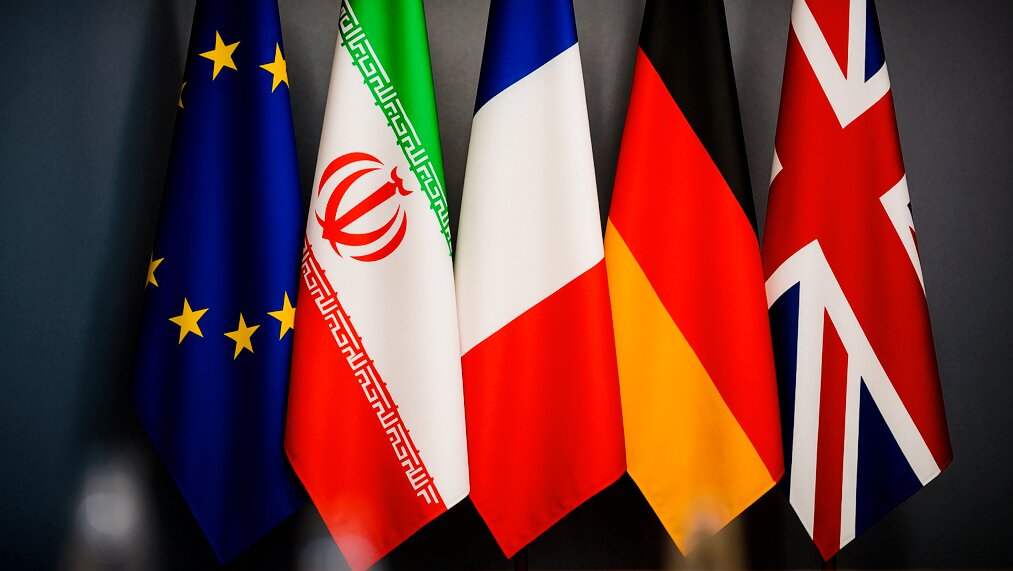
The UN Security Council voted in a key session on a resolution proposed by Russia and China to postpone the re-challenge of UN sanctions on Iran for six months. A resolution that was ultimately not approved by four votes is four votes, nine for nine, and two abstentions that effectively end the process of activating the so-called “trigger” mechanism.
There is no legal basis or political validity for the actions of the three European countries in revitalizing snapbacks. As Iranian officials have said, the new agreement reached between Tehran and the International Atomic Energy Agency in Cairo under new conditions will be lost once the snapback mechanism is implemented. The US violated resolution 2231 in 2018 by unilaterally withdrawing from the JCPOA, and Europe also breached its obligations by absing Washington’s illegal sanctions.
With regard to possible scenarios in the post-snapback era, despite the re-stated re-station of UN sanctions that have been cancelled, Iran can neutralize the negative effects of sanctions by continuing to work with international partners through active diplomacy and relying on unity with China, Russia and other allies. The fact is that the actions of the European troika are exceptional phenomena from the perspective of international law and even contradict the spirit of the UN Charter. According to the UN Charter, agreements between the great powers must be achieved by consensus, but given the snapback initiative faces opposition from China and Russia, the resolutions certainly have little effectiveness, and the obligation to implement them for other countries is undermining.
At this point, the door to diplomacy is still open to Iran, and it is necessary to establish active diplomatic relations with partners such as China, Russia, India, ASEAN countries and Africa to prevent the international community from agreeing to restrictions arising from the six returned resolutions. Of course, the return of resolutions is almost symbolic, and major countries such as Russia and China do not actually agree with the West regarding restrictions, as the national interests of the country take priority over everything else. China is Iran’s biggest economic partner, and Russia is in much the same situation. Some countries, including India, have recently intended to resume oil imports from Iran, and Iran has a high oil and trade capacity that cannot be ignored. I believe that the Russians, Chinese and several other countries that worked with Iran will likely continue their ties with Iran on a large scale. Of course, due to UN pressure, information on cooperation may be limited. One of the tasks of diplomacy and diplomats is to also be encouraged to work with Iran, defining the interests of other countries. Therefore, if other countries feel that their interests are not provided by the implementation of these resolutions against Iran, they will not comply.
With regard to US and European sanctions, it must be recognized that US sanctions are more effective than UN sanctions, and that the restrictions on Iran’s nuclear program by the six previous resolutions must be recognized as weapons and nuclear nature.
One practical scenario is non-cooperation with Iran’s International Atomic Energy Agency. Because it was understood by Tehran and Cairo-sponsored conservation groups, and cooperation with Iranian institutions was to end if the snapback mechanism was activated. Naturally, with the return of sanctions, Tehran will not provide the agency with information about the country’s nuclear facilities and will not accept surveillance of peaceful, active sites. This is seen as a failure from the perspective of European, US and Zionist regimes desperately seeking nuclear information for Iran, as this information will be used for hostile actions against the country.
In fact, it appears that the main victims of sanctions return will be Europe and the United States. Remember, upon the ratification of the JCPOA, Iran accepted the enrichment limit of 3.67%, and if Donald Trump did not withdraw from the JCPOA in 2018, Iran did not implement a 20% enrichment. From another perspective, it should be noted that Europeans also failed to fulfill their commitment and enrichment reached 60%. Therefore, when the other side adopts an adversary position, Iran ignores them and continues to accelerate its industrial and scientific development. Sanctions are difficult to manage, but not impossible. Iran has overcome them before and overcome them today.
MNA/