
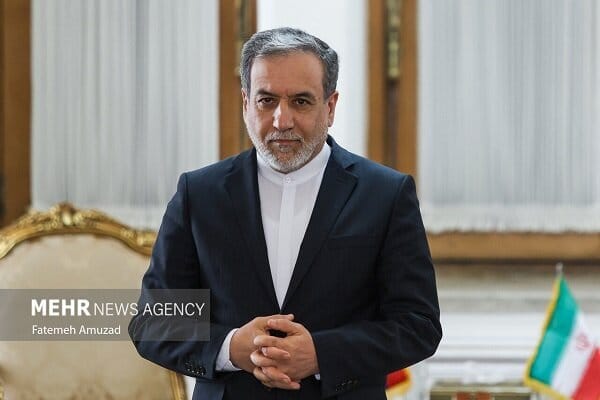
Colombo Alireza Delkosh’s Iranian ambassador said on Friday that the foreign minister’s warning will be made in official news reports sent to his counterparts in Sri Lanka and Maldives, news television reported.
In opposition to U.S. western sanctions on September 28, Araguchi called on Sri Lanka and Maldivian counterparts to confirm the reinvigoration of “snapback” sanctions on Iran after being fired for international landmark trading on Tearan’s nuclear programme.
The diplomatic outreach comes after the UN Security Council failed to adopt a resolution to extend Resolution 2231 for six months following the formal invocation of the “snapback mechanism” by France, the UK and Germany last month, and the “snapback mechanism” by the Joint Comprehensive Plan of Action (JCPOA).
UN sanctions will again freeze Iran’s assets overseas, with stopping weapons dealing with the Islamic Republic and targeting the country’s defense missile programme.
Iran, as well as Russia and China, two other signatories of the 2015 nuclear deal, claim that the mechanism is politically motivated and has no legal basis under international law.
Delkos said the message urged the government to resist Western pressure and warned that international law has become a playground for the US.
This decision with the West is “very dangerous” to international law and could have long-term consequences for all countries around the world, he added.
The ambassador said the minister warned that “Iran is the target today, and tomorrow may be South Asian countries, and the next day in Africa.”
Araguchi told his two South Asian counterparts that the latest sanctions could undermine international regulations and lead to inefficiency.
“This moment is an important test of the reliability of international law,” the minister wrote.
Araghchi told his counterparts that small countries can play an important role in protecting international neutrality and ensuring that strong countries do not take action without consequences.
Iran’s position is fixed in UN Security Council resolution 2231, which approved the 2015 nuclear agreement and officially lifted previous sanctions on Tehran’s nuclear program. Iranian officials emphasize that the resolution established a clear time frame framework on October 18, 2025, where all nuclear-related restrictions are set to expire forever.
MNA