
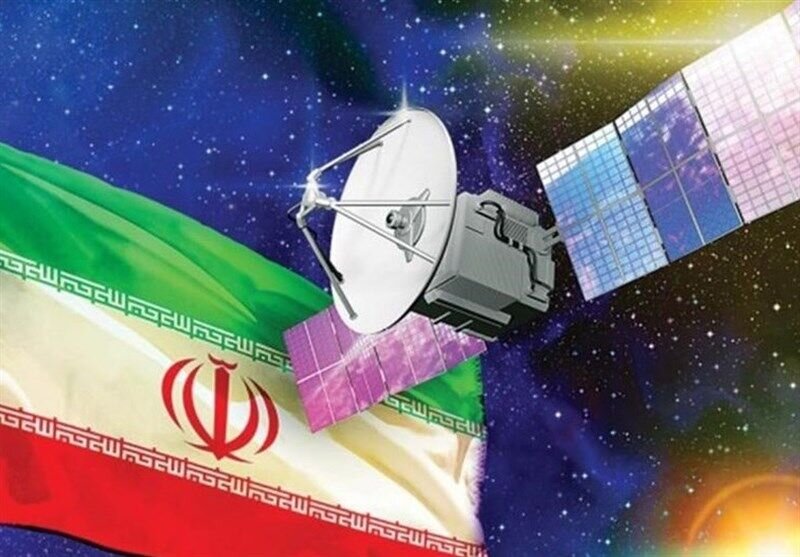
Hassan Salarie said that out of more than 200 countries in the world, only about 10 or 11 have achieved comprehensive technological mastery in space systems, a group that includes major powers such as Russia, China, the United States, Japan and some European countries.
Although these countries represent less than 10 percent of the world, they have maintained leadership in the space industry for decades, he noted.
He said Iran has developed by relying on indigenous expertise and domestic resources. “Iran is developing both satellites and launch vehicles simultaneously,” Salarieh said, adding that such parallel progress requires mastering complex and highly specialized technologies.
Salarieh also outlined Iran’s achievements in satellite imaging technology, highlighting the significant improvement in spatial resolution over the years. “Our progress started with satellites capable of processing images at about 1,000 meters per pixel, then improved to hundreds of meters, tens of meters, and now reaching resolutions of just a few meters,” he said.
He added that these advances were achieved through close cooperation between specialized teams from universities, government research centers and state-owned enterprises, all contributing to the growth of Iran’s domestic space industry.
Salarieh emphasized that Iran’s continued progress demonstrates the country’s determination to achieve self-sufficiency in strategic technology and strengthen its position as one of the few countries capable of independently designing, manufacturing and launching satellites into orbit.
MNA/TSN