
Reuters claimed in a report that Turkey could meet more than half of its gas needs by the end of 2028 by expanding production and increasing imports from the United States, a change that threatens to shrink the last major European market for Russian and Iranian suppliers.
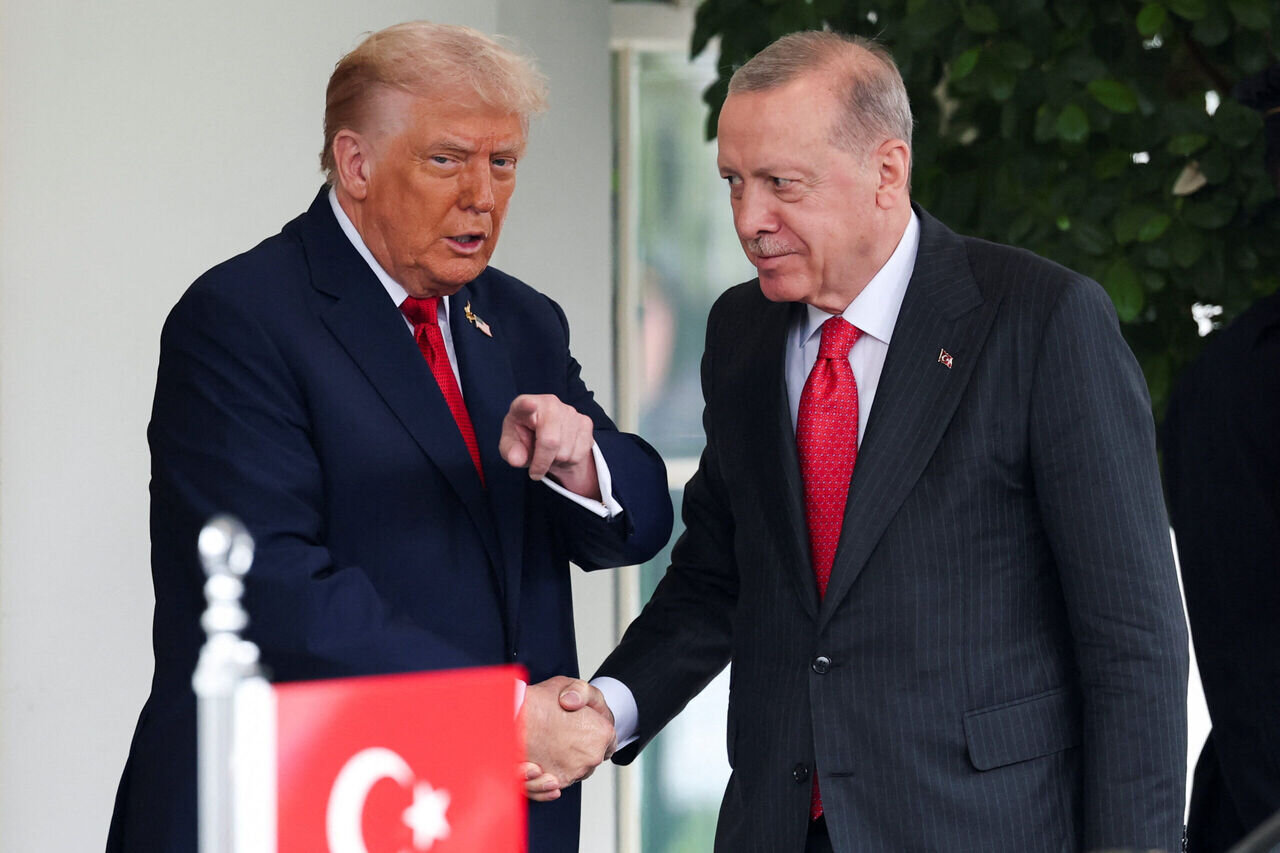
The US government has publicly pressured its allies, including NATO member Turkey, to sever energy ties with Moscow and Tehran. During a White House meeting on September 25, US President Donald Trump pressured Turkish President Tayyip Erdoğan to reduce energy purchases from Russia.
Diversification of supplies would also strengthen Türkiye’s energy security and support its ambitions to become a regional gas hub. Analysts say the Turkish government aims to re-export imported liquefied natural gas and locally produced gas to Europe, while burning Russian and Iranian gas at home.
“Turkey is showing a willingness to take advantage of (the world’s) abundant LNG,” said Sobet Karbuz of the Paris-based Mediterranean Energy and Climate Organization.
Russia remains Turkey’s largest gas supplier, but its market share has fallen from more than 60% two decades ago to 37% in the first half of 2025. Following the Russian invasion of Ukraine in 2022, most European countries suspended imports.
The deadline for Russia and Turkey’s long-term pipeline agreement to supply 22 billion cubic meters (bcm) per year through the Blue Stream and Turk Stream pipelines is approaching. Iran’s 10 bcm contract expires in the middle of next year, while Azerbaijan’s total 9.5 bcm contract runs through 2030 and 2033.
Turkey is likely to extend some of these contracts, but is likely to seek more flexible terms and smaller quantities of supply to increase the diversity of supply, Qalbuz said.
At the same time, Turkey is rapidly expanding its alternative supply sources. State-owned TPAO is increasing production from local gas fields, and state-owned and private companies are expanding LNG import terminals to bring in gas from the United States and Algeria.
Domestic production and contracted LNG imports are expected to exceed 26 billion centimeters per year in 2028, up from 15 billion centimeters this year, according to Reuters calculations.
US LNG import volume set to double
This will cover more than half of Turkey’s gas demand of around 53 bcm, reducing the gap in pipeline imports to around 26 bcm, which is well below the current contracted supply from Russia, Iran and Azerbaijan of 41 bcm.
To support this change, Turkey has signed a series of LNG contracts worth $43 billion with U.S. suppliers, including a 20-year deal with Mercuria in September.
The country has built an annual LNG import capacity of 58 bcm, enough to cover all demand, Türkiye’s Energy Exchange said.
Nevertheless, Russian gas continues to be supplied at full capacity, and the Kremlin said cooperation with Ankara remains strong.
Alexei Begoryov of the Moscow-based Institute of Energy and Finance said Turkey has low need for Russian gas, so BOTAS could theoretically stop importing it from Moscow within two to three years.
“But that will not be the case, as Russian gas is price competitive and BOTAS is creating a surplus that can be used to put pressure on other suppliers,” Begoriev said.
Turkish Energy Minister Alparslan Bayraktar said in a television interview in October that Turkey needs to source gas from all available suppliers, including Russia, Iran and Azerbaijan, but noted that U.S. LNG offers a cheaper alternative.
The Department of Energy declined to comment on future supply contracts or pricing. Gazprom, Russia’s gas pipeline export monopoly, did not respond to a request for comment.
Kalbuz said that after Europe bans Russian energy imports by 2028, Turkey could burn Russian and Iranian gas domestically, export what it produces and re-export imported LNG.
Türkiye’s BOTAS aims to become a regional gas trading hub and has already signed contracts to supply small quantities of gas to Hungary and Romania.
Beyond gas, Ankara has deep ties to Moscow. Russia’s Rosatom is building Türkiye’s first nuclear power plant, and Moscow is also the country’s largest supplier of crude oil and diesel.
MNA/