
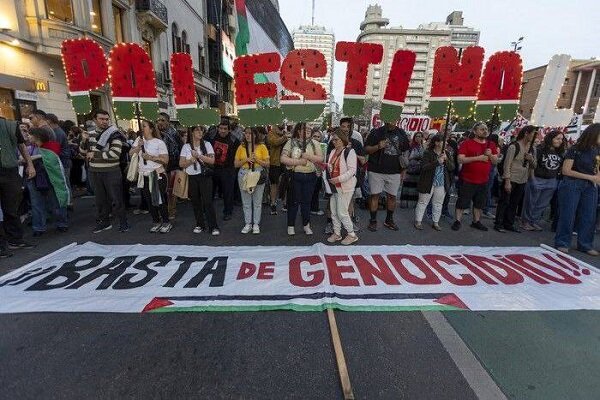
The nationwide protests, organized under the banner “Enough of the carnage! Peace, justice and freedom,” involved all 19 provinces, with Montevideo becoming the center of the movement.
According to a report by Médecins Sans Frontières, more than 66,000 people were killed and more than 168,000 injured in Gaza between October 7, 2023 and October 1, 2025, according to the Palestinian Ministry of Health.
The U.N. Office for the Coordination of Humanitarian Affairs says the region’s health system is in shambles, with only 14 of 36 hospitals partially functioning.
Protests have been further fueled by the recent US-brokered ceasefire agreement between Israel and Hamas, which is viewed with skepticism by many activists who believe it offers a glimmer of hope but is insufficient without concrete action to address the underlying problems.
In Montevideo, demonstrators filled the streets, waving Palestinian flags and shouting slogans such as “This is a hospital, not a military base!” “Zionist nation, you are the real terrorists!” Handmade signs read, “In the face of the cold of annihilation, the only resistance worth having is one that makes your blood boil. Don’t remain lukewarm in the face of genocide.”
Another sign read: “Children in Gaza are not a threat” and was accompanied by a pile of stuffed animals and toys symbolizing the victims’ innocence.
Daniela López, a trade union leader and chief coordinator of pro-Palestinian groups, spoke of the significance of the participants: “We know this is the biggest march ever. Two years have passed since this genocide, and it is almost impossible not to condemn it. And people are taking to the streets to voice it as a testament to our common humanity.”
López emphasized the movement’s growing momentum, noting that a similar rally in February 2024 attracted 15,000 participants, demonstrating growing solidarity.
Broadfront (Frente Amplio), Uruguay’s leftist political coalition, supported the protests.
In a statement issued at a political roundtable, the party condemned the “genocide orchestrated by Benjamin Netanyahu’s government” and called for the immediate establishment of a humanitarian corridor to allow food and medicine to enter Gaza. Party President Fernando Pereira also joined the march, highlighting the coalition’s commitment to global justice.
A pivotal moment occurred when Vice President Carolina Cosse publicly used the word “genocide” for the first time to describe the situation in Gaza. “There is a genocide happening,” Kose told the Subayad news agency in the crowd.
Regarding calls for a severance of ties with Israel, Cosse noted that such decisions concern the executive branch, and suggested that although Uruguay plays an important role in respecting international law, he does not foresee an immediate severance. She emphasized that she was participating in the march as a defender of peace and humanitarian values.
More than 100 Jewish Uruguayans took part in the protest to express their opposition to Israel’s actions in Gaza. One participant said, “Zionism is a genocidal, racist supremacist ideology. Israel does not represent the majority of Jews in the Diaspora. Zionism cannot be confused with Judaism or Jews.”
Their engagement highlighted the diversity and inclusive nature of the movement, which transcends religious and cultural boundaries in the pursuit of justice for Palestinians.
Former lawmaker Constanza Moreira read out a full statement accusing Israeli leaders of trying to erase the nation and its memory.
The declaration renewed calls for Uruguay to officially recognize the genocide, launch an investigation into war crimes, suspend relations with Israel until international law is respected, and stop exports that could contribute to conflict.
The statement concludes with a powerful message: “Silence is complicity, inaction is complicity, and now is the time to act. Peace is not just the absence of bombs, it is freedom with justice.”
As night fell, the energy of the protests remained, signaling a major shift in Uruguay’s political landscape.
Months into President Yamando Orsi’s government, these demonstrations serve as a clear call for bolder action to support Palestinian rights and oppose injustice in Gaza. Uruguay’s streets are a testament to the country’s commitment to human rights, justice and international solidarity.
MNA/TT