
The recent re-imposition of the snapback mechanism by the European parties to the 2015 Iran Nuclear Agreement (JCPOA) has once again heightened tensions between Iran and the West. The E3 nations of the UK, France and Germany have invoked UN Security Council Resolution 2231 to reinstate UN sanctions lifted under the JCPOA, citing concerns about Iran’s nuclear activities. However, the Iranian government strongly rejected the move, calling it illegal, politically motivated, and a clear violation of the spirit and letter of the agreement.
The Iranian government maintains that the so-called snapback is a unilateral and groundless action with no legal or practical effect. Iranian officials say the move reveals the West’s persistent double standards and unwillingness to engage in real diplomacy, years after the US withdrew from the nuclear deal in 2018.
Amid these new tensions, Tehran is deepening its cooperation with Russia and China, emphasizing a long-term transition to a strategic alliance in the east. Just a few weeks ago, Iran and Russia began implementing the Treaty of Comprehensive Strategic Partnership, marking a new phase in cooperation in various fields.
In this regard, MARE spoke with US political analyst Christopher Helali, who argued that snapback sanctions will only expose the West’s hypocrisy and accelerate Iran’s collaboration with Russia and China. He believes this move marks the end of Western diplomacy with Iran and the beginning of a new strategic era shaped by partnership and self-reliance in the East.
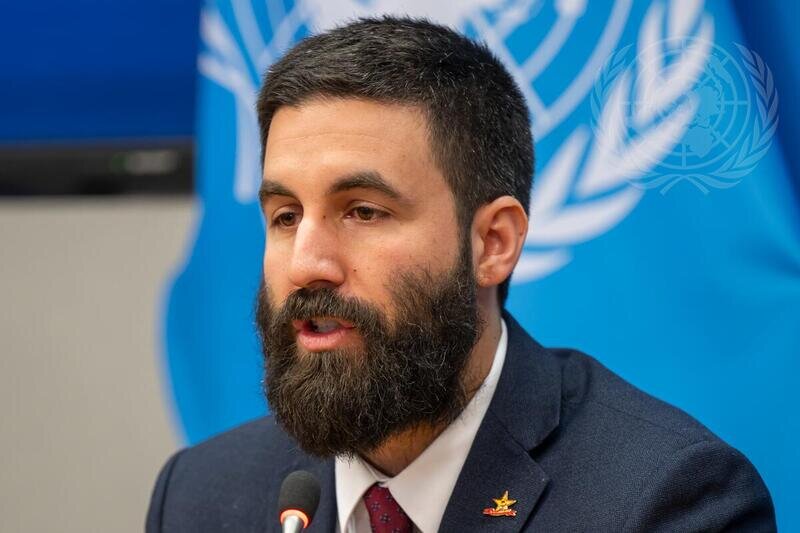
The following is the text of the Mare News Agency’s interview with Christopher Hellari, International Secretary of the Communist Party of America (ACP).
1. How do you assess the strategic and political impact of invoking a snapback on Iran’s international standing?
My assessment of the strategic and political implications of invoking snapback on Iran’s international standing confirms what many of us have long known and understood: that the Western world as a whole has no interest in a diplomatic solution to Iran’s civilian nuclear program. Rather, they were always interested in confrontation, maximum pressure, and military action to create the conditions for regime change. I have long argued that Iran’s fate is tied to the East, not the West. No matter how Iranian reformers try to sell Iran to the West, the West will always view Iran from two perspectives: first, fear and hatred of Islam, and second, Iran’s natural resources (i.e. oil). The first strategic impact is that negotiations on the JCPOA, the so-called Iran nuclear deal, are almost complete. Diplomacy continues, but the friendships built over the past decade are fading. Second, strategic influence shifts from the diplomatic and political spheres to the economic and military spheres. So the battlefield is both the economic and military aspects of the imposition of these sanctions in that Iran has just endured a 12-day war of aggression by the Zionist regime and the United States. As a result, Iran is strengthening its defense capabilities even as concerns persist that another attack may occur in the near future. The political implications are huge. It will transform Iran internally and externally in terms of its posture, relations, and strategic outlook. Iran needs to seriously consider its survival in the face of new Western aggression. In my opinion, the only way to survive is to follow the model developed by North Korea based on the Juche “self-reliance” ideology and the Songun policy.
2. In your view, how has the snapback affected Iran’s diplomatic and economic ties with Russia?
This snapback is helping to change the diplomatic and economic partnership between Iran and Russia. The Russian Federation and China have already made it clear in their statements and positions at the United Nations and elsewhere that they do not recognize the reinstatement of UN sanctions against Iran initiated by the E3 countries using the “snapback” mechanism under UN Security Council Resolution 2231. Therefore, Russia will continue to maintain strategic relations with Iran in all areas. My prediction is that Iran will move closer to Russia diplomatically and economically in the coming years as it continues to confront U.S. hegemony and the unipolar world order, while building a more just multipolar world order.
3. What role do you think Russia will play in mitigating the practical impact of reimposing sanctions on Iran?
My guess is that Russia will continue to trade and cooperate with Iran in various areas, which will help Iran reduce the practical impact of reinstated sanctions. The recent agreement between Iran and Russia’s Rosatom to build a small nuclear power plant in Iran worth $25 billion demonstrates Russia’s commitment to expanding and deepening its strategic relationship with Iran, including in the nuclear field. Also, in my opinion, Russia will continue to defend Iran at the United Nations and insist on a peaceful and diplomatic solution to the fundamental problem that Western countries are reluctant to seriously negotiate in good faith.
4. Considering the reactions of other major powers and UN member states, how effective do you think the snapback will be in achieving its intended objectives?
Given that Russia and China do not recognize snapback sanctions, I believe that the impact will not be as dramatic and devastating as the Islamic Republic has already weathered decades of sanctions and a “maximum pressure” campaign from the United States. I believe that with strengthened economic ties and integration into BRICS+, the Belt and Road Initiative, and the SCO, Iran will be able to weather the economic war from the West and continue to advance and develop its domestic capabilities even without European or American aid. This is a clear demonstration of the resilience of the Islamic Republic of Iran, which some Western commentators and Zionist regime leaders had claimed would collapse just days after launching its illegal war of aggression.
5. Beyond sanctions and pressure, what are the most viable diplomatic tools to reduce tensions and ensure regional stability?
Beyond sanctions and pressure, the most viable diplomatic alternative to de-escalate tensions and ensure regional stability is, of course, a diplomatic solution that meets the needs of the Iranian people and state while also being acceptable to the other country. Solutions depend on diplomatic solutions that bring peace, economic prosperity and development. At the end of the day, we need a human-centered approach. Sanctions and pressures target and disproportionately affect ordinary working-class people, so solutions are needed that promote their well-being and economic development. As diplomatic alternatives with the West seem unlikely at this point, diplomatic alternatives and agreements will likely come from strategic allies like Russia and China, intergovernmental organizations like BRICS+, and the broader Global South.
Interview by Mohadese Pakhravan