
On September 29, 2025, US President Donald Trump announced a 20-point peace plan for Gaza at a White House press conference with Israeli Prime Minister Benjamin Netanyahu. President Trump optimistically claimed the plan would end the war and guarantee freedom for all prisoners of war.
Then, on October 3, Hamas announced its partial acceptance of the plan, demanding the change of the Gaza regime and the disarmament process, as well as the release of Palestinian prisoners in exchange for Israeli prisoners. After continued negotiations and mediation efforts, Hamas announced Thursday that it had reached a final agreement. As of Friday, Israeli occupation forces began withdrawing from the Gaza Strip and displaced Palestinians began returning to their homes.
While these developments are seen as an important step towards peace, many analysts still warn that Israel could still violate the terms of the agreement.
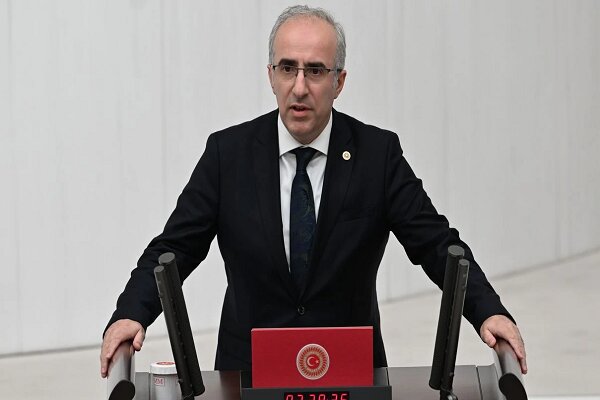
In this regard, Mehr News interviewed Mustafa Kaya, deputy leader of Turkey’s Islamist Felicity Party (Saadet Partisi) and member of the Turkish parliament. Below is the full text of the interview.
The agreement reached last Thursday in Sharm el-Sheikh, Egypt, regarding President Trump’s plan includes three key points: withdrawing Israeli troops from Gaza, allowing humanitarian aid to the enclave, and exchanging prisoners. This means that we are still in the early stages of planning and Hamas has not yet been disarmed. Could this issue become a major challenge in the next phase? Given Israel’s past record of violating ceasefires, could this agreement also be broken?
First and foremost, we must understand that Israel has failed to achieve its military and political goals. Almost completely isolated in the eyes of the world and ultimately forced into negotiations by the global impact of humanitarian convoys.
It is noteworthy that Hamas has declared that it will only hand over weapons to the Palestinian state. Israel, which knows no borders, is likely to violate this agreement. However, the terms of this ceasefire are different from previous ceasefires, and a special monitoring group will oversee its implementation.
Still, risks remain, but only time will tell how this situation will develop.
The Zionist regime was preparing to launch an operation to occupy Gaza, but surprisingly accepted President Trump’s plan. Many analysts view Israel’s latest attacks as a strategic failure, arguing that the regime gained nothing from them. The same regime that tried to annihilate Hamas ultimately waited for Hamas to accept Trump’s peace plan. How do you interpret this?
Israel is essentially in a bind. They had hoped to expand their territory through the Abraham Accords, but instead they became increasingly isolated and even began attacking neighboring countries. The international tribunal has declared it a genocidal and terrorist organization.
Some countries have announced that they will arrest Netanyahu if he enters their territory. Mr. Trump himself has spoken about the growing anti-Israel sentiment among U.S. Republicans.
For these reasons, Israel may have sought to buy time through this agreement. But the real work begins now. Israel’s every move must be closely monitored.
It was clear that President Trump was eager to win the Nobel Peace Prize by ending the Gaza war and resolving tensions between Azerbaijan and Armenia. However, he did not win the award. Can the US president continue to promote the Gaza peace process and ensure that both sides remain committed to it?
Trump wants to act like a corporate CEO and run the country like a business. He recognized the economic damage caused by rising anti-Israel sentiment in the Persian Gulf and around the world, and may therefore have pushed for this deal.
He also calculated that the ongoing conflict would deplete U.S. resources and negatively impact competition with China and Russia. Ultimately he will choose to support Israel, but for now he has made statements aimed at furthering this plan.
Whatever the outcome, the U.S.-Israel alliance is not only regional but global, and plays a crucial role in both U.S. foreign and domestic policy.
After Operation Al-Aqsa Storm, the Palestinian cause was no longer seen as merely an Arab or Islamic issue, but as one of the gravest humanitarian crises of our time. Sumud Flotilla was a clear example of this. Some members of Felicity’s party, including members of Congress, also participated in the mission. What do you think about this?
Genocide has three dimensions: ethnic, religious, and political. When the goal is to eliminate communities across these dimensions, it is genocide. Israel did all of that in Gaza.
Moreover, Israel has used blockade and starvation as tools of genocide. Initiatives like Sumud and Freedom Flotilla have awakened the conscience of humanity in response to this situation.
The participation of our members of Congress in such missions is the clearest expression of our rejection of Israel’s inhumane blockade.
MNA/6618315