
The fragile ceasefire in the Gaza Strip has once again focused the world’s attention on the underlying dynamics of the Israeli-Palestinian conflict and the broader power struggles shaping the Middle East. Although a temporary ceasefire halted bloodshed for the time being, questions about its sustainability, reconstruction, and accountability continue to dominate regional debates.
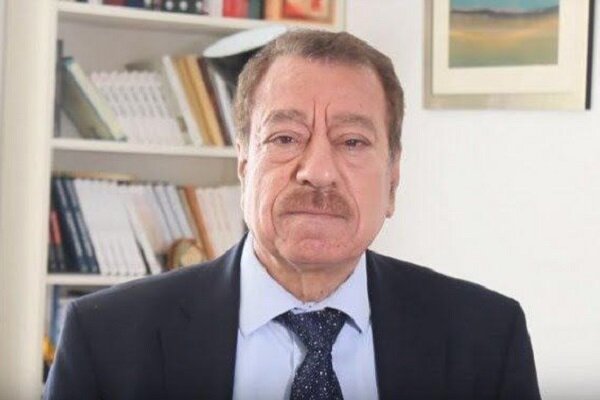
In this context, Abdel Bari Atwan, a prominent Palestinian-British journalist and editor-in-chief of Rai al-Youm, offers a critical perspective on Israeli motives, the role of the United States, and the future of Gaza. Speaking to Me News Agency, Atwan described the ceasefire as “very fragile” and warned there was little hope for lasting peace given Israel’s history of violating the agreement.
Atwan’s comments shed light on the intersection of politics, economics, and power that drives Israeli policy. From the destruction of Gaza’s infrastructure to the geopolitical ambitions of creating a “Greater Israel,” his analysis highlights the deep challenges facing genuine peace efforts in the region.
The following is the text of the interview with Abdel Bari Atwan by Mehr News Agency.
1. How long do you think this ceasefire will last? Given Israel’s past ceasefire violations, do you foresee the possibility of another attack once the prisoner exchange phase is complete?
I believe this ceasefire is very fragile. It’s simply because Israel is not trusted. We have had many agreements, ceasefire agreements, exchanges of hostages and prisoners, but none of them worked. Look at what’s happening in Lebanon, more than eight months after the ceasefire. Israel has broken this ceasefire more than 5,000 times, raiding Lebanon, and killing people there almost every day.
Therefore, I believe that the same experience could be repeated in Gaza. Today, we will see about nine people killed in Israeli military raids in Gaza following the ceasefire. So those people (Israelis) actually never honored their promise not to kill, whether it was in Lebanon, Yemen, Gaza or the West Bank. So personally I’m not very optimistic.
2. What do you think are the main challenges to Gaza’s reconstruction, and which actors do you think will shape this process?
I believe that the reconstruction of the Gaza conflict will be a very complex phase. More than that, Gaza is completely destroyed. Israel has destroyed about 95% of houses and building towers in the Gaza Strip. People are homeless here. More than 2 million people are completely homeless.
The question is: Will Israel allow this construction? The second question is who will pay for it?
This is a bold position. Israel demolished it and asked the Arabs to actually finance its construction, which could cost more than $700 billion. So it’s very early to talk about construction. We are only at the first stage of this ceasefire. So I think that Israel will again violate this agreement, this ceasefire, and I would not be surprised. They will come back and occupy Gaza again.
The most important thing here is that they are protected by the American government. The US government gave Israel the green light to destroy Gaza. Then there are genocidal wars and famine wars. So as long as Americans stand with Israel, I believe they will continue to encourage Israelis to continue their genocide and moral starvation, but I also believe that Reconstruction is just a word with no credibility at all.
I think the most important thing right now is to save the Palestinians in Gaza from genocide, destruction and starvation, and to allow humanitarian aid agencies to enter Gaza. People are really hungry there, really hungry. So the priority now is to keep those people alive and stop the genocide and starvation. Then we can talk about recovery.
3. How do you think the recent wave of Palestinian statehood recognition has affected the political situation surrounding Gaza? Can international public opinion realistically constrain Israel in the future?
The most important thing at this point is to maintain the ceasefire. I don’t think there are any more discussions about a two-state solution or an independent Palestinian state. The United States, which is sponsoring the ceasefire and the so-called peace plan, does not recognize a two-state solution or an independent Palestinian state. President Trump has repeatedly stated that he does not intend to accept an independent Palestinian state and has opposed all movements calling for a permanent cease-fire and a realistic solution to the Israeli-Arab conflict. This is the problem.
Indeed, I believe that the Palestinians want to have their own independent state in all of Palestine, not just the West Bank and Gaza. All of Palestine is our country. But the problem is that Israelis are not just concerned about preserving Palestine, which was occupied in 1948. No, they actually want a larger Israel to be established, taking into account the Palestinian people, all of Palestine, and most Arab countries such as Syria, Lebanon, parts of Saudi Arabia, parts of Iraq, and parts of Egypt. This is the problem and we need to look at it. Israel wants to control the entire Middle East. They want to rebuild the Middle East.
They actually want to destroy Iran’s infrastructure, its military infrastructure, its nuclear infrastructure as well. So I think you need to be very careful when looking at this. Israel attacked Iran, and the US actually bombed Iranian nuclear facilities. Therefore, we must be very careful. I believe that America and Israel do not seek peace. They are experts in destruction, not construction. And they are experts at imposing sanctions on people and creating domestic problems for most Middle Eastern countries, including Iran, Lebanon, Syria, and Egypt. We know what happened to these countries and must be extremely vigilant and vigilant in confronting Israel’s plans to occupy the entire Middle East and establish a greater Israel.
4. When the situation is over, is there a realistic chance that Israel’s political leaders will be held accountable for war crimes?
Israeli leaders aim to eliminate all Palestinians. As Trump said, they want to establish a “Riviera of the Middle East” in Gaza. Gaza is also rich in oil fields. And Israel and Trump are trying to make billions, hundreds of billions of dollars out of Gaza, and they actually want to evacuate the entire population of Gaza in order to establish this Riviera.
Therefore, I believe they intend to carry out this evil plan in stages. So now they’re saying to the Palestinians, we have a ceasefire. Then they will find an excuse to break the ceasefire. And then they use these excuses to break the isolation imposed on Israel by the international community. I think Mr. Trump is working in the interests of Israel and in his own interests as a broker, as a real estate broker. So I think it’s an opportunity for him or his company and his inner circle to evacuate the people of Gaza and build a huge business there. They are looking for real estate business. They want to make money from the Arab world and also for the people of Gaza.
last greeting
I think the Middle East is still on the brink of war. As long as this American president is actually there, he is not a president of peace. He was a war president, and he came to make Israel great both internally and in power. He gave Israel $26 billion and lifted all embargoes on advanced weapons. This means there will be more wars. And like I said, he actually plans to implement the plan and implement it step by step. So we have to be very aware and very careful again. And I believe that those people would go to negotiations if they believed there was a military in the Middle East that could counter them and actually punish them. But I think the Middle East will probably be unstable for decades to come, maybe centuries, as long as they know that there’s no force that can actually stand against them.
Interview by Mohadese Pakhravan