
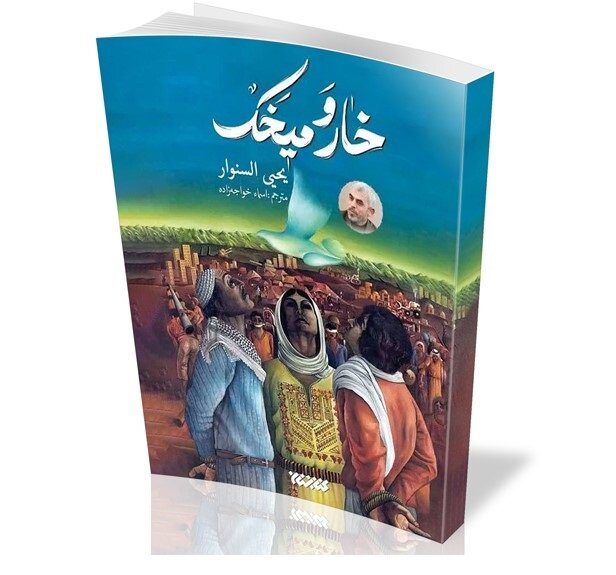
Written by late Hamas leader Yahya Sinwar, the book gives readers a deep insight into the lives of Palestinians. This novel called “Thorns and Carnations” is more than just a story. It is the strong voice of people living under occupation. This falls under the category of “resistance literature”, which is a story about the fight for freedom and dignity.
This book has been translated by many Iranian translators and publishers. Among them, the translation by Asma Khajezadeh has attracted the attention of Iranian audiences.
Yahya Sinwar wrote this important book in 2004. He wrote this book while being held in an Israeli prison. This fact makes this story feel very real and authentic.
In an interesting choice, Sinwar decided to write the book in Hebrew. This is the language of the occupiers. This decision appears to be a way to speak directly to the other side and show the reality of Palestinian life.
The characters in “Thorns and Carnations” aren’t created out of thin air. They are based on the real-life experiences of real Palestinians living in the occupied territories.
This book follows the life of a man named Ahmad. Ahmad was born in a refugee camp and has lived there all his life. The story is told in 30 chapters. Each chapter presents different events and problems that Ahmad faces within the camp.
Together, these chapters paint a complete picture of what daily life is like for Palestinian refugees. This method of telling the story piecemeal reflects that life under siege is full of its own challenges and struggles.
One of the main and most difficult topics in this book is about Palestinians working for Israeli employers. This book shows how complex this situation is.
For some families, this work is the only way to earn money and survive. They believe it is a necessary step to feed their children. However, for others in the community, this same act is seen as betrayal. They believe that working for the occupier is detrimental to the Palestinian struggle for freedom. This internal conflict illustrates the impossible choices people have to make every day.
The story is also about a young Palestinian student. These young men and women decided to travel to Egypt to continue their studies. This book describes the horribly difficult process of passing through Israeli military checkpoints.
You can also feel the deep anxiety of the mothers waiting at home, hoping for a safe return. This part of the story highlights how even a simple goal like getting an education can be a huge challenge.
Amidst all the struggles, this book also contains ordinary human moments. While in college, the protagonist Ahmad develops feelings for a young woman in his class. He plans to keep his feelings to himself and ask her to marry him only after graduation. This small personal dream of love and a future family stands in contrast to the larger political struggle. It is a reminder that people continue to desire a normal life.
The book’s main conflict is the choice Palestinians constantly face. They constantly have to choose between prison and freedom, silence or speaking out, accepting humiliation or standing up and resisting.
The author uses a simple but powerful image to illustrate this: bitter and sweet almonds. Bitter almonds represent difficult parts of life such as war, death, and sacrifice. These difficult experiences allow people to grow faster and become stronger. Sweet almonds represent hope, love, and the will to continue living.
This battle between survival and destruction is the core of the novel. This book depicts people who find strength in the midst of violence and still try to find inner peace.
The picture of her crying while holding a gun in one hand is very powerful. It expresses not only a heart full of sadness, but also a heart full of hope. The author depicts a world where war and hope coexist.

This book reveals that for the people of Gaza, the spirit of resistance is part of life itself. Shinwar, who fought from an early age, shows that being born in Gaza means being born into a life of struggle.
The fight for freedom is not just a political idea. It is woven into everyday life. You cannot separate people from resistance.
For many readers around the world, the life described in this book will seem shocking and unfamiliar. The childhoods of children in Gaza are very different from what most people know. I feel like I discovered a new world.
The book suggests that even other Arabs are often surprised when they learn the real details of life in Gaza.
Thorns and Carnations also explains the reasons behind Palestinian resistance. Shinwar makes his case as to why the fight is necessary. He explains that resistance is not an immediate emotional response. Rather, it is a prudent, long-term strategy. Steady efforts to regain their rights and land. It’s a journey that requires a lot of patience and planning.
Finally, this book shows how the Palestinian people used their faith and determination to become a powerful force. Their struggle affected not only Palestine but all over the world.
This novel is a testament to a journey filled with great challenges, but also unwavering hope. It teaches us that true freedom requires great sacrifice.
Yahya Sinwar was a man who knew how to use both weapons and words. Even after his death, his words continue to spread the message.
“Thorns and Carnations” is his eternal legacy. This is a story that continues to explain, justify, and celebrate the never-ending struggle for Palestinian land, dignity, and future.
Report by Tohid Mahmoodpour