
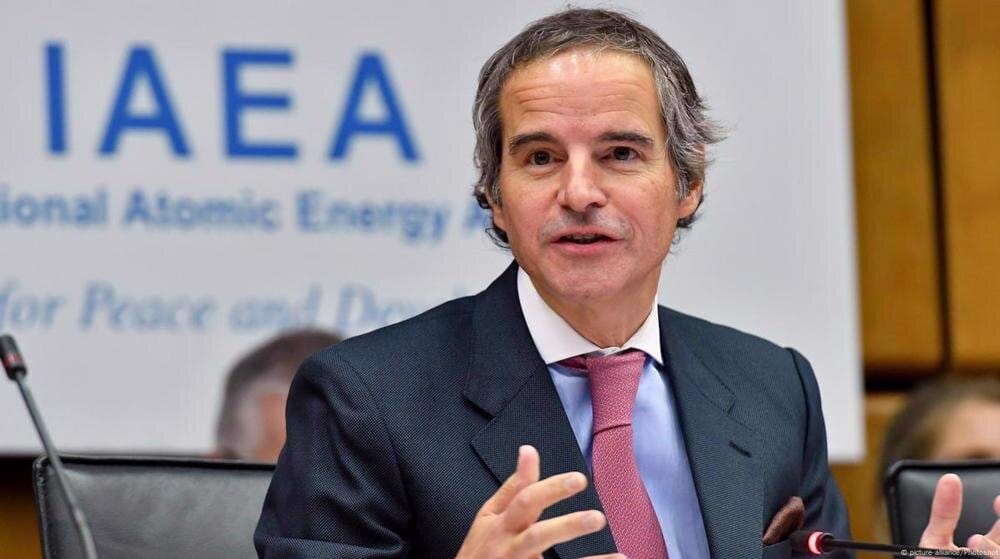
In an interview with Swiss newspaper Neue Zurcher Zeitung, Raphael Grossi said inspectors had found no evidence that Iran had hidden large amounts of enriched uranium.
The IAEA director general claimed that “the majority of Iran’s enriched material is stored in known facilities in Isfahan and Fordow, and to some extent in Natanz. A small portion may have been transferred to other locations.”
He claimed that Iran currently possesses approximately 400 kilograms of highly enriched uranium.
IAEA inspectors will only be allowed access to Iran’s nuclear facilities “if Iran determines it is in its own interest,” Grossi said. He stressed that Iran’s voluntary cooperation is needed to gain full access to Iran’s bombing facilities after the US and Israeli attacks.
Grossi expressed confidence that “a diplomatic solution to the conflict over Iran’s nuclear program will be found,” adding: “If we can bring all parties back to the negotiating table, we can save us from further bombings and attacks.”
Referring to Iran’s reaction to the reimposition of sanctions and the activation of the “snapback” mechanism by three European countries (Germany, France and the United Kingdom), Foreign Minister Grossi said: “Iran’s reaction is not completely negative. It has not withdrawn from the Treaty on the Non-Proliferation of Nuclear Weapons (NPT) and cooperation with the institutions continues, but it is still not at the desired level.”
Mr. Grossi concluded by saying that resolving the Iranian nuclear issue requires “patience and mutual understanding,” adding, “The Iranian issue cannot be separated from the broader regional context. Ultimately, the future of the Middle East will be determined by two issues: the situation in Palestine and the future of Iran.”
MNA