
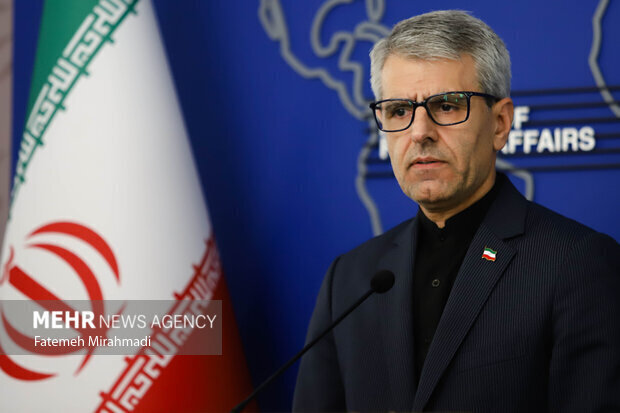
“Many of the claims made by Wendy Sherman about the snapback mechanism are false,” said Esmail Baghai, who spoke to students from Mashhad’s Razavi Islamic University of Sciences on Wednesday.
According to Press TV, Wendy Ruth Sherman, the senior US nuclear negotiator during the JCPOA negotiations, writes in her memoir, Fear Failed: Lessons in Courage, Strength and Persistence, that the inclusion of the so-called snapback mechanism, or reinstatement of UN sanctions against Iran, was one of the final and most difficult parts of the negotiations.
Baghai dismissed the claims, saying “the text of the JCPOA is clear and simple” and denied claims that Iran had been warned about the snapback mechanism.
The UK, France and Germany activated the SO mechanism on August 28, beginning a 30-day process to restore all UN sanctions against Iran.
Despite last-ditch efforts by Russia and China to maintain diplomacy, the Security Council failed to reach an agreement on September 26, and two days later, the E3 and the US declared sanctions reinstated and called on UN member states to implement them.
The Iranian diplomat also said that there was mutual mistrust during the JCPOA negotiations, adding: “The other side did not trust us and we did not trust the other side.”
He added: “Some people claim that the snapback mechanism was forced upon us, but that is completely untrue.”
He explained that while Iran’s guarantee is its nuclear assets, the other side wants assurances that the resolution can be reinstated if Iran violates its commitments.
Mr. Baghai said that although Iran had faithfully fulfilled its obligations under the JCPOA, it had been met with a malicious response from its counterpart.
According to Baghaei, resolution 2231 “has effectively been terminated based on legal and logical reasoning, but Western countries insist that it remain in force.”
Iran on Saturday declared an end to the JCPOA and all UN restrictions on its nuclear program following the expiration of Security Council Resolution 2231, which approved the nuclear deal.
The country insists its nuclear file is closed and should be subject to standard international oversight.
The diplomat added that the two permanent members of the UN Security Council and the Non-Aligned Movement countries oppose Western interpretations of the “importance and greatness of our country and our diplomatic capacity.”
Elsewhere in his remarks, Bagai criticized the US approach, saying, “The United States’ bullying behavior has disrupted international relations. Even renaming the US Department of Defense to the Department of the Army would better reflect America’s actual actions.”
“America’s aggressive unilateralism endangers international peace and security and fosters a dangerous pattern in world relations. The United States seeks to impose its rule by coercion through a variety of means, including tariff wars.”
MNA