
After the Sharm el-Sheikh summit, the Islamic resistance movement Hamas was able to wisely manage the situation, as some Arab and European countries supported the Trump peace plan and its implementation phase began. In this way, the Zionist regime was forced to reduce the intensity of the offensive to some extent and move towards a military withdrawal to the borders of the Gaza Strip and the occupied territories, while releasing many prisoners.
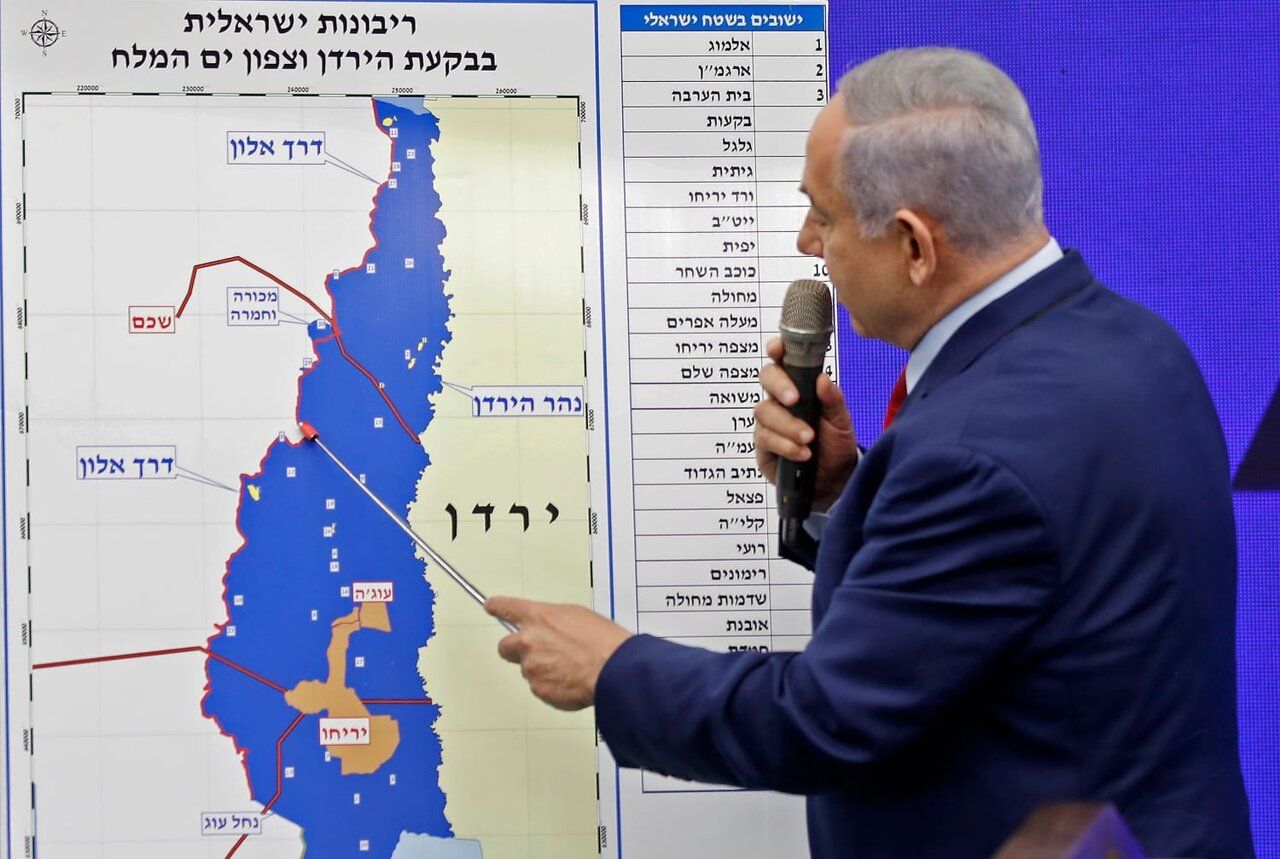
These developments and positive steps aimed at maintaining a ceasefire and providing aid to defenseless Gazans were, in fact, a clear defeat for the regime that had claimed to destroy Hamas and Gaza. It was predicted that Israel would distract world opinion to cover up this failure and hide its incompetence in confronting Palestinian resistance by opening a new front. Therefore, we are witnessing the adoption in Congress of two bills regarding the annexation of Occupied East Jerusalem to the West Bank and Occupied Palestine.
The announcement of this news immediately caused widespread worldwide reaction, was able to somewhat distract public opinion from the genocide in Gaza, ceasefire violations, attempts to neutralize the terms of the peace plan, and gave Prime Minister Netanyahu an opportunity to present the Zionist regime as the region’s predominant power. However, following the rapid opposition of the international community, especially the United Nations, European countries, Arab governments, and even the United States, Prime Minister Netanyahu declared that this action was not a priority in the current situation and was merely a political ploy aimed at managing the domestic opposition. However, in reality, this action should be considered the beginning of a new stage. Despite the US’ stated position and Prime Minister Netanyahu’s apparent retreat, this move may be followed in the future. Trump’s main goal in his first term as president in his so-called “Grand Deal” plan was from the beginning to annex the West Bank to other occupied territories under occupied Palestinian control. The idea of fully annexing the West Bank is an ongoing US strategy that enjoys Washington’s political and security support, as we witnessed when the US embassy was moved to Jerusalem during his presidency. There are currently two reasons why President Trump clearly opposes the annexation plan. First, he wants to see the peace plan through to completion. Second, the United States does not want to become further isolated in the international community in the face of public pressure and negative positions from international organizations, Europe, and Islamic countries.
However, one should not think that the current opposition from Western countries or Prime Minister Netanyahu’s comments mean the end of this case. It is very likely that the annexation issue will be raised again after the current phase of the peace plan passes, and may even be accompanied by US support or silence. Indeed, in the short term, President Trump has discussed temporarily halting annexation in order to advance his desired peace plan, but if this plan fails to secure the interests of the Zionist regime, he may return to expansionist policies in the West Bank. It is worth noting that such a move is in complete contradiction to the so-called “two-state solution” plan, which, according to the 1948 United Nations resolution, envisaged the formation of two states: Arab (Palestine) and Jewish (Israel). Recent moves by the Zionist regime are not only contrary to this international resolution, but also contradict the current position of most countries in the world, which calls for official recognition of a Palestinian state.
Therefore, the international community, especially the Islamic Republic of Iran, must carefully monitor developments as the West Bank annexation issue is not a simple and temporary issue. If this trend continues, the scale of the occupied territories will certainly expand, the Palestinian people’s opposition and resistance will intensify, and as a result, regional development may fall into a critical phase.
MNA