
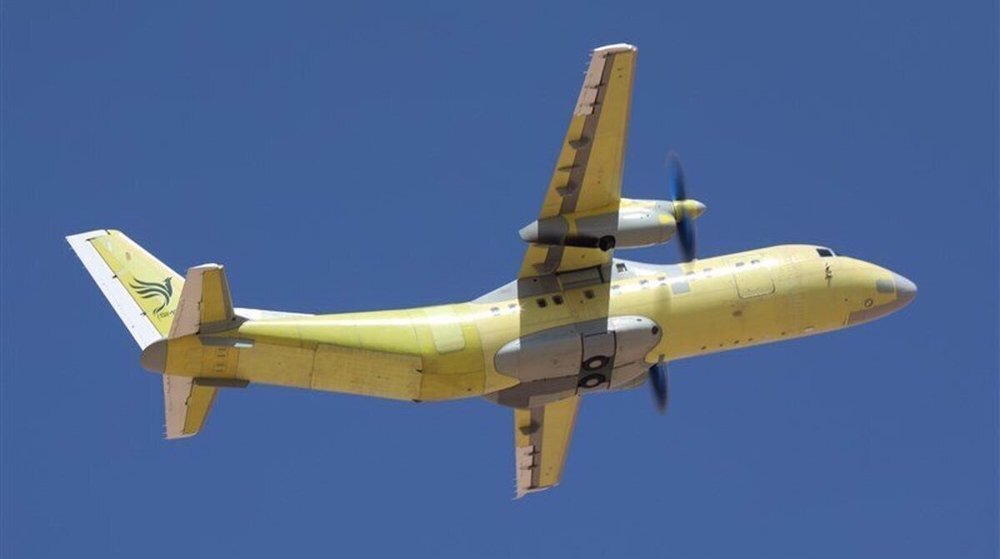
Test flights of the Simurg began on Tuesday at an airfield in the city of Shahin Shahr in central Iran, after a ceremony attended by the deputy heads of Iran’s Ministry of Defense and Ministry of Transport.
According to a statement from Iran’s Civil Aviation Authority (CAA), the aircraft will need to conduct 100 hours of test flights in various conditions to receive final permission to join Iran’s air fleet.
As reported by Press TV, CAA Director-General Hossein Pourfarzaneh said on Tuesday that the indigenization process of Simurgh will take more than 15 years and ranks Iran among less than 20 countries in the world with the ability to design and manufacture aircraft.
Named after a mythical bird from Persian mythology and literature, Simurgh has two 2,500 horsepower engines, can carry 6 tons of cargo over a distance of 3,900 kilometers, and has a maximum takeoff weight of 21.5 meters.
The aircraft conducted a high-speed taxi test in May 2022, one year before its maiden flight.
Since then, Iran’s Ministry of Defense, which manufactures the Simurgh, has been trying to receive a test certificate for the aircraft from the CAA, a process that included obtaining a type certificate, a document that indicates the aircraft’s airworthiness.
Experts say the Simurgh is a modified version of the IrAn-140, a joint project between Iran and Ukraine, which is itself based on the Antonov An-140. However, former CAA officials disputed this view, saying it was a completely different plane due to improved engines and fuselage.
The Simurgh is said to be an agile, light and fast aircraft with high cargo carrying capacity that suits Iran’s weather conditions, making it ideal for critical services such as medical flights.
Officials say the aircraft will improve the ability of Iran’s army and navy to transport troops and equipment between bases across the country.
They also believe that Simurgh could join Iran’s short-haul airline fleet in the future.
Recent news reports have pointed to significant achievements in Iran’s aircraft manufacturing and maintenance industry.
This comes as sanctions imposed on Iran have prevented the country’s airlines from purchasing new aircraft and aircraft parts.
MNA/