
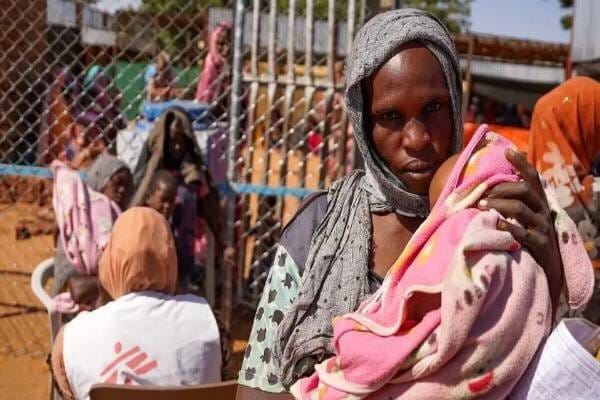
Sudan, a vast country in the Horn of Africa divided by the Blue and White Nile rivers, has witnessed a severe humanitarian and political crisis in recent years. Since April 2023, the conflict between the Sudanese army commanded by General Abdel Fattah al-Burhan and the Rapid Support Forces militia led by Mohamed Hamdan Daklou (Hemidati) has escalated into a full-scale civil war. The conflict has left more than 20,000 people dead, 13 million displaced and 30 million in need of humanitarian assistance. The fall of El Fasher, capital of North Darfur state, on October 26, 2025, not only changed the military balance but also raised concerns about a repeat of the genocide of the 2000s.
Sudan’s current crisis is not just an internal conflict, but the result of a combination of foreign interference, inter-tribal conflict, and historical legacy. The United Arab Emirates has been accused of sponsoring rapid support forces, and international pressure on Khartoum further complicates the issue of national sovereignty.
The roots of the war and the war spread to Darfur
Sudan’s war was born out of internal divisions and conflicts between military elites. After Omar al-Bashir was ousted in 2019, former allies Burhan and Hamidati clashed over the division of power and resources. The Rapid Assistance Force, which has roots in the Darfur Janjaweed militia and a history of violent ethnic repression, first attacked Khartoum and then expanded into the country’s western regions.
Darfur, the site of a genocide in the 2000s that killed more than 300,000 people, is once again the target of violence. Al-Fashir, a city of about 800,000 people, was besieged by Rapid Support Forces (RSF) for 18 months. The fall of the city in October 2025 was not only a military defeat, but also a sign of a deteriorating humanitarian situation. Nighttime attacks on residential areas, abductions of women and children, and destruction of homes were reported. Many residents were forced to flee 70 kilometers to the town of Tawira, where they witnessed the killings and mass graves of civilians.
war crimes and ethnic cleansing
Fasher’s fall is emblematic of widespread human rights violations. In the first three days alone, more than 1,500 civilians, mainly from the Masalit ethnic group, were killed and subjected to ethnic cleansing. Six medical staff were abducted and a large ransom was demanded for their release, severely damaging the medical system. Hospitals became military targets and medical equipment was looted. The Office of the United Nations High Commissioner for Human Rights has documented mass executions, systematic rape of women, and acts of tribal violence. These actions have exacerbated ethnic tensions and created a serious humanitarian crisis. The Sudanese government calls these acts “acts of terrorism” and is attempting to provide military support to the Rapid Support Forces militia.
Role of support for foreigners
The UAE’s role in supporting rapid support forces is prominent. According to various reports, the country provides military equipment such as armored vehicles and light weapons to militia groups. Analysts see this support as economic exploitation, control of Darfur’s gold mines, and access to Suakin port. This foreign support not only prolonged the war, but also stimulated debate about international responsibility for war crimes.
Humanitarian situation and key statistics
Sudan’s humanitarian crisis is widespread. According to a UN report, 30 million people require humanitarian assistance, 25 million face severe hunger and 13 million are displaced. Many of the displaced people have sought refuge in neighboring countries such as Chad, Egypt and Ethiopia. More than 250,000 people in Darfur live under siege, lacking access to food, medicine and safety. Blocking relief routes by rapid response forces led to the use of starvation as a weapon of war. According to the report, Darfur is experiencing population cleansing and repopulation, which could have long-term implications for the region’s social and ethnic stability.
Domestic stakeholders facing crisis
The two main players in this war are the Sudanese army and the RSF, but there are also layers of complexity. Sudan’s military, led by al-Burhan, operates in the east and south of the country and is committed to preserving national dignity. The RSF controls the western region with outside support. Islamist groups and local People’s Committees play an important role in protecting civilians and documenting crimes. Civil-military coalitions can play a decisive role in the post-conflict phase, but their internal cohesion and coordination remain weak. Local committees with limited resources are especially important as the only civil protection force.
Overseas reaction
The global response is slow but important. The United Nations, African Union and European Union condemned the violence. The United States imposed sanctions on the commander of the Rapid Support Force, and the United Nations Secretary-General called for a halt to arms shipments. Powerful countries in the region have attempted to mediate between militaries and rapid support forces. At the grassroots level, international campaigns and demonstrations are increasing pressure on countries that support militias and on the international community. However, aid still covers only a fraction of the true needs and the humanitarian situation remains critical.
prospects for peace
Peace in Sudan is possible but fragile. There are three main methods:
1. Military security: including a ceasefire and the integration of rapid support forces into the military and transitional government.
2. Civil-government: Includes national dialogue, establishment of a transitional government, and holding elections.
3. Human society: including national reconciliation, reconstruction, and the establishment of social justice.
Conditions for success along these paths include mutual recognition, neutralization of external interference, participation of non-political forces, and enforcement of justice to prevent retaliation. By strengthening its internal structures and establishing a transitional parliament, the Sudanese government can regain legitimacy, but challenges remain significant. Fragments within the military, overreach of rapid support forces, and external pressure are serious threats to stability.
conclusion
Mr. Al Fasher’s ouster, the crimes of rapid support forces, and the role of foreign countries have turned the situation in Sudan into a complex and multidimensional crisis. But popular resistance, support for the military, and international efforts to build peace can pave the way to recovery and stability. Sudan’s future is possible only through national reconciliation, justice and limiting foreign interference.
Behind the scenes, the UAE is the main supplier of the Rapid Support Forces militia, which fuels the war by smuggling gold and sending sophisticated weapons. Despite its claims of neutrality, the United States indirectly provides logistics to these forces through private security companies and military bases in the Horn of Africa, and the European Union plays an indirect role by remaining silent and continuing to trade money. Diplomatic efforts toward a ceasefire and humanitarian aid, including the formation of the Quartet, have so far been limited.
MNA