
As the United States’ main nuclear rivals, Russia and China, continue to test their respective weapons, President Trump announced on social media last week that he had ordered the Pentagon to begin testing nuclear weapons immediately, according to Newsweek.
Energy Secretary Chris Wright later clarified that the test would not involve an actual explosion, as previously conducted in the country. Instead, it can involve all other parts of the nuclear weapon to ensure an atomic explosion.
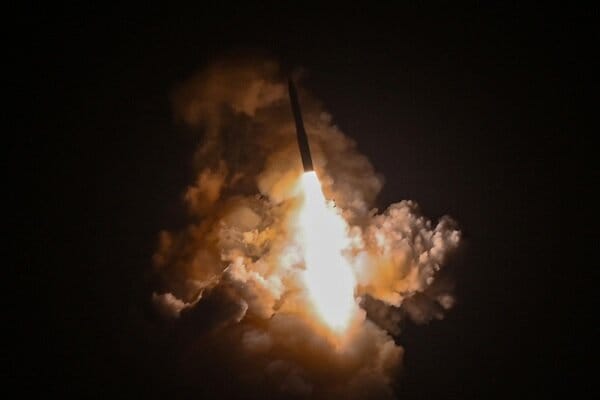
The U.S. military regularly tests its ICBM fleet, which is part of the nuclear triad along with nuclear-capable ballistic missile submarines and bombers, several times a year to ensure that it is safe, secure, effective, and practical in providing strategic deterrence.
Marco Langbroek, a lecturer in the Department of Aerospace Engineering at the Delft University of Technology in the Netherlands, said, citing navigational alerts, that the upcoming US Minuteman III intercontinental ballistic missile test will take place between Wednesday and Thursday.
The missiles will be launched from Vandenberg Space Force Base in California and will reach five debris zones designated as the Ronald Reagan Ballistic Missile Defense Test Range on Kwajalein Atoll in the Marshall Islands in the central Pacific Ocean.
If confirmed, the flight path would be similar to the previous test launch in May. In this case, an unarmed missile carrying a reentry vehicle designed to carry a warhead flew approximately 4,200 miles west after launching from California.
This is the second time the U.S. nuclear military has conducted a test since September, when a submarine fired four unarmed Trident II D5 extended-life submarine-launched ballistic missiles in the Atlantic Ocean off the coast of Florida.
MNA