
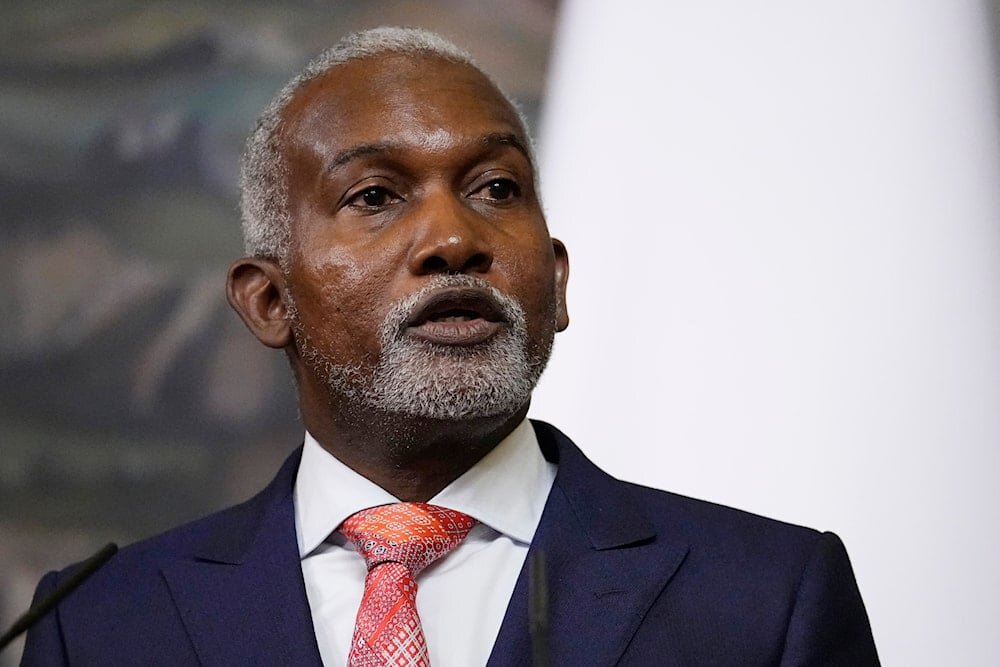
Taggar’s statement came in response to a question about US President Donald Trump’s warning of possible swift military action in Nigeria if the country fails to stop armed groups from killing Christians, Reuters reported.
Speaking in Berlin alongside German Annalena Verbock, Tugger pointed to his country’s “constitutional commitment to religious freedom and the rule of law” and said: “This shows that it is impossible for any religious persecution to be supported in any way by the Nigerian government, whether at the federal, state or local government level.”
US President Donald Trump announced on November 3 that his administration would immediately halt US aid to Nigeria, citing the “genocide of Christians” in the country. He warned that any military action by the United States would be “decisive” and said that if troops were sent in, “we will be in full force to eradicate terrorists once and for all.”
Following his statement, the U.S. State Department redesignated Nigeria as a “country of special concern” under the International Religious Freedom Act, allowing the U.S. government to impose sanctions and limit aid. President Trump also said he has ordered the Pentagon to begin planning for potential actions, but did not provide a clear outline of what those would include.
In Abuja, Nigeria’s presidential office welcomed U.S. assistance in the fight against terrorism, but responded that any cooperation must “respect Nigeria’s sovereignty and territorial integrity.” National Security Advisor Daniel Bwala said the government remains open to dialogue, adding that Trump’s comments should not be taken as a formal policy change.
Officials also pushed back against Trump’s portrayal of the violence as a targeted campaign against Christians. They stressed that both Christians and Muslims are suffering from attacks by extremist groups such as Boko Haram and ISWAP, as well as from clashes between farmers and herders across the country.
President Trump’s claims about a “genocide of Christians” in Nigeria stem largely from pressure from U.S. lawmakers and advocacy groups who have long accused Abuja of turning a blind eye to anti-Christian violence. Sen. Ted Cruz and members of the U.S. Commission on International Religious Freedom have repeatedly claimed that tens of thousands of Christians have been murdered and thousands of churches destroyed since 2009, but these numbers remain unconfirmed.
Another factor shaping President Trump’s comments is the continuing wave of violent attacks in northern and central Nigeria. Armed groups such as Boko Haram, ISWAP and criminal militias have been carrying out attacks, kidnappings and bombings in Nigeria for more than a decade.
Some of these attacks have actually targeted Christian villages, churches, and clergy, increasing reports of faith-based persecution. But analysts say Muslim communities have also been hit hard by similar insurgents, with entire towns in the northeast evacuated or destroyed.
MNA