
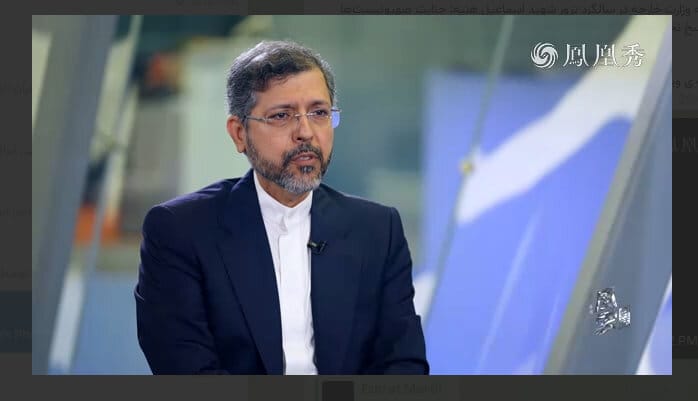
Saeed Khatibzadeh, Deputy Foreign Minister and Director of the Center for Political and International Studies (CPIS), made the comments while speaking at a conference at the Sasakawa Peace Foundation (SPF) in Japan.
Referring to the unprovoked war of aggression against Iran in June, he said the international community should not ignore the Israeli regime’s aggressive and terrorist acts carried out in coordination with the United States during negotiations under the false pretext of diplomacy.
The senior diplomat added that Iran’s enemies cannot achieve by political means what they could not achieve by invasion.
The CPIS chief emphasized that the unprecedented unity of Iran’s defense apparatus and Iranian people not only thwarted the enemy’s plot, but also nullified all the flawed narratives that had been propagated for decades.
“Iran’s enemies cannot achieve by political means what they have not been able to achieve by invasion,” he noted, noting the excessive demands of the United States and Western governments over the hype created by Israel regarding Tehran’s peaceful nuclear program.
Rejecting foreign pressure and dogma, Khatibzadeh said Islamic revolutionary leader Seyyed Ali Khamenei had comprehensively outlined a framework by which the country would never surrender to its enemies. “We have never turned away from diplomacy and we are not the ones who need to prove our goodwill,” he added.
Elsewhere in his speech, the deputy foreign minister criticized the three European countries – Britain, France and Germany – for activating the so-called snapback mechanism, saying it was a grave mistake from legal, political and strategic points of view.
He concluded that governments around the world must overcome hegemony and bullying in international relations through cooperation in multilateral frameworks.
Mr. Khatibzadeh and his accompanying delegation met with heads of prominent Japanese think tanks, including the Japan Institute of Energy Economics (JIME), the Middle East Institute (MEIJ), the Institute of Developing Economies (IDE), the Institute of Geoeconomics (IOG), and the Sasakawa Peace Foundation (SPF), and also participated in joint roundtables with researchers.
MNA/IRN