
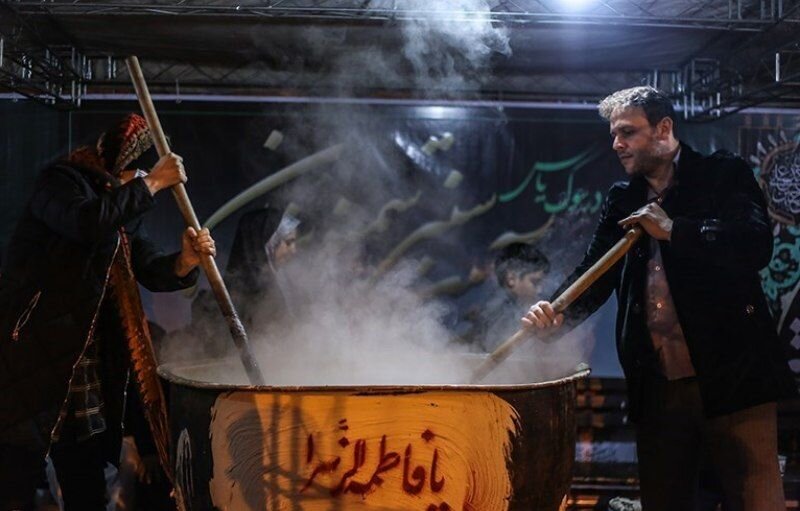
The centuries-old Moqadzadeh Historical House in the central Iranian city of Saveh becomes a quiet center of worship each year during Fatimiyyah, the day of remembrance of Prophet Muhammad’s (PBUH) daughter Fatima. During this time of reflection and mourning, local families gather to prepare samanu (a traditional Persian pudding made from sprouted wheat) and continue to observe the custom known as samanu pazan.
People of all ages take part in the cooking process, which begins before dawn and continues throughout the day. Flour, flour, and water are slowly simmered in large copper pots to create a rich, naturally sweet dish that is shared liberally among participants and visitors. This ritual involves prayer, reflection, and a shared sense of purpose rooted in cultural and religious continuity.
For many of the women leading the ceremony, Samanupazan is as much about connection as it is about food.
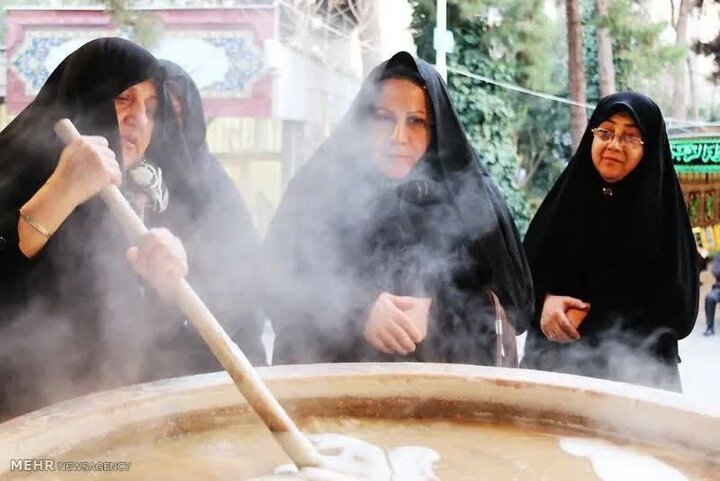
The revival of this old tradition has been supported in recent years by the City of Sabé and the City’s Cultural Council, ensuring that it continues to thrive as part of the region’s living heritage. Families donate in a variety of ways, some offering wheat or sugar, others sponsoring tea or donating their time to serve visitors. Acts of generosity are a hallmark of this event, with residents often volunteering to help or provide food. Acts of generosity are common. Passersby might sponsor pots of soup or hand out hot samanu to the crowd.
But Samanu’s story extends far beyond this courtyard. The dish first entered Iran in the early Islamic period and gradually evolved into its current form.
Beyond its cultural and spiritual role, samanu has a special place in traditional Persian medicine due to its nutritional properties. Because of its deep connection with spring, which symbolizes fertility, rebirth, and the rebirth of nature, it is also an essential part of the Persian New Year’s table, Haftsheen, which celebrates the rebirth of life.
In 2016, Iran’s Ministry of Cultural Heritage officially registered Samanu Pazhan and its related rituals as part of the country’s intangible cultural heritage.
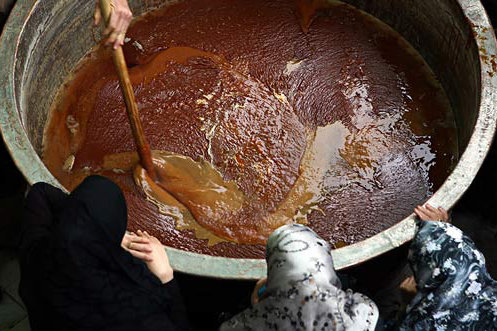
This year’s main pot contained 170 kg of wheat, 500 kg of flour and about 2,000 liters of water, producing several thousand servings of samanu. But beyond the scale of the cuisine, what stands out is the collective effort and cooperation that brings the community together.
As the ceremony ends and the last portions are distributed, the smell of wheat and the sounds of quiet conversation fill the courtyard of Moqadzadeh’s house. This simple yet deeply rooted tradition continues to connect generations through faith, memory and shared heritage.
Throughout Iran, Lady Fatima is deeply respected in the hearts of many people. She is seen as a symbol of purity, compassion and resilience that continues to inspire generations of Iranians. Rituals like Samanu Pazhan reflect this enduring respect, transforming everyday acts into expressions of faith and remembrance.
Reported by Mohadese Pakhravan