
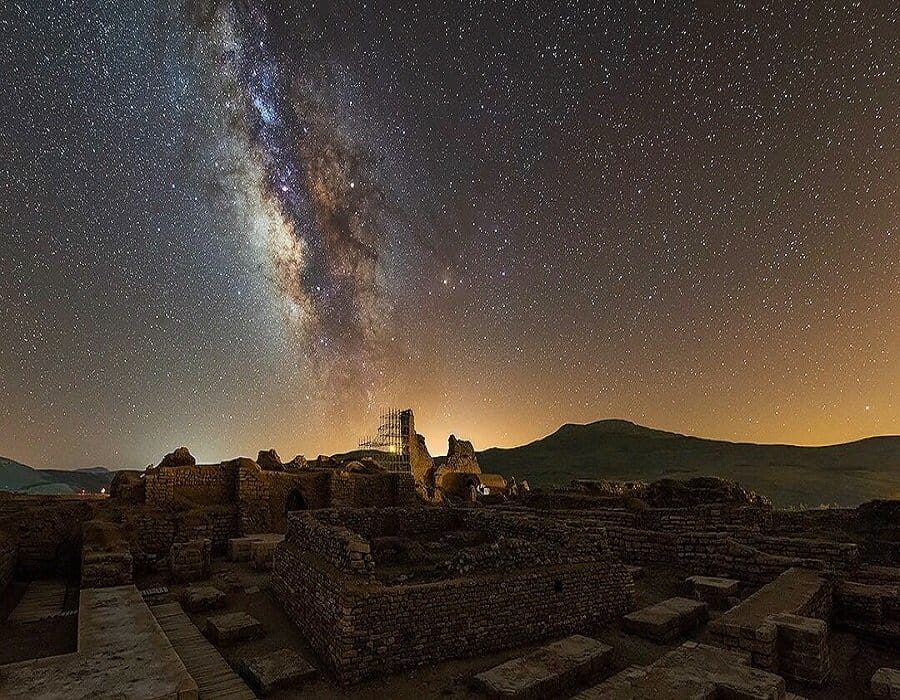
Takht-e-Soleiman (Solomon’s Throne), located in the mountains of Western Azarbaijan, Iran, is a breathtaking archaeological site with a history dating back more than 3,000 years. Once a center of Zoroastrian worship during the Sassanid period, its ruins and sacred fire temples continue to enshrine the mysteries of an ancient civilization that intrigue historians and travelers alike.
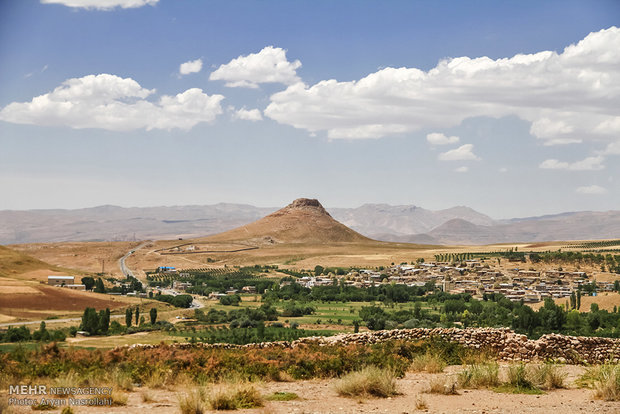
Takte Soleiman, UNESCO World Heritage Site
Takte Soleiman was added to UNESCO’s World Heritage List in 2003. Recognized for its cultural, historical and architectural importance, the site preserves the remains of a Sasanian fire temple and fortified settlement, reflecting ancient Zoroastrian religious practices. Its UNESCO listing highlights its outstanding universal value and the importance of preserving this remarkable heritage for future generations.

Ancient temple of Takte Soleiman
According to ancient writings, Takte Soleyman was believed to be the birthplace of Zoroaster. It was a large educational and social center and place of worship for Iranians during pre-Islamic times. However, it was destroyed in 624 AD during an attack by the Byzantine emperor Heraclius.
The site is home to some impressive structures that demonstrate the architectural and design talents of the ancient Persians. The main structures of Takt-e-Suleiman include the temples of Azargoshasp and Anahita.
Azargoshasp Temple is one of the most impressive structures in Takt-e-Suleiman. This temple was dedicated to the worship of fire, an important aspect of Zoroastrianism. The design of the temple features a central courtyard surrounded by a series of rooms and halls. The walls are decorated with intricate carvings and reliefs depicting scenes from Zoroastrian mythology.
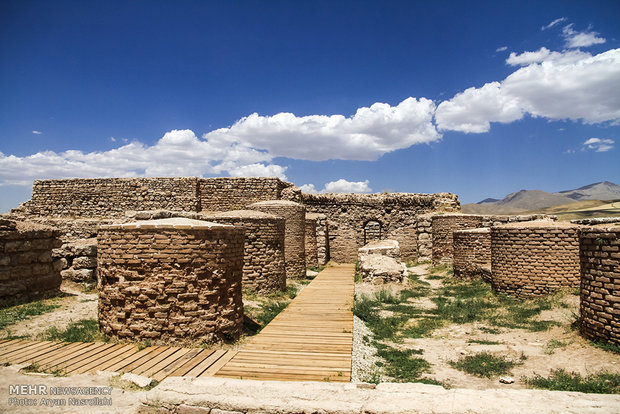
Anahita Temple is another impressive structure in Takte Soleyman. It was built during the Parthian period and was dedicated to Anahita, the goddess of water and fertility. This temple features a rectangular design with a central hall that was used for religious ceremonies. The walls of the temple are decorated with beautiful frescoes depicting scenes from Persian history and mythology.
Devil’s Prison near Takte Soleiman
Three kilometers west of the ruins is a cone-shaped hollow mountain that was formed as a result of volcanic activity thousands of years ago. Some locals called it Solomon’s Prison, believing that King Solomon threw monsters who disobeyed him into a deep crater.
Built during the Sasanian period (224-651 AD), the conical prison was a place for Zoroastrian priests to offer sacrifices and pray.

This hill was formed over thousands of years by mineral stone deposits from an ancient lake. It was once a temple between 830 and 660 BC, and there were several therapeutic sulfur springs in the surrounding area.
Unlike other volcanoes, Hell Hill is made up of mineral stone deposits. There was once a spring in this area, but over time it became a lake. The water was filled with salt and sulfur.
Over time, the salt remained at the bottom of the lake and became a solid sedimentary layer. Thousands of years later, the layer now takes the form of a hill with a hole inside. The lake gradually dried up, but its remnants still remain.
This place is now one of the most beautiful natural attractions for mountaineers.
The strange story of “Majiro”
Solomon’s Prison or Devil’s Prison is a 100-meter-high conical hill with a terrifying hole and strange stories inside, located in Iran’s Western Azarbaijan province.
Climb the hill and at the top you will see a stone building made of saluge mortar. A black hole with no exit is hidden inside the building, and if you step into it, you will definitely die.
Some locals believed that Solomon imprisoned demons who rebelled against him in a black hole in the hills. They then built buildings on top of the black hole to tighten it.
According to the story, the devil inside the black hole is the same devil who stole from Solomon a special ring inscribed with the name of the Lord. This demon was believed to be a very dangerous and ferocious creature that releases poisonous gas from its mouth. Local residents believed that anyone who dared to step into the black hole would be killed by the devil. That’s why it was named the Devil’s Prison.
The fortress ruins were the first tourist attraction in Western Azarbaijan to be recognized as a World Heritage Site in July 2003.

Mysterious floating island lake near Takte Soleiman
Approximately 20 kilometers from Takht-e-Soleiman in West Azarbaijan, Iran, there is a remarkable lake known for its floating islands. This natural phenomenon intrigues locals and tourists alike.
The lake is fed by springs, rich in dissolved minerals, and reaches a depth of 112 meters in some areas. The floating island is made up of dense vegetation and local reeds, which remain green even in winter and gently float in the wind.

This natural feature has been the subject of both scientific curiosity and local legend. This lake of historical and archaeological importance complements the nearby Sasanian ruins of Takt-e-Soleiman, adding a unique natural dimension to the region’s cultural and historical heritage.
The “floating island” is not just a myth, local and tourist sources claim it exists and explain how it moves. However, some of the more dramatic legends (such as the hidden treasure and Solomon’s ring) originate from folklore rather than verified archaeological research.
Report by Marji Rahmani