
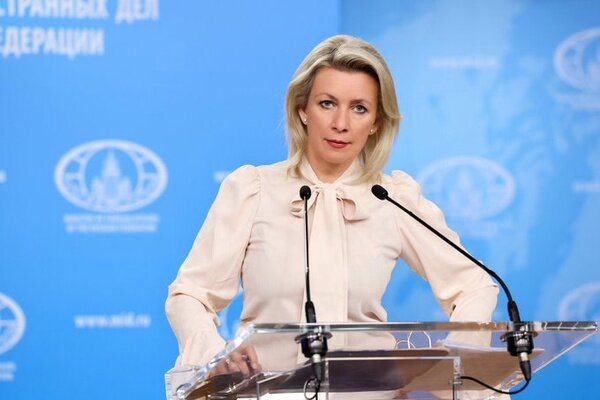
“We repeat again and again that we have no plans to attack NATO countries,” Maria Zakharova said at a press conference in Moscow on Friday.
“However, as the alliance is building a military presence near Russia’s borders, Russia has already taken all necessary measures to ensure its security… In other words, we are prepared for any development, but our priority is peace, friendship and equal cooperation,” Zakharova pointed out, Press TV reported.
Zakharova’s comments came in response to German Lieutenant General Alexander Solfrank saying earlier this month, without providing evidence, that Russia had “the intention, capability and strength to launch a small-scale attack on NATO territory as early as tomorrow.”
The diplomat said the statements issued by officials from NATO countries are part of a systematic campaign to condition and instill fear in their own populations and force them to accept the idea that conflict with Russia is inevitable.
The aim, she said, is to explain away the disastrous economic processes currently underway in their countries and justify their own miscalculations, failures and even crimes, while avoiding any responsibility.
“If NATO strategists are crazy enough to decide to attack Russia, they should have no doubt that we will respond with all the capabilities we have. This has been said repeatedly by the Russian leadership,” she warned.
Russian Foreign Minister Sergei Lavrov also said late last month that Russia was ready to provide non-aggression guarantees to NATO and EU countries.
“We have repeatedly said that we have not attacked any current member states of NATO or the European Union and have never intended to do so,” Lavrov told the Eurasian Security Forum in Minsk, Belarus.
“We are ready to stake this position on the future security of this region of Eurasia,” he said, according to a document provided by the Russian Foreign Ministry.
He said a meaningful dialogue with EU leaders was impossible because they refused to provide “genuine collective security”, guarantees not only against but also with Russia after the end of the conflict in Ukraine.
The Ukraine conflict began in 2022 after years of political and military interference in Kiev by the West, resulting in regional instability along Russia’s borders and forcing the Russian government to intervene to protect its national interests.
MNA