
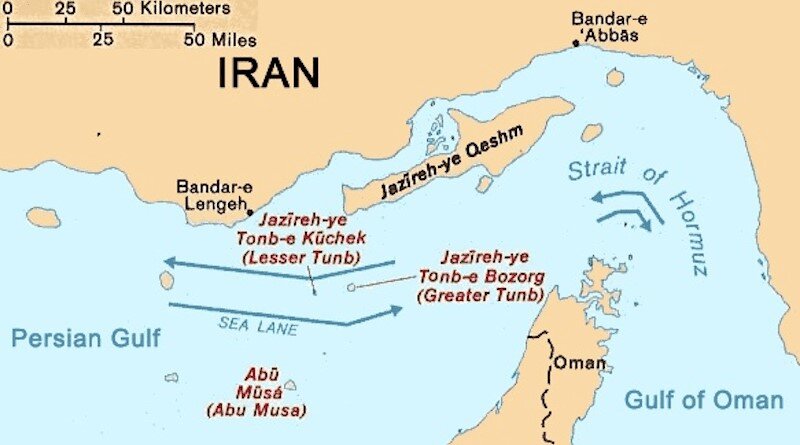
Baghai said on Thursday that these islands are “an inalienable part of Iran’s territorial integrity” and that any territorial claims against them are “groundless and invalid,” adding that such a position violates the principles of respect for a nation’s territorial integrity and good neighborliness.
He said Iran has exercised “effective, continuous and undisputed” sovereignty over the three islands for centuries, and repeated claims do not change “geographical and historical realities” or create any legal rights for the claimants, according to Press TV.
Mr. Baghai reiterated Iran’s policy of good neighborliness and cooperation to safeguard regional security and stability, and called on the UAE and PGCC to avoid provocative positions that undermine neighborly relations.
The Abu Musa Islands and Greater and Lesser Tunb in the Persian Gulf have historically been part of Iran, evidence of which has been discovered and supported by countless historical, legal, and geographical documents from Iran and other parts of the world. However, the United Arab Emirates has repeatedly claimed sovereignty over the islands.
The islands came under British control in 1921, but Iranian sovereignty over them was restored on November 30, 1971, one day after British troops left the area and two days before the UAE became a formal federation.
According to Press TV, Baghai also dismissed Kuwait’s unilateral claims regarding the Arash gas field, saying repeated statements and unilateral claims “do not create legal rights” for Kuwait.
He said that achieving a fair and durable agreement in this area requires bilateral dialogue, joint efforts and a constructive atmosphere to ensure mutual benefits.
Iran maintains that it has clear and established rights to its share of the Arash gas field, arguing that the underwater reservoir is a joint Iranian-Kuwaiti field and that historical records show that both countries have recognized their interests bilaterally for 60 years.
Nearly 40% of the fields are located in Iranian waters. Iranian officials maintain that unilateral actions by Kuwait and Saudi Arabia, including a 2022 agreement to jointly develop the area, have no legal basis. This is because the maritime boundaries involving all three countries have never been formally defined.
The Iranian government has repeatedly rejected recent PGCC statements asserting exclusive ownership of Arash by Saudi Arabia and Kuwait as baseless and contrary to well-established historical negotiations.
Iran said such a declaration would not erase its legal rights in this area and stressed that only the three countries’ border delimitation and cooperative development plans could determine each party’s share.
MNA